


Supplements to support a healthy metabolism may provide nutrients involved in the body’s everyday energy processes, but they aren’t a shortcut to changing how your body uses energy. Metabolism is the process of using energy to keep the body functioning, even at rest. B vitamins help the body use energy from food, while caffeine and green tea catechins may influence energy expenditure.
It’s understandable to look for extra support when progress feels slow, but supplements work best as one part of a broader approach. This guide explains how B vitamins, caffeine, and green tea catechins relate to metabolism, their potential limits, and how to consider supplements alongside nourishing foods and regular movement. The goal is to help you make informed choices that fit your wellbeing, rather than rely on a quick fix.
Key Takeaways
- B vitamins help the body use energy from food, but supplements are most useful when they address a nutrient shortfall.
- Adults should not consume more than 350 mg per day of magnesium from supplements, according to the National Institutes of Health.
- Build your foundation with varied, nourishing foods and regular movement; supplements don’t replace these habits.
- Caffeine may temporarily increase energy expenditure, but it can also affect sleep, heart rate, and how calm or jittery you feel.
- Green tea catechins are often paired with caffeine in metabolism products, but their potential effects should be considered alongside safety and overall lifestyle.
Supplements with little evidence for metabolism or weight loss
Not every product marketed for weight loss meaningfully changes metabolism. A 2021 systematic review in Obesity analyzed 1,743 clinical studies of vitamins and supplements, while the broader takeaway remains practical: no supplement currently available can cause weight loss on its own. Ingredients such as caffeine, green tea extract, L-carnitine, capsaicin, and conjugated linoleic acid appear in metabolism products, but their presence alone doesn’t establish that a product will help you lose weight.
Some nutrients matter to health without acting as weight-loss treatments. Clinical trials found vitamin D had no effect on body weight. A 2024 systematic review of 18 studies associated calcium supplementation with small average changes: BMI decreased by 0.18, waist circumference by 0.51 cm, and body fat mass by 0.34 kg. The evidence for those reported calcium effects was low-certainty, so they don’t establish calcium as a reliable way to reduce belly fat.
Magnesium supports many body processes, but research does not show consistent weight loss for most adults. A 2020 systematic review of 32 studies found that most adults didn’t lose weight while taking magnesium supplements. Adults should not consume more than 350 mg per day of magnesium from supplements, according to the National Institutes of Health. High supplemental doses can also cause diarrhea, and magnesium may be unsuitable with some health conditions.
Other popular ingredients have limited or mixed findings. Raspberry ketone isn’t well studied, even though one 8-week study reported no known adverse effects. Among six chromium studies in an Obesity meta-analysis, only one of the three low-risk-of-bias studies linked chromium with weight loss, reporting 3 to 6 pounds. That isolated result doesn’t make chromium a dependable weight-management choice.
Are metabolism supplements regulated by the FDA, and what claims are allowed? In the United States, dietary supplements don’t require FDA approval before they’re marketed, and the FDA doesn’t regulate them in the same way as medications. A product’s availability doesn’t prove a weight-loss claim is supported by evidence, so distinguish a claim about a nutrient’s role from a promise that a product will make you lose weight.
How much do common metabolism supplements cost in the United States? Costs vary by ingredient, product format, serving size, and package quantity. Compare those details alongside the evidence and safety information. A higher price doesn’t demonstrate stronger effects on weight or metabolism.
For a grounded next step, focus on the specific ingredient and the evidence behind its intended use. Supplements may help address a deficiency, but a varied diet and sustainable lifestyle remain central to weight management. If a product combines several ingredients, assess each one rather than assuming the blend works as a whole.
2. B vitamins and energy metabolism
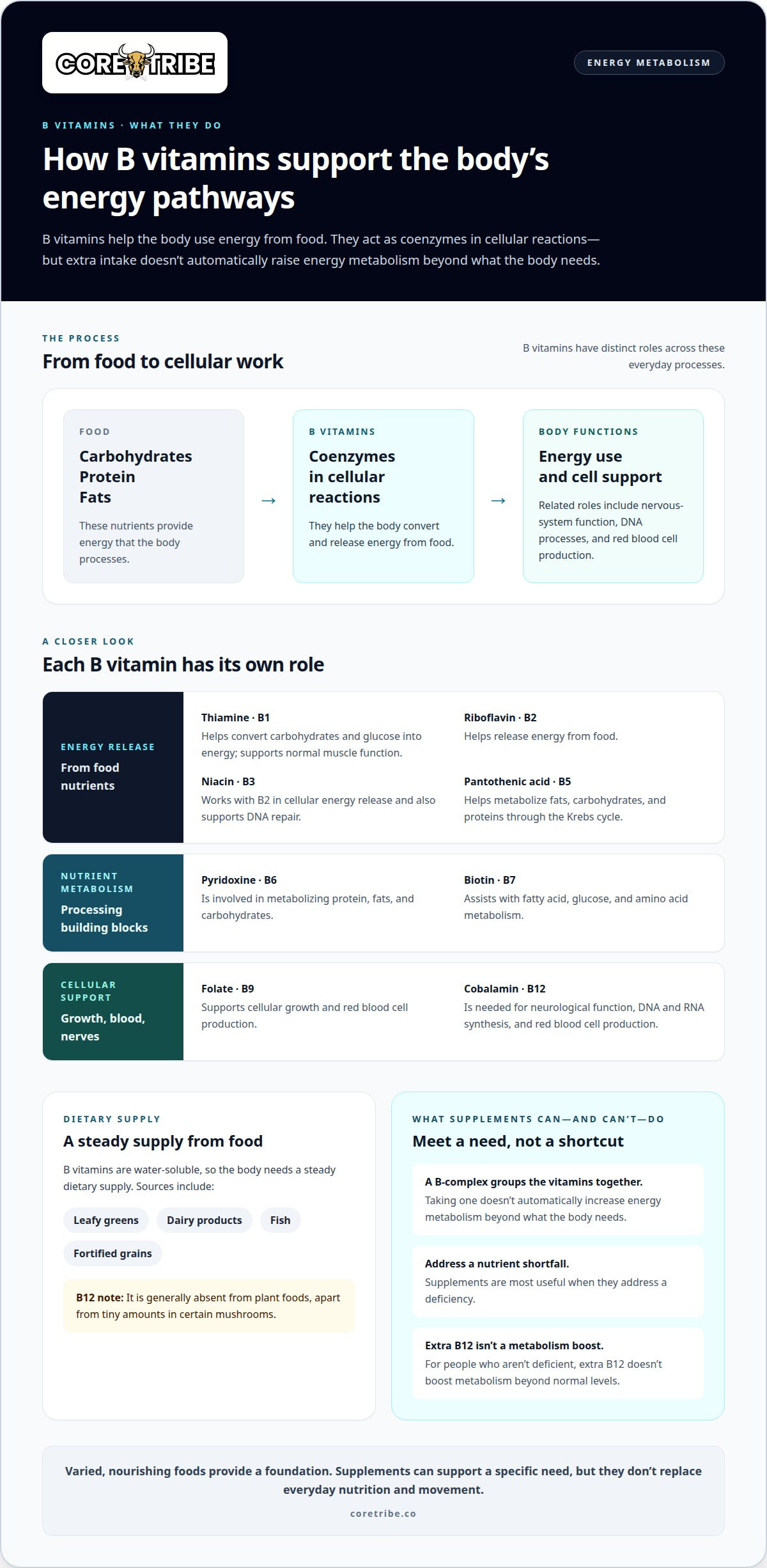
B vitamins help the body convert carbohydrates, protein, and fats into usable energy. They act as coenzymes in cellular reactions, including processes that support the brain and nervous system. A B-complex supplement groups these vitamins together, but taking one doesn’t automatically increase energy metabolism beyond what the body needs.
Each B vitamin has a distinct role. Thiamine, or B1, helps convert carbohydrates and glucose into energy and supports normal muscle function. Riboflavin, or B2, helps release energy from food. Niacin, or B3, works with B2 in cellular energy release and also supports DNA repair. Pantothenic acid, or B5, helps metabolize fats, carbohydrates, and proteins through the Krebs cycle.
Other members of the B-complex support different steps. Pyridoxine, or B6, is involved in metabolizing protein, fats, and carbohydrates, while biotin, or B7, assists with fatty acid, glucose, and amino acid metabolism. Folate, or B9, supports cellular growth and red blood cell production. Cobalamin, or B12, is needed for neurological function, DNA and RNA synthesis, and red blood cell production.
B vitamins are water-soluble, so the body needs a steady dietary supply. Foods such as leafy greens, dairy products, fish, and fortified grains provide them naturally. B12 is generally absent from plant foods, apart from tiny amounts in certain mushrooms. For people who aren’t deficient, extra B12 doesn’t boost metabolism beyond normal levels.
Green tea extract also appears in products marketed for energy expenditure and fat oxidation. That role is distinct from the established work of B vitamins in normal energy metabolism. An extract may combine ingredients, so consider each one’s intended role rather than assuming the blend directly changes how the body uses food.
Protein has a separate connection to energy use: the body expends more energy digesting high-protein foods than high-carbohydrate foods. This doesn’t mean eliminating carbohydrates; it highlights how food composition affects digestion. Pairing a protein source with varied whole foods can support a balanced eating pattern without treating one nutrient as a metabolism shortcut.
Iron matters for a different reason. It helps transport oxygen throughout the body and stores oxygen in muscles for contractions. Insufficient iron can contribute to anemia, fatigue, and reduced physical performance. Since high doses can be toxic, discuss suspected iron deficiency with a doctor or dietitian before taking an iron supplement.
For a practical first step, review food sources and consider whether a specific deficiency may explain a concern. If you’re shaping a broader wellness routine, explore the wellness collection as one part of that lifestyle, alongside nourishing meals and regular movement.
3. Combining supplements with diet and exercise
Whole foods provide a steady foundation for getting vitamins and minerals involved in metabolism. A varied eating pattern can supply these nutrients across meals, rather than relying on a supplement to cover every gap. Supplements to support a healthy metabolism may be useful when addressing a deficiency, but they don’t necessarily improve metabolism otherwise. Start by reviewing your usual meals: notice which foods you regularly eat and which are often missing.
For long-term weight management, combine an overall balanced eating pattern with an appropriate calorie intake and physical activity. This doesn’t require cutting out carbohydrates or treating calories as the only measure of health. Consider the portions and balance of your meals, then choose changes you can maintain. For example, pair a carbohydrate source with protein and vegetables, rather than expecting a metabolism product to offset an eating pattern that doesn’t meet your needs.
Exercise supports strength and everyday function, not only changes on the scale. Strength training can build muscle, which burns more calories than body fat. A practical routine might include resistance exercises for major muscle groups, alongside movement you can sustain in daily life. Choose activities that fit your schedule and ability. Supplements to support a healthy metabolism belong, if useful, alongside those habits, not in place of regular movement.
Whether breakfast works for you may depend on your routine, so consider how a morning meal fits your eating pattern. Try planning a balanced breakfast with a source of protein and carbohydrates, then observe whether it supports your energy and eating pattern through the day. Hydration and sleep also matter to overall wellbeing. Supplements can’t replace water, restorative sleep, or nourishing meals.
So, what lifestyle habits support metabolic health better than supplements? A varied diet, suitable calorie intake, regular exercise, strength training, hydration, and sleep provide a more complete foundation. If you’re considering a vitamin or mineral product, first identify why you want to take it. Addressing a deficiency is different from expecting a supplement to cause weight loss.
Clinical studies can help explain what an ingredient may do, but a study result doesn’t automatically apply to every product or person. Consider the ingredient, your eating pattern, activity, sleep, and health needs together. If you take medication or have a health condition, discuss new supplements with a healthcare provider before adding them to your routine. This helps keep the decision connected to your overall wellbeing and long-term habits.
4. Caffeine and resting metabolic rate
Caffeine can stimulate thermogenesis, the process of producing heat, and may increase energy expenditure while the body rests. A meta-analysis of six randomized controlled trials involving 98 participants found that caffeine alone or combined with catechins significantly increased energy expenditure compared with placebo. The finding supports a measurable effect on energy use, but it doesn’t establish one calorie increase that applies to everyone. Dose, timing, and habitual caffeine intake shape how the effect fits into daily life.
Can caffeine or green tea extract increase metabolism, and by how much? Trials found higher energy expenditure with caffeine, alone or with catechins, than with placebo, but the reported finding gives no single calorie amount. It describes an effect, not a universal change in resting metabolic rate or a reliable weight-loss result.
Caffeine-containing supplements may combine caffeine with green tea extract or other ingredients. Read the product label for the amount of caffeine in each serving, then account for coffee, tea, energy drinks, and other sources in your total daily intake. The National Institutes of Health recommends no more than 500 mg of caffeine a day. A label’s serving size matters: taking more servings than directed can raise total intake quickly.
Pay attention to how caffeine affects normal function, including sleep and mood. Caffeine can increase blood pressure and heart rate, cause gastrointestinal problems, and lead to anxiety, jitteriness, or sleep disruption. High doses can cause vomiting, heart palpitations, and seizures. If an afternoon supplement leaves you restless at bedtime, the resulting sleep disruption may undermine the daily routine you’re trying to support.
Formulas with additional stimulants need particular care. In a study of 15 healthy adults, a single 900 mg dose of bitter orange standardized to 6% synephrine significantly increased heart rate and blood pressure for up to 5 hours compared with placebo. A separate 8-week clinical trial found that a supplement providing 20 mg of synephrine per day and 284 mg of caffeine didn’t increase resting heart rate or blood pressure compared with placebo or the same formula without synephrine. Those differing results show why ingredient, dose, and formulation matter.
For a practical check, add up caffeine from all sources before using a supplement, and notice changes in sleep, heart rate, or anxiety. Evidence of increased energy expenditure doesn’t mean caffeine replaces balanced eating or movement, nor does it show that every caffeine-containing product has the same effect. People sensitive to stimulants may find that limiting intake supports daily wellbeing better than adding a concentrated dose.
5. Green tea catechins and caffeine
Green tea provides catechins, plant compounds studied alongside caffeine for possible effects on energy use. Brewed tea and green tea extract aren’t interchangeable: extracts concentrate tea compounds into a supplement, while brewed tea is consumed as a drink. Ingredient amounts and combinations can differ by product. That distinction matters when interpreting research or considering how an extract fits into your routine.
A 2012 study found that green tea supplements reduced body weight in people with obesity by an average of nearly 2 pounds compared with placebo. This result describes the average difference observed in that study, not a reliable amount every person will lose. It also doesn’t show that green tea extract alone causes lasting weight loss or replaces a balanced diet, physical activity, and other lifestyle habits.
Catechins and caffeine are often considered together because green tea products can contain both. Research on caffeine combined with catechins has found increased energy expenditure compared with placebo, but this doesn’t mean every green tea extract has the same composition or effect. Read the ingredient information to see whether a product contains caffeine, green tea extract, or both, and account for caffeine from other drinks.
Concentrated extracts call for more care than simply drinking green tea. Clinicians advise taking green tea extract with food to minimize potential risks. Follow the product’s directions, and discuss an extract with a healthcare provider if you take medication or have a health condition. This is especially useful when a supplement combines green tea with caffeine or other active ingredients.
Keep the goal in view: nutrients and plant compounds can be part of a broader health routine, but an extract isn’t a substitute for meals or movement. A varied eating pattern paired with regular exercise, for example, gives weight management a foundation beyond a single supplement. If you already drink caffeinated coffee or tea, include those servings in your overall caffeine intake before adding another source.
Use the evidence as one part of a decision, not as a promise on a label. The obesity finding from 2012 offers a specific research result, while the product’s ingredients, caffeine content, directions, and your broader routine shape how it fits. For a wider approach to wellbeing beyond green tea, explore wellness options that complement your everyday habits.
Coretribe: Shilajit Supplements
Coretribe offers Shilajit Supplements for readers interested in adding a natural supplement to a broader wellness routine. Options include Coretribe ® Pure Shilajit Capsules - Mixed Sea Moss & Ashwagandha and Coretribe®Shilajit Honey Sticks. Neither should be treated as a proven way to increase metabolism or cause weight loss. Instead, consider how a supplement fits alongside balanced meals, regular movement, and your individual health needs.
Before adding a supplement, consider its ingredients and discuss it with a healthcare provider, especially if you take medication or have a health condition. This helps keep your choices grounded in your overall wellbeing rather than promises of a quick metabolic change.
Contact Coretribe to learn more about its Shilajit Supplements.
Make your next wellness choice with care
Let your next step be guided by your health needs, not the promise of a quick change. Before adding supplements to support a healthy metabolism, consider what you hope to address, what you already take, and how a supplement fits your daily routine. A healthcare provider can help you weigh those factors, particularly if you have a health condition or take medication.
Coretribe offers natural wellness products for people building a thoughtful routine. Explore the available options at your own pace, and keep nourishing food, movement, and rest at the center of your approach. A supplement can be one consideration, not the whole plan.
Explore Coretribe’s wellness offerings and choose a next step that feels considered and sustainable. Small, consistent decisions can help you shape a routine grounded in care.
Frequently Asked Questions
What is Metabolism?
Metabolism is the collection of processes through which your body uses energy to function. It continues while you’re active and at rest, including during sleep. For example, your body uses energy for basic functions even when you’re sitting quietly. The term describes more than how quickly someone burns calories, and it doesn’t explain body-weight changes on its own.
What Are the Risks and Side Effects?
Risks depend on the ingredient, amount, and your health. Caffeine may affect blood pressure, heart rate, sleep, and anxiety; high doses can cause vomiting, palpitations, or seizures. Magnesium supplements can cause diarrhea at very high doses, while excess iron can be toxic. In the United States, supplements don’t require FDA approval before marketing, so a product’s availability doesn’t establish its safety or effectiveness.
What if I Miss the Vitamins that Support Metabolism?
A missed vitamin isn’t a reason to take extra doses. B vitamins are water-soluble and need regular dietary replenishment. Include sources such as fortified grains, leafy greens, dairy, and fish. People who avoid animal products should know that vitamin B12 generally isn’t naturally present in plants, apart from tiny amounts in certain mushrooms. If you’re concerned about a deficiency, discuss your diet and symptoms with a healthcare provider.
What does metabolism mean, and what factors affect metabolic rate?
Metabolic rate refers to the energy your body uses over time. It varies between people, even among those with the same height and weight. The thyroid gland helps regulate metabolism, while age-related shifts in muscle and body fat can also influence energy needs. These factors mean another person’s calorie needs or weight changes aren’t a reliable measure of your metabolism.
Which supplements have evidence for supporting metabolic health?
No supplement has been shown to cause weight loss on its own. B vitamins help normal energy processes, but extra B12 doesn’t boost metabolism beyond normal levels unless you’re deficient. Caffeine, alone or with green tea catechins, has increased energy expenditure compared with placebo in trials. These findings don’t establish that a supplement will produce lasting weight loss or suit every person.
Do protein, fiber, or creatine supplements affect metabolism or calorie burning?
Protein-containing foods require more energy to digest than high-carbohydrate foods, but that doesn’t make protein powder a weight-loss treatment. Fiber supplements shouldn’t be considered calorie-burning products. Creatine also shouldn’t be chosen solely to raise metabolic rate: the evidence covered here doesn’t establish it as a metabolism or weight-loss supplement. Consider each product for its intended role, not as a shortcut to burning calories.
What are the risks and side effects of metabolism-boosting supplements?
Some products combine stimulants, making total caffeine intake easy to overlook. Check the label and include caffeine from coffee, tea, and energy drinks in your daily total. Caffeine can disrupt sleep or cause jitteriness, while concentrated ingredients may carry other risks. Ephedra is banned from dietary supplements in the United States, and yohimbe should only be used under medical supervision because it can cause serious adverse effects.
Which supplements can interact with medications or medical conditions?
Interactions are possible, and metabolism products aren’t always well-studied alongside prescription drugs. One specific concern is 5-HTP: taking it with other substances that increase serotonin may cause serotonin syndrome, a serious condition involving excessive serotonin. Magnesium supplements may also cause problems for people with some underlying health conditions. Before starting a supplement, review its ingredients with a healthcare provider, especially if you take medication or manage a chronic condition.

