


A tired spell, digestive discomfort, or a skin change may seem like signs your liver needs a detox, but none proves that you need a cleanse. Your liver naturally processes substances and helps eliminate them; detox programs don’t prevent liver damage or treat liver disease. These symptoms can have many causes, so persistent or serious changes call for attention, not a quick cleanse.
It’s understandable to look for a simple way to support your body when you’re not feeling your best. This guide explains what the liver does, why commercial detoxes may not help, and what to know about supplement safety and supportive food choices. You’ll also learn which symptoms need prompt medical attention, helping you choose a sensible next step with greater confidence.
Key Takeaways
- Learn which everyday habits and health conditions can affect liver health, and where a cleanse falls short.
- Understand why supplements marketed for liver support deserve caution and what to consider before using them.
- Recognize symptoms that call for prompt medical attention rather than a home detox.
- Explore practical food and lifestyle choices that support overall liver health.
- See how the liver processes substances naturally, helping you separate its real functions from detox marketing claims.
1. Can a liver detox prevent liver damage?
No. Liver detox programs don’t prevent liver damage or treat liver disease, and cleanse products have no proven benefit and may cause harm. The liver already processes substances and helps eliminate them naturally. If you’re feeling fatigued or noticing other changes, don’t assume a cleanse is the answer. These symptoms can have several causes, and a detox isn’t a substitute for finding out what’s behind them.
How is liver disease diagnosed and what tests are used? Diagnosis generally starts with a healthcare provider reviewing symptoms and medical history. It may then involve blood tests and imaging. The tests depend on the symptoms and findings; a detox product can’t diagnose liver disease or show whether liver damage is present.
Do liver detoxes or cleanses work, according to medical evidence? They haven’t been shown to prevent liver damage or treat liver disease. Some dietary supplements can cause drug-induced liver injury, so talk with a healthcare provider before using one, especially if you take medication or have an existing liver condition.
Alcohol use and obesity are two factors that can affect liver health. Alcohol can contribute to liver injury, while obesity increases the risk of metabolic dysfunction-associated steatotic liver disease. For someone with alcoholic liver disease, stopping alcohol gives the liver the best chance to recover. Don’t use a cleanse to offset alcohol or substance use; it can’t remove the risks those exposures create.
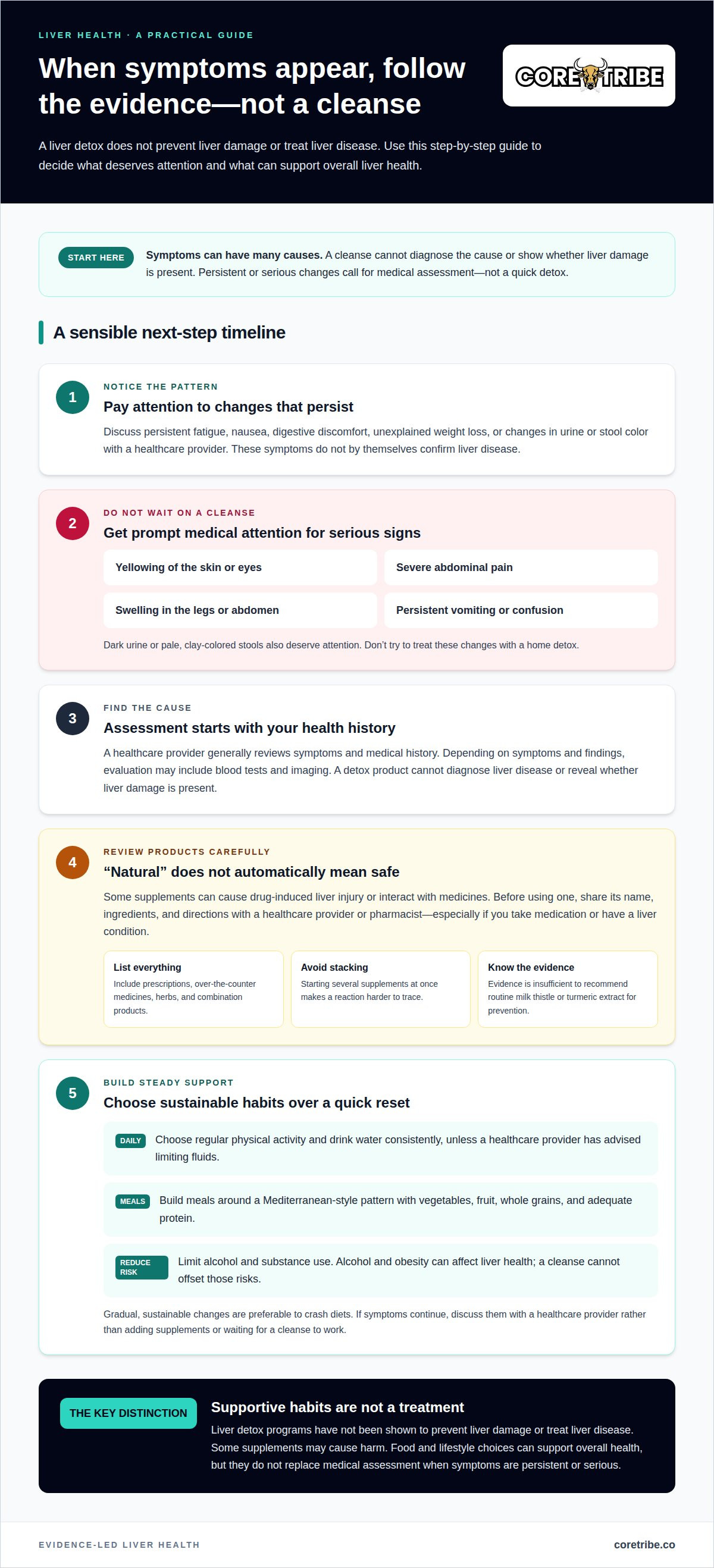
Practical habits support liver health without promising a quick reset. Choose regular physical activity, limit alcohol and substance use, and build meals around a Mediterranean-style pattern. Vegetables, fruit, whole grains, and adequate protein provide a steadier foundation than a restrictive cleanse. Drink water consistently unless a healthcare provider has advised you to limit fluids. Gradual, sustainable changes are preferable to crash diets, which can add stress rather than support lasting improvement.
Talk with a healthcare provider about persistent fatigue, nausea, digestive discomfort, unexplained weight loss, or changes in urine or stool color. Jaundice, severe abdominal pain, swelling in the legs or abdomen, persistent vomiting, or confusion also need prompt medical attention. These symptoms don’t confirm liver disease, but they shouldn’t be treated with a home detox instead of medical assessment.
Protective steps can address specific risks: hepatitis A and B vaccination may be recommended for people who aren’t immune or have another underlying liver disease. Avoid illicit drug use and unprotected sex with multiple partners to reduce viral hepatitis risk. If symptoms continue despite changes such as limiting alcohol or improving meals, discuss them with a healthcare provider instead of adding supplements or waiting for a cleanse to work.
2. Are detox supplements safe to use?
“Natural” doesn’t automatically mean safe for the liver. Some dietary supplements can cause drug-induced liver injury, and risk may depend on the ingredient, amount, combination, and a person’s health. Products promoted as liver cleanses or weight-loss detoxes aren’t proven ways to protect the liver. A supplement label may list several ingredients together, making it harder to identify which one caused a problem if symptoms develop.
Can detox supplements or cleanses harm the liver or interact with medications? Yes. Some supplements can injure the liver, and they may interact with medicines. Discuss each product with a healthcare provider or pharmacist before combining it with medication. This is especially relevant if you have chronic liver disease or regularly take prescription medicines.
Milk thistle and turmeric extract are often promoted for liver support, but human clinical trial evidence isn’t sufficient to recommend routine use to prevent liver problems. That doesn’t mean everyone will respond the same way; it means marketing claims aren’t proof of protection. A capsule can’t replace evaluation of symptoms, and a “cleanse” shouldn’t delay care for jaundice, persistent vomiting, or confusion.
Take a careful, practical approach before adding any product:
- Write down the supplement’s name, ingredients, and directions, then share them with a healthcare professional.
- Include prescriptions, over-the-counter medicines, herbal remedies, and combination products in that conversation.
- Avoid starting several new supplements at once; this makes it harder to connect a reaction with a specific product.
- Stop treating a product as harmless simply because its label says “natural” or links it to traditional use.
For everyday nourishment, choose foods that support a balanced eating pattern rather than relying on concentrated extracts. Vegetables, fruit, and adequate protein can be part of meals that support general health. Broccoli, kale, and cauliflower are practical examples of vegetables promoted in liver-support diets. They’re foods, not treatments for chronic liver disease, and adding them won’t neutralize excess alcohol or make an unsafe supplement safe.
Weight-loss cleanses deserve particular caution because their marketing may promise liver detoxification alongside weight change. Clinical data don’t support the effectiveness of liver detox products marketed this way. Instead of pursuing a rapid cleanse, focus on sustainable habits and discuss ongoing symptoms or supplement use with a healthcare professional. For readers exploring a liver detox option, keep the distinction clear: a wellness product isn’t a proven treatment for liver injury.
3. When should I visit a hospital for liver-related symptoms?
Some liver problems develop without obvious symptoms, while others cause changes that need prompt medical attention. Yellowing of the skin or eyes, known as jaundice, can signal difficulty clearing waste. Dark urine or pale, clay-colored stools may indicate that bilirubin isn’t being processed normally. Don’t try to treat these changes with a cleanse.
Seek prompt medical care for severe abdominal pain, persistent nausea or vomiting, confusion, or swelling in your abdomen or legs. Fluid buildup in the abdomen, called ascites, may cause bloating or discomfort. Confusion can also occur with hepatic encephalopathy, a complication of liver disease. These symptoms need medical assessment, not a home detox.
Other possible signs of liver damage include unusual tiredness, loss of appetite, digestive discomfort, itchy skin, and easy bruising. Fatigue or nausea alone doesn’t establish a liver problem, but persistent symptoms deserve attention, especially alongside urine or stool color changes. Symptoms mistaken for signs your liver needs a detox can also stem from unrelated conditions, so don’t treat a symptom as a diagnosis.
- Jaundice: yellowing of the eyes or skin.
- Possible bile or bilirubin changes: dark urine or pale stools.
- Fluid buildup: swelling in the abdomen or legs.
- Changes in thinking: confusion or unclear thoughts.
- Ongoing symptoms: persistent vomiting, unexplained itching, or easy bruising.
Hormonal changes can have many causes, so they aren’t a reliable way to diagnose liver disease. The liver helps metabolize and clear hormones such as estrogen and cortisol. Mention new or persistent changes to a healthcare provider, particularly if they occur with jaundice, abdominal swelling, or other symptoms. A single change in mood or energy doesn’t show that the liver needs a detox.
Digestive symptoms need context, too. The liver produces bile, which helps break down fats; problems with bile flow can be associated with pale stools. Bloating may have several causes, but a swollen abdomen with discomfort can reflect fluid buildup. Record when symptoms began and any changes in appetite, stool, urine, or skin. These details help describe what has changed.
Alcohol or drug withdrawal is another reason not to rely on a home detox. Detoxing at home can lead to serious complications, especially when the liver or other organs are already under stress. If confusion, persistent vomiting, severe pain, or jaundice occurs, seek prompt medical care. Don’t wait for a cleanse to improve symptoms.
4. Dietary changes promoted as liver support
A steady eating pattern can support liver function, but food isn’t a cure for liver disease. Choose meals built from vegetables, fruit, whole grains, and protein sources such as beans, fish, or eggs. These foods provide nutrients for everyday body processes without relying on a restrictive cleanse. A Mediterranean-style pattern is one practical framework: combine plant foods with varied protein sources and limit excess sugar and alcohol.
Fiber from oats, beans, vegetables, and fruit supports digestion and helps move waste through the digestive tract. Broccoli, kale, cauliflower, Brussels sprouts, berries, citrus, and leafy greens are examples often included in liver-supportive eating. Rotate them through meals rather than treating any single food as a detox ingredient. Water also supports normal elimination; a daily intake of 64 ounces is suggested unless a healthcare provider directs otherwise.
Protein supplies amino acids involved in binding and neutralizing compounds for removal. Include a suitable source with meals, such as lentils at lunch or eggs with breakfast. Avoid severe restriction or crash diets, which can place added strain on the body. For metabolic dysfunction-associated steatotic liver disease, gradual weight change may be part of care, but a healthcare provider should guide changes in light of the person’s health.
- Build a meal around vegetables, whole grains, and a protein source.
- Choose water regularly through the day, unless fluid limits apply.
- Reduce excess sugar, alcohol, ultra-processed foods, and unnecessary supplements.
- Add movement to your routine and prioritize consistent sleep.
Movement and fiber are often discussed together because regular activity supports digestion and helps keep elimination moving. Sleep matters too: the liver carries out repair and regeneration during deep sleep. These habits support your liver as part of broader wellbeing, not as a quick fix for dysfunction. Avoiding heavily fragranced products and improving indoor air quality can also reduce some environmental exposures where practical.
Personalized clinical support is especially relevant for someone with diagnosed liver disease, persistent symptoms, or abnormal test results. A healthcare provider can consider the diagnosis, medications, nutrition needs, and overall health before recommending dietary changes. For example, someone with a medical condition or fluid restriction may need different guidance from someone seeking general support. Bring questions about supplements and major diet changes to that discussion rather than adding a cleanse to an existing treatment plan.
Keep expectations grounded: a balanced plate may support health, but it can’t diagnose or treat liver injury. If jaundice, abdominal swelling, or confusion appears, seek medical attention instead of trying dietary changes alone.
5. How the liver naturally processes and eliminates substances
The liver handles substances as part of its normal work, rather than storing toxins until a cleanse removes them. It processes hormones, metabolic waste, environmental exposures, and byproducts of digestion. It also supports digestion, stores nutrients, and helps regulate energy. The liver performs over 500 jobs, so its role extends well beyond the detox language used in product marketing.
Processing can be understood as a sequence: transformation, conjugation, then elimination. First, the liver changes a substance’s structure. Next, it can attach other compounds to make the substance easier to handle and remove. Amino acids, sulfur compounds, and antioxidants are among the nutrients involved in conjugation. These steps help the body process substances from food, alcohol, medications, and the environment.
After processing, waste can leave through urine, stool, sweat, or bile. The liver makes bile, which helps break down fats during digestion. Bile also carries some processed substances into the digestive tract, where they can leave with stool. Urine provides another route for the body to remove substances. The route depends on what is being processed and how the body handles it.
Consider a meal containing fat. Bile helps the digestive system break down that fat while the liver continues processing substances absorbed from food. This is ordinary physiology, not evidence that a special cleanse is needed. Eating a balanced range of foods supports general nutrition, but no single food can make the liver process every substance faster or reverse liver disease.
Elimination matters because processed waste needs a route out of the body. Bile moves into the digestive tract, and regular bowel movements help carry its contents away. If elimination slows, some processed substances may be reabsorbed. That’s why ordinary habits that support digestion and hydration make more sense than promises to “flush toxins” with a short cleanse.
The practical takeaway is simple: the liver already performs detoxification continuously. A cleanse doesn’t switch this work on, and “toxins” aren’t simply stored in the liver, waiting for a product to release them. Persistent symptoms still need attention because liver disease can affect normal function, while fatigue or digestive changes can have other causes. A supplement also isn’t proof that the liver is processing substances more effectively.
For a grounded next step, keep learning about the body’s natural processes and explore wellness options without treating a product as a cure or a replacement for medical care.
Coretribe: Liver detox
Coretribe offers Liver detox as a wellness option for readers interested in adding liver-focused support to everyday routines. It isn’t a way to diagnose, prevent, or treat liver disease, and it shouldn’t replace medical care or a healthcare provider’s advice. If you have symptoms, a diagnosed liver condition, or take medication, discuss supplements with a healthcare professional before use, since some dietary supplements can cause liver injury.
Keep the foundation practical: balanced meals, regular movement, and limiting alcohol support general wellbeing without promising a cleanse. Choose products thoughtfully and consider how they fit your health needs. To learn more about Coretribe’s Liver detox, contact Coretribe.
Choose a Thoughtful Next Step
Changes in your energy, digestion, or skin can raise questions, but they can’t tell you on their own what’s happening with your liver. Treat them as a reason to pay attention, not proof that you need a cleanse. If you’re wondering whether the signs your liver needs a detox describe what you’re experiencing, focus first on the nature of the symptoms and whether they persist or worsen.
For health concerns, seek guidance from a healthcare professional. For general wellness product information, keep your goals realistic and consider how a product fits alongside your usual routine. Coretribe’s Liver detox offering is a wellness option, not a diagnosis or treatment for liver disease.
If you’d like to explore that option, view Coretribe’s Liver detox offering. Take your next step with care, and choose the support that suits your needs.
Frequently Asked Questions
What Does the Liver Actually Do?
The liver processes substances from food and medicines, helps manage hormones and metabolic waste, and makes bile to aid fat digestion. It also stores nutrients and helps regulate blood sugar. Rather than acting as a passive filter, it chemically changes substances so the body can eliminate them through bile or urine. This ongoing work happens without a cleanse; no drink or supplement switches it on.
Can drinking lemon water detox my liver?
No, lemon water doesn’t detox the liver or speed its normal processing. Adding lemon can flavor water and may make it easier to drink, but the liver still handles substances through its ongoing processes. Enjoy it as a beverage if you like the taste, not as treatment for symptoms, fatty liver disease, or alcohol-related injury. Jaundice or persistent vomiting calls for medical care, not lemon water.
Are detox supplements safe to use?
Some supplements can cause drug-induced liver injury, and products may interact with medicines. Before adding a capsule, powder, or herbal blend, share its ingredient label with a healthcare professional or pharmacist, especially if you take regular medication or have diagnosed liver disease. Milk thistle and turmeric extract are often promoted for liver support, but human evidence isn’t sufficient to recommend routine use to prevent liver problems.
Can a liver detox prevent liver damage?
No, a detox plan hasn’t been shown to prevent liver damage or treat liver disease. Prevention focuses on reducing relevant risks, such as limiting alcohol and avoiding illicit drug use. People with alcoholic liver disease should stop drinking alcohol to give the liver its best chance to recover. Hepatitis A and B vaccination may be recommended for people who aren’t immune or have another underlying liver disease.
Can liver detox help with fatty liver disease?
A cleanse isn’t a treatment for fatty liver disease. For metabolic dysfunction-associated steatotic liver disease, gradual weight loss of 5 to 10 percent can improve liver fat content and reduce inflammation. Crash diets aren’t the answer; sustainable changes to eating and activity are more appropriate. A healthcare professional can assess the condition and help determine suitable steps based on your health and test results.
How do I know my liver is full of toxins?
The liver doesn’t simply fill up with stored toxins awaiting a cleanse. Symptoms such as fatigue, nausea, itchy skin, or digestive discomfort can have many causes, so they can’t establish liver dysfunction on their own. A healthcare professional may assess symptoms and medical history, then use blood tests or imaging when appropriate. Yellow skin or eyes, confusion, or severe abdominal pain needs prompt medical attention.
How long does this process take?
The liver processes substances continuously, but recovery from injury depends on its cause and severity. After stopping alcohol, liver enzyme levels typically normalize within 4-8 weeks of abstinence, though the timeline varies. That figure doesn’t mean every kind of liver damage heals in that period. Severe scarring from cirrhosis may prevent full recovery, so a healthcare professional can guide care and assess progress.
What are the best natural remedies for liver detox?
No natural remedy or cleanse has been shown to detox the liver or treat liver disease. For general support, focus on a Mediterranean-style eating pattern, regular physical activity, adequate sleep, and limiting alcohol. Milk thistle and turmeric extract lack sufficient human clinical trial evidence to recommend routine use for preventing liver problems. If you’re considering an herbal product, discuss its ingredients with a healthcare professional before use.

