


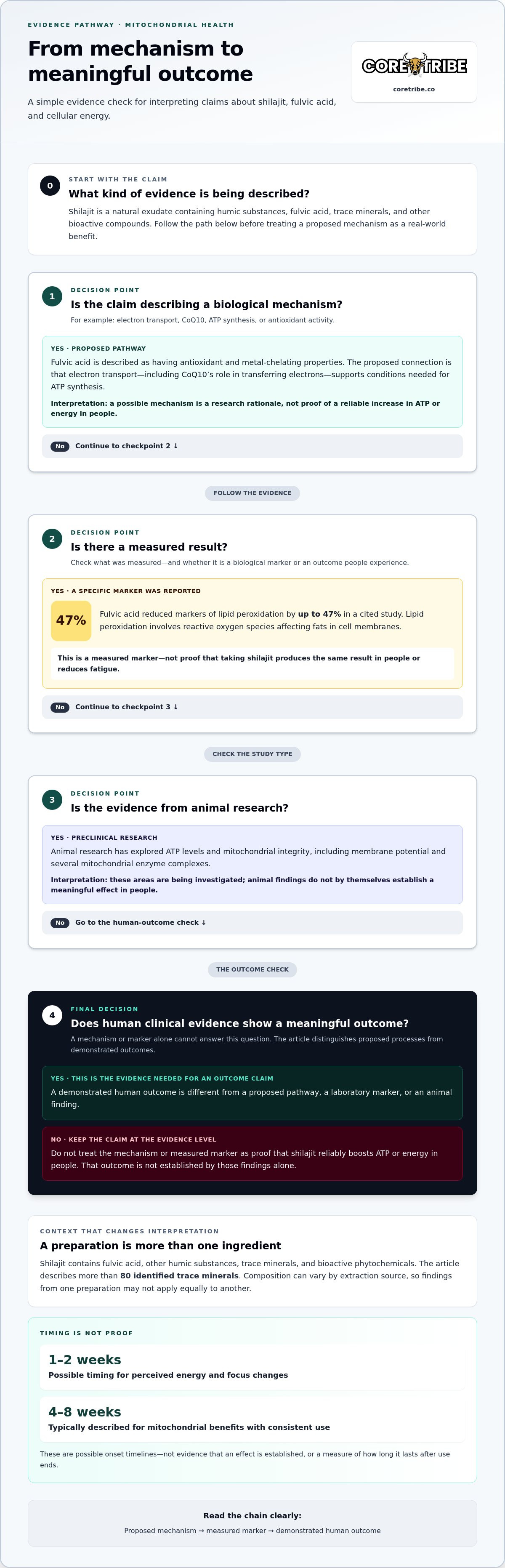
Shilajit is a natural exudate containing humic substances, fulvic acid, trace minerals, and other bioactive compounds. Interest in shilajit for mitochondrial health centers on fulvic acid and its possible relationship to cellular energy processes, including ATP production and the electron transport chain. These mechanisms are promising research areas, not proof that shilajit treats a condition or reliably boosts energy.
To understand how a traditional natural substance might relate to the body’s energy systems, start with the mitochondria. They produce ATP, the molecule cells use to power essential work. Oxidative stress and the condition of mitochondrial membranes can also influence how these systems function.
This guide explains what shilajit is, how fulvic acid may relate to ATP production, oxidative stress, and membrane function, and what the evidence can and can’t tell us. It distinguishes proposed mechanisms from demonstrated outcomes, helping you assess the supplement in a measured, informed way.
Key Takeaways
- Shilajit contains fulvic acid, a humic substance with antioxidant and metal-chelating properties that researchers examine in relation to mitochondrial processes.
- Learn how the electron transport chain and CoQ10 connect to ATP production, and why proposed mechanisms aren’t the same as proven human outcomes.
- Fulvic acid reduced markers of lipid peroxidation by up to 47% in a cited study, offering one way to understand its potential antioxidant role.
- Animal research has explored ATP levels and mitochondrial integrity, including membrane potential and several mitochondrial enzyme complexes.
- Understand what to consider when connecting the evidence to shilajit supplements, including Coretribe ® Pure Shilajit Capsules - Mixed Sea Moss & Ashwagandha.
Fulvic acid and mitochondrial electron transport
Shilajit contains fulvic acid and other humic substances linked to mitochondrial processes. The proposed connection centers on electron transport, CoQ10, and ATP synthesis.
Fulvic acid in electron transport
Fulvic acid is a low-molecular-weight humic substance with antioxidant and metal-chelating properties. In mitochondria, electron transport passes electrons through protein complexes, supporting the conditions needed for ATP synthesis. Shilajit is described as supporting ATP production and potentially enhancing CoQ10 activity in this chain. CoQ10 helps transfer electrons, making it relevant to cellular energy function.
This proposed pathway explains why researchers study shilajit for mitochondrial health. It does not establish that taking a supplement reliably increases ATP or improves energy in people. A mechanism describes how a substance could interact with a process; clinical evidence must show whether that interaction produces a meaningful effect.
Fulvic and humic substances
Humic substances are organic compounds that include fulvic acid and higher-molecular-weight humic acid. Shilajit is a natural exudate composed predominantly of these substances, along with trace minerals and bioactive phytochemicals. Humic acid is associated with immunomodulatory effects, while fulvic acid is noted for antioxidant and metal-chelating properties.
Shilajit is not a single isolated compound. Its composition and potential effects vary depending on where it is extracted. The relationship between fulvic acid, humic acid, and other constituents helps explain why findings from one preparation may not apply equally to another.
Fulvic acid and trace minerals
Shilajit is described as containing more than 80 identified trace minerals, alongside fulvic acid and other bioactive substances. Fulvic acid’s metal-chelating property means it can bind metals; that chemical feature is one reason researchers consider its relationship with mineral components.
Binding alone does not establish how a mineral is absorbed or used by the body. The mineral’s identity, the preparation’s composition, and the amount available all matter. When assessing a supplement, remember that a list of minerals describes its ingredients, not their effect on mitochondrial function or ATP production.
Energy effects and their duration
Energy and focus changes may appear within 1-2 weeks, while mitochondrial benefits typically require 4-8 weeks of consistent use. These timelines describe possible onset during continued use, not how long an effect lasts after use ends.
This distinction matters when judging a supplement’s role. ATP production depends on multiple cellular processes, and perceived energy can also reflect sleep, nutrition, activity, and health. A study’s timeline provides context for observing effects, but does not establish lasting effects or durable clinical benefits after use stops.
Reactive oxygen species and antioxidant effects
Reactive oxygen species are molecules that participate in normal cell activity but may also contribute to oxidative stress. Shilajit is described as having antioxidant and anti-inflammatory actions that may influence mitochondrial function and cellular energy metabolism.
Antioxidant activity
Antioxidant activity describes how a substance can limit oxidation, including reactions that damage cellular molecules. Fulvic acid, a constituent of shilajit, has antioxidant properties, and one cited study reported that it reduced markers of lipid peroxidation by up to 47%.
Lipid peroxidation occurs when reactive oxygen species affect fats in cell membranes. The 47% result offers a specific example of an effect measured in a study, not proof that taking shilajit produces the same result in people. For readers considering shilajit for mitochondrial health, that distinction keeps a laboratory marker separate from a clinical outcome such as less fatigue.
Antioxidant protection
Antioxidant protection means limiting oxidative damage, not removing every reactive oxygen species from the body. These molecules also take part in ordinary biological signaling, so the balance between their production and the body’s antioxidant defenses matters.
At the mitochondrial level, oxidative stress can affect components involved in energy metabolism. Shilajit’s reported antioxidant activity gives researchers a reason to examine whether it supports this balance. A reported reduction in lipid peroxidation markers is one measurable finding, while the effect on everyday energy remains a separate question.
Shilajit is also described as having anti-inflammatory effects. Oxidative stress and inflammation can intersect in biological processes, but they are not interchangeable: an antioxidant finding alone does not establish an anti-inflammatory benefit for a person. This distinction matters when interpreting claims about chronic fatigue, which can have many causes and is not itself evidence of mitochondrial damage.
Traditional medicine has used shilajit, but historical use and modern clinical evidence answer different questions. A reported effect on an oxidation marker may point to a possible mechanism; it does not establish how a supplement affects symptoms, how long an effect lasts, or whether it changes a chronic condition. Keep these distinctions in mind when weighing antioxidant claims.
In practical terms, separate three ideas: the proposed mechanism, the measured marker, and the outcome a person experiences. Fulvic acid’s antioxidant properties and the reported reduction in lipid peroxidation markers describe the first two. By themselves, they do not show that shilajit prevents oxidative damage throughout the body or treats inflammatory illness.
For a broader view of available supplement options, consider the ingredients and intended use alongside the evidence discussed here.
Mitochondrial energy production and ATP
Mitochondria produce at least 95% of the body’s primary energy source, adenosine triphosphate (ATP). Understanding that process helps put claims about fatigue and supplements into context.
Cellular energy metabolism
Cellular energy metabolism comprises the processes cells use to convert nutrients into usable energy, including ATP. Mitochondria play a central role, so researchers examine mitochondrial function when studying energy-related effects of shilajit.
This distinction matters because energy is not a single bodily reserve. Cells continually make and use ATP to support functions such as movement and cognition. A change in perceived focus or stamina does not, by itself, demonstrate a change in cellular ATP production. A proposed mechanism and a measured effect are separate parts of the evidence.
ATP and mitochondrial energy
ATP stores and transfers energy that cells can use for their work. Mitochondria generate it through processes that include the electron transport chain, where CoQ10 participates in electron transfer.
Age can also affect this system: human internal synthesis of CoQ10 diminishes greatly with age. This helps explain why CoQ10 appears in discussions of mitochondrial energy, but it doesn’t show that shilajit reverses age-related changes. A journal study of a supplement needs to be assessed by its measured outcomes, population, and design, not by mechanism alone.
Energy and chronic fatigue
Chronic fatigue describes persistent low energy, while chronic fatigue syndrome involves disabling fatigue alongside other constitutional and neuropsychiatric symptoms lasting more than six months. The duration and accompanying symptoms help distinguish this condition from an ordinary tired day.
Cells depend on ATP, but fatigue cannot be explained by one energy pathway alone. Stress, sleep, nutrition, and health conditions can also shape how a person feels. Cognitive difficulty or reduced stamina can affect daily life, but these experiences do not independently identify mitochondrial dysfunction or establish a diagnosis.
Research into shilajit and cellular energy includes animal models of chronic fatigue syndrome. In one rat study, researchers induced the condition through multiple weeks of intense activity. Such models let researchers examine biological processes under controlled conditions, but a finding in rats does not directly establish an effect in people with chronic fatigue syndrome.
This distinction is useful when reading supplement claims. Separate the proposed mitochondrial mechanism, the ATP measurement, and the person’s symptoms: each answers a different question. For example, a study reporting a change in cellular energy would not automatically show improved cognitive function or relief from chronic fatigue in everyday life.
For a clear view of the evidence, note whether a study involved people or animals, what it measured, and whether it assessed symptoms or cellular markers. These details determine what its findings can tell you about energy metabolism.
Mitochondrial membrane potential and integrity
Mitochondrial membrane potential helps researchers assess mitochondrial function and integrity. A rat study examined this measure alongside several mitochondrial enzyme complexes.
In that study, researchers measured complexes I, II, IV, and V, as well as membrane potential, in the prefrontal cortex. These measures describe different aspects of mitochondrial activity, not one overall health score. Together, they help researchers examine whether mitochondrial processes and structural stability change under study conditions.
How does shilajit compare with CoQ10 or creatine? CoQ10 participates in electron transport, while creatine supports a separate energy-buffering system; these supplements aren’t interchangeable. Comparing them means considering their distinct mechanisms and the outcomes each study measured, rather than assuming one is more effective.
What shilajit dose and form have been studied for mitochondrial or energy benefits? A clinical study gave men ages 45 to 55 purified shilajit at 250 milligrams twice a day for 90 days. In a rat study, researchers used 25, 50, or 100 mg/kg for 21 days before stress exposure, so those animal doses aren’t human guidance.
Can shilajit interact with medications or supplements? People taking anticoagulants or diabetes medications should consult a healthcare provider before use. Iron-related concerns also matter: people with hemochromatosis, thalassemia, or sickle cell anemia should avoid shilajit because it can increase iron levels.
Product purity matters for mitochondrial research and everyday use. Unpurified shilajit can contain contaminants, including mycotoxins, heavy-metal ions, polymeric quinones, and free radicals. A study found detectable lead, mercury, and arsenic in some Ayurvedic products, including shilajit, sold online. Purified, ready-for-use preparations are the form advised for human consumption.
Research has also explored shilajit in oncology, but cell findings don’t establish a cancer treatment. In vitro assays found concentration- and time-dependent cytotoxicity in malignant urothelial cell lines, with minimal effects on normal uroepithelial cells. Further analysis found cell-cycle arrest at G0/G1 and S phases, followed by intrinsic apoptosis. These findings don’t establish prevention or treatment of cancer, Alzheimer’s disease, or other conditions.
Ayurvedic tradition and contemporary studies address different questions. Shilajit’s reported antioxidant and anti-inflammatory actions inform interest in broad, holistic health, while the rat measurements focus on specific mitochondrial markers. Neither membrane potential nor enzyme activity alone demonstrates improved mental function, relief from oxidative stress, or lasting health benefits in people.
Composition and reported health benefits can vary with the region from which shilajit is extracted, so findings from one source may not describe every preparation. The page states that research doses of purified Shilajit extract typically range from 200 mg to 500 mg daily; this range describes reported research use, not individualized advice.
Preparation and composition have also been addressed in patent records. US Patent 6,440,436 concerns a process for preparing purified shilajit from native shilajit, while US patent application 20030198695 concerns a herbo-mineral composition associated with shilajit. Such records describe processes or compositions; by themselves, they do not demonstrate a clinical effect or establish that products are equivalent. For mitochondrial studies, differences in source and preparation remain relevant when interpreting results, alongside the specific measures researchers chose to assess.
Shilajit and mitochondrial ATP production
Evidence for mitochondrial support comes mainly from animal studies measuring ATP and mitochondrial function. Shilajit may influence cellular energy by supporting ATP synthesis and potentially affecting CoQ10 activity in electron transport.
Evidence for mitochondrial support
Preclinical evidence examines whether shilajit changes energy markers during strenuous activity or induced fatigue. In one forced-swim mouse study, muscle ATP measured 1.39 µmol/g in controls and 0.25 µmol/g in the swim-only group. The shilajit-only group measured 0.49 µmol/g, while the shilajit-plus-CoQ10 group had brain ATP of 0.28 µmol/g.
These figures represent different groups and tissues, so they are not direct comparisons of one treatment’s ability against another. They show why researchers measure ATP in specific samples rather than relying only on reported energy or activity.
Possible effects on mitochondrial function
Mitochondrial function includes processes that help cells produce energy and maintain organelle integrity. In a rat model, shilajit attenuated chronic-fatigue-syndrome-induced mitochondrial dysfunction and preserved mitochondrial integrity. Researchers also measured complexes I, II, IV, and V, alongside membrane potential in the prefrontal cortex.
These measurements connect the proposed mechanism with specific biological markers. They do not establish that shilajit prevents disease, improves memory, or restores mitochondrial function in people. Animal models help researchers examine mechanisms under controlled conditions, but human outcomes require clinical evidence.
Potential effects on cellular energy
ATP provides usable energy for cellular activity, making it a central measurement in studies of mitochondrial energy. In the forced-swim mouse study, the shilajit-only group’s muscle ATP was 0.49 µmol/g, compared with 0.25 µmol/g in swim-only mice. The shilajit-plus-CoQ10 group’s blood ATP was 0.62 mmol/L.
Blood, brain, and muscle measurements describe different samples. A change in one does not automatically predict energy, cognition, or physical performance across the body. The findings provide a reason to study shilajit’s proposed relationship with ATP, not a clinical result for chronic fatigue or another disease.
The clearest takeaway is that existing findings focus on animal models and measured markers. For example, a study may assess ATP after forced swimming, while a person may care about everyday stamina. These questions are related but not interchangeable. Future clinical studies would need to measure human outcomes alongside mitochondrial markers to clarify the connection.
To explore shilajit supplement options, view available shilajit supplements and consider how they fit your wellness routine.
Coretribe: Coretribe ® Pure Shilajit Capsules - Mixed Sea Moss & Ashwagandha
Coretribe ® Pure Shilajit Capsules - Mixed Sea Moss & Ashwagandha offer a shilajit supplement option for readers exploring the ingredient after learning about mitochondrial research. The blend includes sea moss and ashwagandha, so review the listed ingredients and consider how they fit your routine. The studies discussed in this article do not establish that this product increases ATP or improves mitochondrial function.
If you’re comparing formats, Coretribe also offers Shilajit Honey Sticks. Choose the format that best suits your preferences and follow the product directions. If you take medication or have a health condition, discuss supplement use with a healthcare professional before starting.
Explore Coretribe’s shilajit offerings online, or contact Coretribe with questions about its products.
Make Your Next Wellness Choice Thoughtfully
Use your interest in shilajit for mitochondrial health as a starting point for a more deliberate supplement decision. Consider your main goal, the ingredients you already use, and whether a product’s format suits your routine. Keeping a simple note of your energy, sleep, and activity can help you reflect on how your habits feel over time, without treating a supplement as a substitute for broader care.
Coretribe offers shilajit products, including Coretribe ® Pure Shilajit Capsules - Mixed Sea Moss & Ashwagandha and Coretribe®Shilajit Honey Sticks. Its wider wellness range also includes Revive Dress. Explore the options and choose what aligns with your needs and preferences.
Explore Coretribe’s wellness offerings and take your next step with care and confidence.
Frequently Asked Questions
What Is Shilajit?
Shilajit is a natural exudate made up mainly of humic substances, fulvic acid, trace minerals, and bioactive phytochemicals. Its composition can differ depending on where it forms, so products may not have identical constituent profiles. For everyday use, the practical distinction is between raw material and purified preparations intended for consumption. Choose a purified, ready-for-use product rather than assuming all forms have the same composition or quality.
What human clinical studies have tested shilajit for energy or mitochondrial outcomes?
A human study tested purified shilajit in male volunteers ages 45 to 55, using 250 milligrams twice daily for 90 days. The reported outcome concerned testosterone, not ATP production or mitochondrial function. This means the study offers human data on shilajit use, but it doesn’t directly answer whether shilajit for mitochondrial health changes energy levels in people. Separate animal research has measured ATP and mitochondrial markers.
What are the risks and side effects of taking shilajit?
Contamination and medication interactions are important risks to consider. People taking anticoagulants or diabetes medications should consult a healthcare provider before use. Shilajit can increase iron levels, so people with hemochromatosis, thalassemia, or sickle cell anemia should avoid it. During pregnancy or breastfeeding, discuss safety and dosage with a doctor. These considerations make personal health conditions and current medications relevant when deciding whether to add a supplement.
Can shilajit contain heavy metals or other contaminants, and what testing should buyers look for?
Yes. A study detected lead, mercury, and arsenic in some Ayurvedic products, including shilajit, sold online; unpurified material may also contain mycotoxins and other contaminants. Look for purified, lab-tested shilajit with testing for heavy metals and other contaminants. This helps distinguish a ready-for-use preparation from raw material. An ingredient list alone does not establish that a product has been tested for purity.

