


Research doesn’t show that shilajit treats “adrenal fatigue.” Still, searching for shilajit for adrenal fatigue can feel compelling when tiredness persists and online advice points in every direction. The exhaustion, brain fog, and difficulty coping are real; the label, however, isn’t a recognized medical diagnosis. That distinction matters because adrenal insufficiency is a different, diagnosable condition, and ongoing fatigue can have many possible causes.
This guide explains what people mean by adrenal fatigue, what shilajit research can and can’t tell us, and why animal findings don’t establish benefits in people. We’ll also look at the limited human evidence, explain why product purity matters, and outline sensible next steps for persistent fatigue, including when to seek medical evaluation. The goal is a balanced view: respect your experience, consider supplements carefully, and don’t let a wellness label delay attention to a health issue that may need diagnosis.
Key Takeaways
- “Adrenal fatigue” is a popular wellness term, not an established diagnosis; adrenal insufficiency is a separate medical condition.
- Research on shilajit for adrenal fatigue does not establish that it treats persistent tiredness or adrenal conditions.
- Animal findings and early human studies offer limited clues, not proof that shilajit normalizes the body’s stress response.
- For ongoing fatigue, track symptoms, sleep, daily demands, medicines, and supplements to discuss with a clinician.
- Consider shilajit supplements as wellness products, not medical treatment, and make purity and safety part of your decision.
What Does 'Adrenal Fatigue' Mean, and Is It a Medical Diagnosis?
Persistent tiredness can make ordinary days feel demanding. If you’ve been searching for an explanation, you may have encountered “adrenal fatigue,” a popular wellness term for fatigue and other symptoms attributed to prolonged stress. Feeling depleted is real, but the explanation that the adrenal glands have become “worn out” is not an established medical diagnosis. The Adrenal Fatigue overview describes the term’s lack of medical recognition and the controversy around its use.
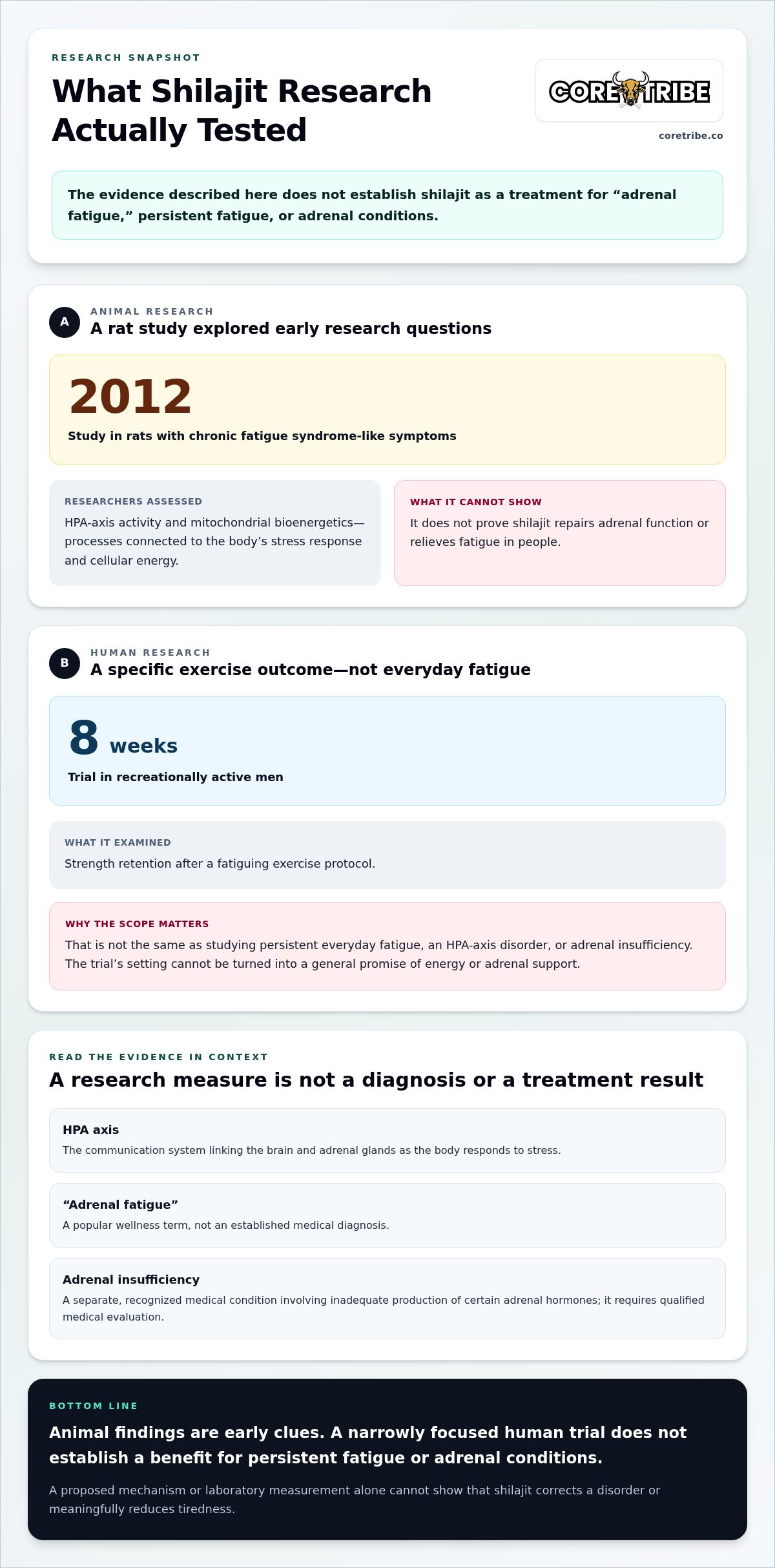
In brief: “Adrenal fatigue” is a wellness label, not a confirmed disorder. Adrenal insufficiency is a recognized medical condition in which the body doesn’t make enough of certain adrenal hormones, and it requires qualified medical evaluation.
Adrenal fatigue versus adrenal insufficiency
The names sound similar, but they shouldn’t be used interchangeably. “Adrenal fatigue” is commonly applied to a broad collection of complaints, often with the idea that stress has exhausted the adrenal glands. Major medical organizations, including the Endocrine Society, don’t recognize it as a diagnosis. Adrenal insufficiency, by contrast, describes inadequate hormone production and has defined medical causes and evaluation. A clinician determines whether it may be present; a symptom description alone can’t do that.
This distinction matters because a label can shape what someone does next. Assuming that tiredness proves an adrenal problem may encourage self-treatment and distract from other explanations. A wellness questionnaire or online symptom list can’t establish adrenal dysfunction, and matching common experiences to a checklist isn’t a substitute for medical assessment.
Why persistent fatigue deserves a broader view
Fatigue is a symptom, not an explanation in itself. It can be associated with many factors, including sleep problems, anemia, thyroid disorders, depression, medicines, or other health concerns. These examples aren’t a way to identify your own cause; they show why the same feeling of low energy can call for different next steps. The adrenal glands aren’t necessarily responsible.
There’s no single duration of tiredness that confirms “adrenal fatigue,” and a wellness quiz can’t measure whether your adrenal glands are functioning normally. If fatigue persists, worsens, or concerns you, arrange an evaluation with a qualified clinician rather than relying on a self-assigned label. Make that conversation more useful by noting when the tiredness began, how it changes through the day, and whether anything seems to affect it. Bring questions about medicines and supplements, too.
This context is useful before trying a supplement based on claims about shilajit for adrenal fatigue. First clarify what the term does and doesn’t mean, then consider shilajit research separately from the question of why you feel tired. The next section looks at what studies can suggest and where their limits remain.
What Shilajit Research Says About Fatigue, the HPA Axis, and Human Evidence
Shilajit is discussed in wellness circles for energy and stress support, but those claims need to be separated from what research has actually tested. The hypothalamic-pituitary-adrenal (HPA) axis is the communication system linking the brain and adrenal glands as the body responds to stress. A change in an HPA-axis measure in a study doesn’t, by itself, show that a supplement corrects a disorder or meaningfully reduces tiredness.
The Endocrine Society’s explanation of adrenal fatigue provides useful context: the popular term isn’t a recognized medical condition. A laboratory result or animal experiment should not be read as evidence that shilajit treats a human adrenal problem.
What the rat study did, and did not, test
A 2012 study examined shilajit in rats displaying chronic fatigue syndrome-like symptoms. Researchers assessed outcomes including HPA-axis activity and mitochondrial bioenergetics, which concern processes involved in cellular energy. These measurements came from an animal model. They don’t prove that shilajit repairs adrenal function or relieves fatigue in people, and the study didn’t test whether shilajit treats the popular concept of “adrenal fatigue.”
Evidence statement: The 2012 rat study explored chronic fatigue syndrome-like symptoms and HPA-axis and mitochondrial measures in animals. It cannot establish that shilajit is effective for human fatigue or “adrenal fatigue.”
Preclinical research can help researchers explore questions for future investigation. But differences between an animal model and human health mean those results are an early research clue, not a treatment recommendation.
How to read claims about human benefits
Human studies offer a different kind of evidence, but the outcome they test matters. For example, an eight-week trial in recreationally active men examined strength retention after a fatiguing exercise protocol. That isn’t the same as studying persistent everyday fatigue, an HPA-axis disorder, or adrenal insufficiency. A result in one group and one specific setting can’t be stretched into a general promise of energy or adrenal support.
To establish a health benefit, human clinical trials need to assess outcomes that matter to people, such as fatigue or daily functioning, and use a design that can distinguish an effect from chance or expectation. Traditional use, a proposed mechanism, or a laboratory measurement alone doesn’t meet that bar.
The evidence described here doesn’t establish shilajit as a treatment for adrenal fatigue. Claims that it repairs the adrenal glands, balances cortisol, or guarantees more energy go beyond these findings. If you’re exploring shilajit as a supplement rather than a treatment, you can view shilajit supplement options while keeping the evidence and your health needs in perspective.
Can Shilajit Help Adrenal Fatigue? Separate Plausible Claims from Proven Care
The direct answer: current evidence doesn’t establish that shilajit is effective for “adrenal fatigue.” This doesn’t prove future research could never find a benefit for a particular outcome. It means the available evidence shouldn’t be presented as proof that shilajit treats adrenal dysfunction, persistent fatigue, or a condition that isn’t medically recognized.
Claims about shilajit for adrenal fatigue can sound persuasive when they combine traditional use, proposed effects on stress pathways, and studies of fatigue. But these are different kinds of information. A plausible biological explanation is a reason to investigate, not evidence that people will experience a meaningful benefit.
Popular shilajit claims versus what the evidence supports
| Popular claim | Evidence type | What can reasonably be concluded |
|---|---|---|
| Shilajit helps “adrenal fatigue” | No clinical evidence cited here establishes this | Effectiveness for this claim hasn’t been demonstrated. |
| Shilajit supports energy or relieves fatigue | A fatigue-related rat study; limited human research on other outcomes | Animal findings don’t prove human benefit, and results from a different human outcome can’t establish relief of ongoing fatigue. |
| Shilajit balances cortisol or repairs adrenal function | Claims that require direct, relevant human evidence | The evidence discussed here doesn’t show that shilajit changes cortisol or repairs adrenal glands in people. |
The fatigue-related study discussed earlier was preclinical: it used rats, not people. It examined measures including HPA-axis activity and mitochondrial processes, but those measurements don’t demonstrate a treatment effect in humans. Likewise, an exercise study measuring strength after exertion doesn’t answer whether a supplement improves persistent fatigue or treats an adrenal condition.
Traditional use can be meaningful cultural and historical context, but it isn’t a substitute for well-designed human trials. “Natural” doesn’t automatically mean proven, risk-free, or appropriate for everyone. Shilajit products can vary, and contamination is a concern with poorly sourced material. A certificate of analysis from an independent laboratory can provide useful information about product testing, but it doesn’t establish that the supplement treats fatigue.
Why a supplement is not a substitute for evaluation
A supplement can’t identify why you’re tired, confirm adrenal dysfunction, or rule out a medical condition. Don’t use it to delay an assessment or replace prescribed care. If you’re considering a product, discuss it with a qualified clinician, especially if you take medicines or have a diagnosed condition. For ingredient-specific cautions, see this shilajit, sea moss, and ashwagandha side effects guide.
Keep the conclusion measured: shilajit remains a subject for research, not a proven answer to “adrenal fatigue.” Any future claim should rest on relevant human evidence, not a mechanism, tradition, or animal finding alone.
A Safer Next Step for Ongoing Fatigue: Evaluation, Context, and Supplement Caution
Persistent fatigue warrants assessment, not self-diagnosis as “adrenal fatigue.” Gather useful context and discuss the changes you’re experiencing with a qualified healthcare professional. This keeps the focus on understanding your health rather than treating a label or relying on a supplement to explain what’s happening.
How to prepare for a healthcare conversation
Before your appointment, make brief notes about what has changed and when. You don’t need to interpret the symptoms or decide what tests you need. Clear notes can help you describe the pattern and leave diagnosis and evaluation decisions to the professional.
- Track the timeline. Note when the fatigue began, whether it is steady or comes and goes, and what time of day it feels strongest.
- Record sleep and daily demands. Include sleep patterns, changes in routine, and how tiredness affects work, household tasks, exercise, or other usual activities.
- List medicines and supplements. Write down what you take, including shilajit or other wellness products, and bring the product labels if available.
- Share changes and concerns. Mention whether the pattern has improved, worsened, or changed, and ask what evaluation is appropriate for your situation.
Specific details can make the conversation more useful. For example, “I feel tired” gives less context than “my energy is lower in the afternoon, and I’ve stopped doing my usual evening walk.” These notes don’t diagnose a cause, but they help explain how fatigue affects daily life.
Questions to consider before using shilajit
If you’re considering shilajit for adrenal fatigue, approach it as a supplement decision, not a way to confirm or treat an adrenal condition. Review the full product label and ingredient list, and discuss them with a qualified healthcare professional, particularly if you take medicines or have a health condition. Ask about possible interactions and whether the product is appropriate for your circumstances.
Quality deserves attention, too. Shilajit can be vulnerable to heavy-metal contamination, so ask what information is available about independent testing, including a certificate of analysis. Don’t assume that a natural source or traditional use guarantees purity or safety. A label or test report can inform a product decision, but it can’t establish that shilajit will relieve fatigue.
The information here doesn’t support one dose or duration for everyone. Avoid starting a supplement in place of prescribed treatment or postponing an evaluation while waiting to see whether it helps. If you’re exploring shilajit as a supplement, view available shilajit supplement options and review the product information with your health needs in mind.
Considering Coretribe Shilajit? Choose It as a Supplement, Not an Adrenal Treatment
After reviewing what research can and can’t establish, you may consider shilajit as a supplement while keeping health claims in perspective. Coretribe ® Pure Shilajit Capsules - Mixed Sea Moss & Ashwagandha combines shilajit with sea moss and ashwagandha. It is not a treatment for “adrenal fatigue,” adrenal insufficiency, or persistent fatigue, and choosing it doesn’t confirm or address the cause of tiredness.
A supplement can be part of someone’s wellness routine, but it can’t replace an evaluation or prescribed care. If fatigue is ongoing, worsening, or concerning, discuss it with a qualified healthcare professional rather than relying on a product to resolve it.
What to consider when browsing a shilajit supplement
Start with the label, not broad promises about energy or adrenal support. Read the current ingredient list so you understand what the product contains, especially if it combines shilajit with other ingredients. For a blend, consider each ingredient rather than assuming a familiar name makes the whole formula suitable for you.
Your personal circumstances matter, too. Medicines, health conditions, and individual sensitivities may affect whether a supplement is appropriate. Discuss the product and its full ingredient list with a qualified professional before adding it to your routine, particularly if you take medication or are managing a health condition. Don’t assume that “natural” means risk-free.
Shilajit quality is another consideration. Poorly sourced or unpurified material may contain heavy metals, so look for clear information about product quality and independent testing. Don’t infer a specific certification, testing standard, or safety guarantee from general marketing language. If available, a certificate of analysis can show what a laboratory tested; it doesn’t prove that the supplement treats fatigue or is right for every person.
Keep wellness choices grounded in the evidence
Searches for shilajit for adrenal fatigue can lead to strong claims, but buying a supplement doesn’t establish an adrenal diagnosis or treat one. Keep the supplement decision separate from the question of why you feel tired. Review the label, consider your health context, and seek professional guidance where needed, without treating a supplement as a substitute for assessment.
For a broader look at the ingredients in this blend, explore the shilajit, ashwagandha, and sea moss synergy guide. If you’re considering a shilajit supplement as a wellness option, you can also browse the Coretribe supplement collection and review the product information at your own pace. The aim is an informed choice, not a promised health outcome.
Take Your Next Step With Care and Clarity
Let your next step be guided by what matters most to your health, not by a label that promises a simple explanation. If fatigue is affecting your daily life, bring your notes and questions to a qualified healthcare professional. If you’re considering shilajit for adrenal fatigue, keep the decision grounded in evidence and treat any supplement as a wellness choice, not a substitute for understanding persistent symptoms.
For those exploring shilajit supplements, Coretribe offers Pure Shilajit Capsules blended with Sea Moss and Ashwagandha, as well as Shilajit Honey Sticks. Neither product is presented as a treatment for fatigue or an adrenal condition. Review product information thoughtfully and consider your individual circumstances as you decide what fits your routine.
Browse Coretribe supplements and review the product information as you consider your options.
Frequently Asked Questions
Is adrenal fatigue a real medical diagnosis?
No. “Adrenal fatigue” is a popular wellness phrase, not an established medical diagnosis, and using it doesn’t explain why someone feels tired. Adrenal insufficiency is a different, recognized condition that requires medical evaluation. If fatigue is affecting your routine, describe the specific changes you’ve noticed rather than arriving with a fixed conclusion. For example, note whether it affects concentration, activity, or your ability to manage usual responsibilities.
Can shilajit help with adrenal fatigue?
Current evidence doesn’t establish that shilajit treats adrenal fatigue or adrenal insufficiency. The fatigue-related research described here involved rats, so it can’t confirm a benefit in people. A study of a different outcome, such as exercise performance, also wouldn’t prove that shilajit relieves persistent tiredness. If you’re considering shilajit for adrenal fatigue, discuss the specific product with a qualified healthcare professional, especially if you take medication.
Does shilajit lower or balance cortisol?
The research discussed here doesn’t show that shilajit balances cortisol in people. Measuring HPA-axis-related outcomes in an animal study isn’t the same as demonstrating a meaningful human effect. Cortisol results need to be interpreted in the context of a person’s health and the reason testing is being considered. Don’t use a supplement or an online test to draw conclusions about your adrenal function; raise your questions with a healthcare professional instead.
What happens if persistent fatigue is mistaken for adrenal fatigue?
Focusing only on that label may narrow the conversation before the reason for fatigue has been assessed. For instance, someone might keep trying wellness products without explaining how tiredness has changed their work or daily routine. If fatigue persists, worsens, or interferes with everyday activities, arrange a healthcare conversation. A brief record of when symptoms occur and what has changed can help you describe the situation without trying to diagnose yourself.
Is shilajit safe to take with medication?
There isn’t enough information here to say that shilajit is safe with every medication or for every person. Before combining them, show a qualified healthcare professional or pharmacist the exact product label, including all ingredients. This is particularly important if you have a health condition or use several supplements, since the full combination matters. Don’t stop, reduce, or replace prescribed medication to try shilajit; discuss any treatment changes with the prescriber.
How can I tell whether a shilajit supplement is right for me?
No single label can determine whether a supplement suits your individual circumstances. Read the current ingredient list, consider why you’re interested in taking it, and discuss the product with a qualified healthcare professional if you have a health condition or use medication. Be cautious of wording that promises adrenal repair or guaranteed energy. A purchase doesn’t investigate persistent fatigue, and current evidence doesn’t establish shilajit as a treatment for adrenal conditions.
When should I speak with a doctor about fatigue?
Consider arranging an appointment if fatigue persists, gets worse, concerns you, or interferes with everyday activities. You don’t need to wait until you have a theory about its cause. Before the conversation, note when the tiredness occurs, how it affects your routine, and any relevant changes you’ve noticed. Bring a current list of medicines and supplements, including shilajit, so the healthcare professional can consider them as part of your circumstances.

