


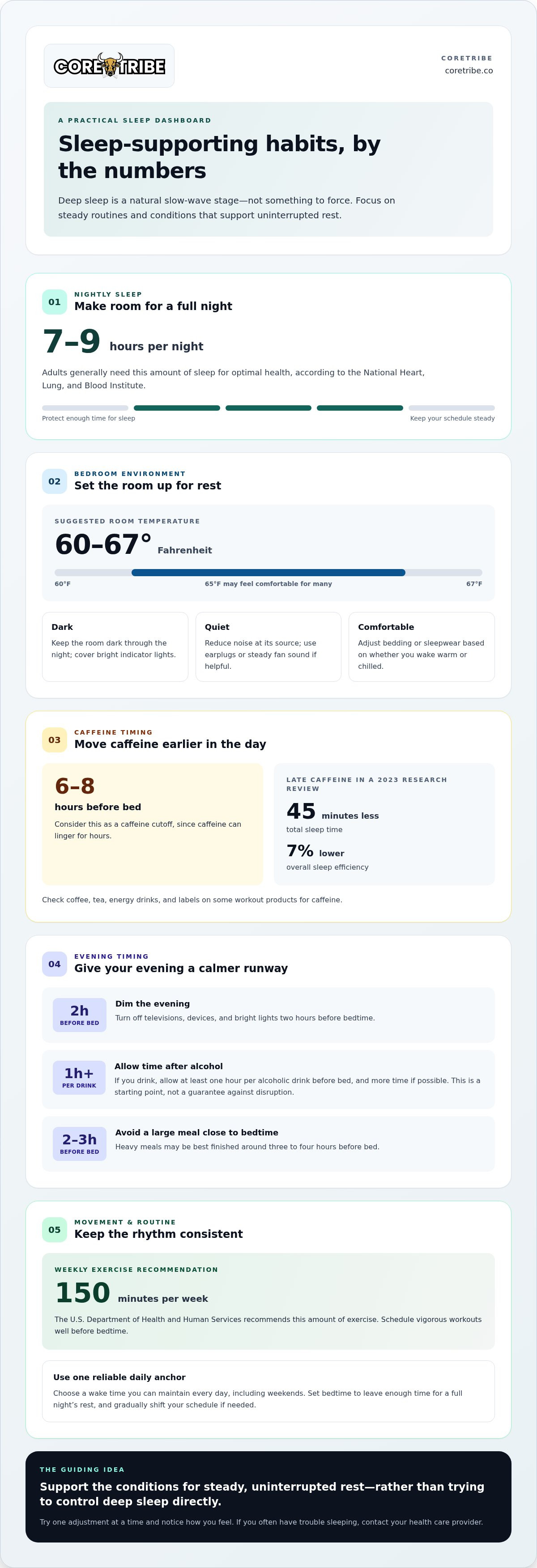
Deep sleep isn’t a stage you can force; it’s slow-wave sleep that your body moves through naturally. To understand how to improve deep sleep quality, focus on habits that support steady, uninterrupted rest: keep regular sleep and wake times, create a dark, quiet, cool bedroom, and avoid intense exercise close to bedtime. Adults generally need seven to nine hours of sleep per night for optimal health, according to the National Heart, Lung, and Blood Institute.
If you wake feeling unrefreshed, you may wonder whether you’re getting enough deep sleep. Rather than trying to control a particular sleep stage, focus on conditions that support a good night overall. This guide explains what you can adjust, including bedroom temperature, light, daily routines, caffeine, and exercise timing, to support better sleep quality. Try the practical changes consistently and see which ones help you build a calmer, more restorative rhythm.
Key Takeaways
- Make your bedroom dark, quiet, and comfortably cool to create conditions that support uninterrupted rest.
- Pay attention to when you consume caffeine, alcohol, and nicotine, since these habits can affect sleep through the night.
- Keep sleep and wake times consistent, including on weekends, to reinforce your regular sleep-wake rhythm.
- The U.S. Department of Health and Human Services recommends 150 minutes of exercise per week; schedule vigorous workouts well before bedtime.
- Deep sleep is slow-wave sleep, a natural stage you can support through steady habits rather than trying to control directly.
1. Bedroom darkness, quiet, and temperature
Even a bedroom that feels calm can have sleep disruptors. Start with three basics: darkness, quiet, and a comfortable temperature. A cool, quiet, dark room can make it easier to fall asleep. These changes improve your sleep environment, but they can’t directly control how much deep sleep your body produces.
For temperature, try setting the room between 60 and 67 degrees Fahrenheit. Around 65°F may feel comfortable for many people, though personal preferences and habits vary. If you wake feeling too warm, adjust the thermostat, bedding, or sleepwear. If you feel chilled, add a light layer rather than making the whole room warmer. Notice how you feel at bedtime and upon waking, then adjust one factor at a time.
Keep the room dark throughout the night, not just while you’re falling asleep. Close curtains or blinds, cover bright indicator lights, and use a dim lamp if you need to get up. Turn off televisions, devices, and bright lights two hours before bed. If your phone needs to stay nearby, silence notifications and place it face down, beyond easy reach. These steps help keep your bedtime routine calm and consistent.
Reduce noise at its source where possible. Close a door, move a ticking clock, or use earplugs if everyday household sounds interrupt your rest. A fan can provide steady background sound, while sudden alerts or television noise may draw your attention back to the room. Choose a solution that masks disruptive sounds without adding light or another disturbance.
Make your bedroom a place for sleep, not work or scrolling. Put your laptop away before starting your evening routine and keep charging devices away from the bed. Then add a repeatable wind-down step, such as reading a printed book under soft light. A familiar sequence signals the transition from daytime activity to bedtime.
Try these adjustments for several nights before changing them. If the room is dark and cool but noise still wakes you, focus next on sound. If you often struggle to sleep even in a suitable environment, persistent insomnia or another sleep disorder may need attention. Contact your health care provider if you often have trouble sleeping.
2. Limiting alcohol, caffeine and nicotine
A nightcap may make you feel sleepy at first, but alcohol can disrupt sleep later in the night and affect sleep architecture, including restorative deep sleep. Notice whether drinking is followed by more awakenings or less refreshing rest. If you drink, allow at least one hour per alcoholic drink before bed, and more time if possible. This is a practical starting point, not a guarantee against sleep disruption.
Caffeine can linger for hours, so timing matters as much as the drink itself. A 2023 research review found that late caffeine consumption reduced total sleep time by 45 minutes and overall sleep efficiency by 7%. Consider setting a caffeine cutoff six to eight hours before bedtime. For example, if you plan to sleep at night, move coffee, tea, and energy drinks earlier in your day. Check labels for caffeine in unexpected items, including some workout products.
Nicotine is stimulating, and its effects can take hours to wear off. Smoking or vaping near bedtime may make it harder to wind down. Notice when you use nicotine, especially during evening breaks, and consider shifting the habit earlier. Avoid substituting extra caffeine, which can prolong stimulation. If stress prompts evening use, try a quieter transition, such as a warm shower or gentle breathing.
Meal timing can affect how comfortable you feel at night. Avoid a large meal within two to three hours of bedtime. Heavy meals may be best finished around three to four hours before bed. If hunger interrupts your evening, choose a modest snack instead of a large, rich meal. Spicy or fatty foods bother some people, so note whether they affect your rest and adjust accordingly.
Screen habits can reinforce or undermine these changes. Late coffee while watching a bright screen combines caffeine with an alerting evening routine. Turn off televisions, devices, and bright lights two hours before bed, then choose a low-key activity. For several nights, note when you have caffeine, alcohol, nicotine, or late meals, along with any awakenings. Look for patterns to identify which habit may be most useful to change first.
Try one adjustment at a time, such as moving your last coffee earlier, and observe how your nights feel. Avoid changing every habit at once, since that makes cause and effect harder to see. For a broader wellness routine, explore wellness essentials alongside these practical sleep habits.
3. Consistent sleep and wake times
Contact a health care provider if sleep problems happen often or affect your daily life. Loud snoring, gasping, or choking during sleep can signal sleep apnea and warrant evaluation. These signs need attention beyond adjustments to your bedtime routine.
Choose a wake time you can maintain every day, including weekends. Set a bedtime that leaves enough time for a full night’s rest. A steady schedule reinforces your body’s sleep-wake rhythm, helping it anticipate when to feel alert and when to wind down. If your current routine varies widely, gradually shift bedtime and wake time toward your preferred schedule.
Keep your schedule consistent on weekends, too. A two-day shift can take several days to correct, so avoid treating Saturday and Sunday as a reset. If work or family commitments affect your morning, keep the difference as small as practical. A reliable wake time also gives you a useful anchor for morning light, meals, and daytime activity.
Research reviewing 41 studies examined sleep timing, consistency, and adult health. The practical lesson is to look at your pattern across the week, not just one night. For several days, write down when you go to bed, when you wake, and whether you nap. This simple record can show whether late nights or changing wake times coincide with difficulty falling asleep.
Naps can help with daytime tiredness, but long or late naps may make nighttime sleep harder. Keep a nap to 20-30 minutes and take it earlier in the afternoon. If you regularly nap because nights feel unrefreshing, note that pattern rather than extending the nap. Persistent fatigue despite a steady schedule deserves attention, especially alongside loud snoring or interrupted breathing.
Build a repeatable sequence around your bedtime. For example, prepare clothes for tomorrow, dim the lights, and read a few pages before getting into bed. Follow a similar order each night, even after a stressful day. If you’re awake and frustrated, get out of bed for a quiet activity, then return when sleepy. This helps keep the bed associated with rest rather than prolonged wakefulness.
A consistent schedule won’t address every cause of ongoing sleep difficulty. If trouble sleeping continues despite a steady routine, discuss it with a health care provider or clinic. Mention changes in sleep timing, daytime effects, and symptoms such as gasping or choking. An evaluation can help identify whether insomnia, sleep apnea, or another issue is disrupting your rest.
4. Exercise timing
Regular physical activity can support better sleep, but a workout too close to bedtime may feel stimulating. Build movement into your week and notice how its timing affects your ability to fall asleep. For example, compare an afternoon walk with a vigorous evening session while keeping your bedtime steady.
The Physical Activity Guidelines for Americans recommend 150 minutes of exercise per week, according to the U.S. Department of Health and Human Services. Spread activity across the week in a way that suits your schedule. Brisk walking, cycling, and other movement can contribute. Choose an activity you can repeat comfortably, rather than relying on occasional intense sessions.
Finish vigorous exercise at least three hours before bedtime. Intense workouts may leave you feeling alert and make it harder to settle down right away. If you usually exercise in the evening, try moving your session earlier and note whether you fall asleep more easily. Near bedtime, a gentler activity, such as relaxed stretching, may be a better fit.
Morning movement is another practical option. An outdoor walk after waking combines physical activity with bright daylight, which can support your circadian rhythm. Walk to a nearby destination or take a short route before starting work. This brings activity earlier in the day without requiring a complex workout plan.
Choose a workout that fits your energy and routine. If a demanding session leaves you alert late at night, shift it earlier rather than giving up exercise. If evening is your only available time, choose a lower-intensity activity and observe how it affects your sleep. A large meal immediately before vigorous movement may also feel uncomfortable, so allow time to digest.
Use a simple record to identify patterns. Note the activity, when you did it, and whether you felt ready for sleep at bedtime. Include late workouts, rest days, and morning walks. After several entries, look for links between exercise timing and nighttime awakenings. This can help you adjust one part of your routine instead of changing everything at once.
Exercise supports overall sleep habits, but it isn’t a direct switch for deep sleep. Your body regulates sleep stages naturally, and physical activity is one part of your broader daily rhythm. Keep movement regular, protect time to wind down, and avoid sessions that make it harder to settle. A sustainable plan should fit your schedule, not add stress.
5. Deep sleep and slow-wave sleep
Deep sleep, also called slow-wave sleep or N3, is the third stage of non-REM sleep. During it, brain waves slow, breathing and blood pressure decrease, and muscles relax. This stage supports physical recovery, immune function, memory consolidation, and cognitive performance.
For adults, deep sleep typically accounts for about 10-20% of nightly sleep and occurs mostly during the first half of the night. The body regulates sleep stages naturally, so trying to force extra minutes of deep sleep usually isn’t a useful goal. Understanding how to improve deep sleep quality starts with supporting a full, steady night, rather than chasing a particular stage.
Sleep supplements such as melatonin or magnesium aren’t established here as ways to increase deep sleep. Research has examined melatonin doses from 0.1 to 10 milligrams taken up to 2 hours before bedtime; a studied dose range doesn’t establish benefit or safety. Risks depend on the supplement, dose, health conditions, and medicines, so discuss use with a health care professional.
Sleep trackers can estimate sleep stages, but their readings aren’t exact measurements. A study compared 11 consumer sleep trackers across sleep stages, so treat a nightly deep-sleep score as an estimate, not a diagnosis. Look for patterns across nights and give more weight to how rested you feel during the day.
Insomnia and sleep apnea can interrupt sleep and reduce opportunities for uninterrupted deep sleep. Some medications can also affect sleep, though the effects depend on the medicine and the person. If your sleep changes after starting or adjusting medication, discuss the timing with the prescribing professional rather than stopping treatment on your own.
For a practical check, keep a simple sleep diary for several nights. Record bedtime, wake time, awakenings, exercise, and how alert you feel the next day. If you use a tracker, compare its estimates with your own observations. These details can help you understand how to improve deep sleep quality through changes that fit your routine.
Keep a steady schedule, limit late caffeine, and allow time to wind down. These habits support overall sleep, rather than targeting one stage directly. If you’re exploring supplements as part of a broader wellness routine, explore Shilajit Supplements, without treating them as a proven deep-sleep aid.
Coretribe: Coretribe ® Pure Shilajit Capsules - Mixed Sea Moss & Ashwagandha
Coretribe ® Pure Shilajit Capsules - Mixed Sea Moss & Ashwagandha can be one supplement option within a broader wellness routine. Consider them a supplement, not a way to control deep sleep or replace the daily habits discussed above. Sleep quality depends on factors such as a steady schedule, a supportive bedroom, and mindful exercise timing. Supplements are not a substitute for medical evaluation when ongoing sleep problems or symptoms such as gasping disrupt rest. Focus on consistent routines and consider supplements only as part of your wider approach to wellbeing. For more information about Coretribe, visit Coretribe.
Build a Sleep Routine That Lasts
Learning how to improve deep sleep quality is less about chasing a perfect night and more about building a rhythm you can sustain. Choose one habit to maintain this week, then observe how your energy and rest respond. Small, steady adjustments can help you discover what supports your routine without turning sleep into another source of pressure.
For a broader wellness routine, Coretribe offers Coretribe ® Pure Shilajit Capsules - Mixed Sea Moss & Ashwagandha, Coretribe®Shilajit Honey Sticks, and Revive Dress. These products are part of its wellness range, not treatments for sleep difficulties. Ongoing sleep problems or signs such as gasping during sleep warrant a conversation with a health care provider.
Explore Coretribe’s wellness offerings as you shape habits that fit your everyday life. Keep your next step simple, and give your routine room to become consistent.
Frequently Asked Questions
What Is Deep Sleep?
Deep sleep is the third stage of non-REM sleep, also called N3 or slow-wave sleep. Brain waves slow, breathing and blood pressure decrease, and muscles relax during this stage. It supports physical recovery, immune function, memory consolidation, and cognitive performance. Deep sleep generally occurs more during the first half of the night, so repeated interruptions then can affect how restorative sleep feels.
How can I get better at falling asleep?
Make the transition to bed a predictable sequence, such as putting away work, washing up, and reading quietly. If your mind races, try journaling or focused breathing for 10-15 minutes. If you’re still awake after about 20 minutes, leave the bedroom and do something relaxing until you feel sleepy. Return to bed then, rather than turning the bed into a place for prolonged frustration.
What is the 10-3-2-1-0 rule for sleep?
The 10-3-2-1-0 rule is a countdown-style sleep routine, but its exact steps can vary. A useful part of the approach is stopping caffeine well before bedtime: one version recommends avoiding it starting 10 hours beforehand. Other practical cutoffs include finishing vigorous exercise at least 3 hours before bed and turning off bright devices 2 hours beforehand. Treat the sequence as a planning aid, not a substitute for habits that fit your needs.
What is deep sleep and how much do adults need per night?
Deep sleep is the N3 stage of non-REM sleep. Adults typically spend about 10-20% of their nightly sleep in this stage, though the amount varies naturally. The National Heart, Lung, and Blood Institute says adults generally need seven to nine hours of sleep per night for optimal health. Focus first on getting sufficient total sleep, rather than trying to reach a precise deep-sleep score.
What habits and lifestyle changes improve deep sleep quality?
Build a routine around regular sleep timing, a restful bedroom, and daily activity. For example, take a morning walk, keep evening light low, and avoid late stimulants. These habits support the conditions for sleep, but they can’t command a particular sleep stage. To track changes, note your bedtime and how rested you feel the next day. This can help you identify which adjustments suit your routine.
How do consistent sleep schedules affect deep sleep?
Regular bedtimes and wake times help reinforce your body’s sleep-wake rhythm. A schedule that shifts sharply on weekends can make it harder to return to weekday timing, so keep wake-up times reasonably close throughout the week. If your work schedule changes, choose the most consistent sleep window your commitments allow. Track the pattern alongside your daytime alertness, since a steady routine is more informative than judging sleep by a single night.
What bedroom temperature, light, and noise levels support deep sleep?
A quiet, dark, cool bedroom supports falling asleep. A commonly recommended temperature range is 60 to 67 degrees Fahrenheit, with personal comfort guiding adjustments. Block outdoor light with curtains and cover bright device indicators. Reduce interruptions by silencing notifications and addressing recurring household noise. Turn off televisions, devices, and bright lights 2 hours before bed to create a calmer transition into sleep.
How do caffeine, alcohol, nicotine, and late meals affect deep sleep?
Late caffeine can shorten and fragment sleep; a 2023 review found reduced total sleep time and sleep efficiency. Alcohol can initially make you sleepy but disrupt sleep later, while nicotine’s stimulating effects can interfere with winding down. Avoid large meals close to bedtime, and finish heavy meals earlier. Keep a simple log of evening caffeine, alcohol, nicotine, and food to see which patterns coincide with waking or feeling unrefreshed.

