


Beets aren’t a cleanse, but they can be part of a balanced eating pattern that supports liver health. Foods that support liver detoxification include beets, berries, walnuts, leafy greens, and cruciferous vegetables such as broccoli. No single ingredient replaces the liver’s natural work, but varied, nourishing meals can support healthy function.
It makes sense to look for everyday foods that support your liver, especially when “detox” claims make it hard to know what belongs on your plate. A useful starting point is simple: focus on whole foods and treat any one ingredient as part of the bigger picture, not a quick fix.
Here, you’ll learn how beets may fit into liver-supportive eating, along with the potential roles of walnuts, berries, greens, and other practical choices. You’ll also find easy ways to bring these foods into meals while keeping the focus on steady, balanced habits.
Key Takeaways
- Build meals around a variety of vegetables, fruit, whole grains, and protein rather than relying on one “detox” food.
- Add walnuts or other sources of omega-3 fats to meals as part of a balanced eating pattern.
- Use citrus, including grapefruit, for flavor, while keeping in mind that grapefruit can interact with some medications.
- Enjoy blueberries and cranberries as fruit options, and vary your choices to benefit from a wider range of plant foods.
- Try beets in meals or drinks as one more colorful addition to a liver-supportive diet.
1. What foods are good for healthy liver function?
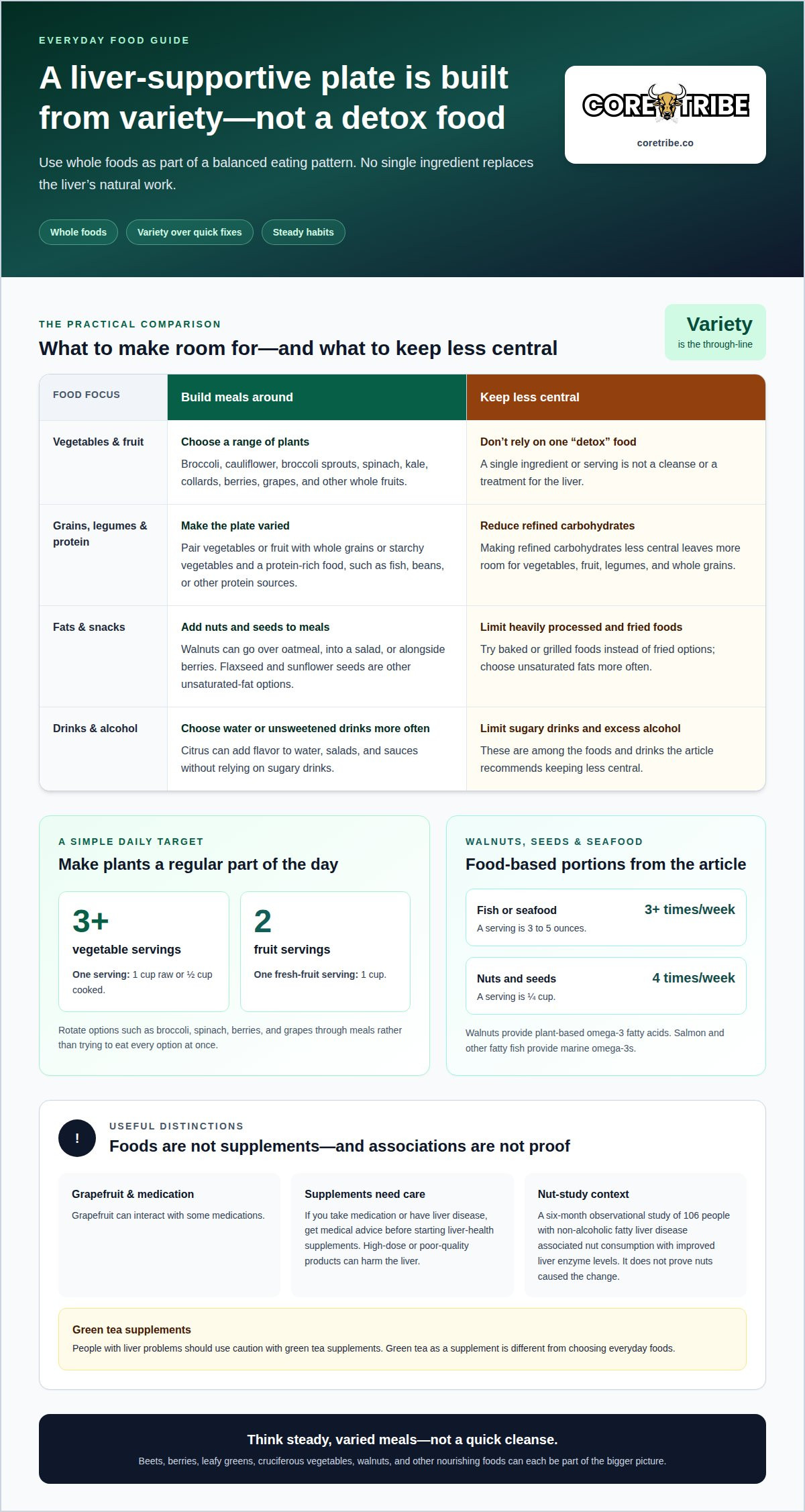
Build meals around vegetables, fruits, whole grains, legumes, and protein foods rather than one “detox” ingredient. Berries, leafy greens, and cruciferous vegetables are practical choices. A varied plate provides different plant compounds and fiber as part of an eating pattern that supports metabolic health. Think of foods that support liver detoxification as everyday ingredients, not a quick cleanse.
Broccoli, cauliflower, and other cruciferous vegetables contain glucosinolates, compounds associated with the liver’s production of detoxification enzymes. Broccoli sprouts offer another way to eat broccoli, such as in a salad or sandwich. Cruciferous vegetables also contain indole, a compound linked with lower liver fat. These associations don’t mean one serving can cleanse or treat the liver; they reinforce the value of regularly eating a range of vegetables.
Spinach, kale, and collards add leafy greens to meals, while blueberries and cranberries offer colorful fruit options. Grapes and other whole fruits can round out snacks or meals. Research on grape seed extract has reported improved liver function among people with non-alcoholic fatty liver disease after three months. Extract is different from eating grapes, so keep that distinction in mind.
Foods and drinks to limit include heavily processed and fried foods, sugary drinks, excess alcohol, and refined carbohydrates. Making these less central leaves more room for vegetables, fruits, legumes, and whole grains. Choose water or unsweetened drinks more often than sweetened beverages, and try baked or grilled foods instead of fried options.
For overall liver health, choose a varied eating pattern that includes fruits, vegetables, legumes, whole grains, and protein foods. Fish, beans, and other protein sources complement plant foods, while nuts provide healthy fats. A practical plate could include nonstarchy vegetables or fruit alongside whole grains or starchy vegetables and a protein-rich food. This is a useful framework for including foods that support liver detoxification without relying on a single ingredient.
A practical daily target is at least three servings of vegetables and two servings of fruit. One vegetable serving is 1 cup raw or 1/2 cup cooked; one fresh-fruit serving is 1 cup. Rotate broccoli, spinach, berries, and grapes through meals rather than trying to eat every option at once.
If you take medication or have existing liver disease, get medical advice before starting supplements for liver health. High-dose or poor-quality products can harm the liver, and people with liver problems should use caution with green tea supplements. Food choices can support balanced eating, but supplements require more care.
2. Walnuts and omega-3 fatty acids
Walnuts add plant-based omega-3 fatty acids to meals, along with other nutrients such as arginine and glutathione. Their role is best understood as part of an overall eating pattern, not as a stand-alone liver treatment. Sprinkle chopped walnuts over oatmeal, mix them into a salad, or pair them with berries for a simple snack.
Walnuts are one source of healthy fats, but they aren’t the only option. Flaxseed and sunflower seeds offer other unsaturated fats, while salmon and other fatty fish provide marine omega-3s. These foods can help bring variety to meals, alongside lean proteins such as chicken or turkey and plant proteins such as beans and lentils. Broccoli can round out a plate with vegetables and fiber.
A six-month observational study involving 106 people with non-alcoholic fatty liver disease associated nut consumption with improved liver enzyme levels. Because it was observational, the finding doesn’t prove that nuts caused the change. It does offer a reason to include nuts as one component of a balanced pattern, rather than relying on a supplement or a single food to improve liver function.
For a practical rhythm, include fish or seafood three or more times a week, and nuts and seeds four times a week. A serving of fish or seafood is 3 to 5 ounces; a serving of nuts and seeds is 1/4 cup. These portions can be worked into familiar meals: try salmon with brown rice, or add walnuts to breakfast. Omega-3 supplements are different from food sources and should be taken under a doctor's supervision.
Fatty liver can be influenced by several factors, including diet, alcohol use, weight, and metabolic health. Lifestyle changes can often improve fatty liver, especially in its early stages. A steady approach might include replacing refined grains with whole grains, choosing unsaturated fats more often, and limiting highly processed foods. Regular physical activity can complement these changes, while a restrictive “detox” plan is no substitute for balanced eating.
For people with metabolic dysfunction-associated steatotic liver disease (MASLD), gradual weight loss can improve the condition. Losing 5% to 10% of body weight can significantly improve MASLD, and people with the condition typically should not drink alcohol. These are health considerations, not a reason to assume that walnuts or omega-3s reverse liver disease on their own. Keep food changes consistent, and treat supplements as a separate decision from choosing whole foods.
3. What to Eat for Liver Detox and Cooling?
Grapefruit adds a distinctive citrus flavor and plant antioxidants to meals. It contains naringin and naringenin, compounds associated with reduced inflammation and protection from liver damage. Add grapefruit segments to breakfast or pair them with other fruit for a refreshing snack. Citrus fruits can also brighten salads, sauces, and water without relying on sugary drinks.
Antioxidants are found across many colorful foods, not in one special “detox” ingredient. Blueberries and cranberries are examples, while leafy vegetables and other fruits add variety. Green tea contains catechins, plant-based antioxidants associated with improved liver function. A study involving people with non-alcoholic fatty liver disease found improved liver enzyme levels after 12 weeks of consuming antioxidant-rich green tea.
Beetroot is another colorful option. If you include beetroot juice in a liver-health routine, the suggested amount is 1 cup daily. You can also roast beets, grate them into a salad, or blend them with other vegetables. These choices make beets an easy dietary addition, rather than a stand-alone cleanse or a replacement for balanced meals.
Avocados are associated with the body’s natural production of glutathione, which helps the liver rid itself of toxins. Add avocado to toast, grain bowls, or salads, and pair it with vegetables or beans. Glutathione contributes to the body’s antioxidant balance; eating avocado supports a varied diet, not an instant detox effect. Whole foods also provide nutrients beyond a single plant compound.
Do foods marketed as liver cleanses or detoxes work? No specific food or cleanse can replace the liver’s normal work or undo the effects of excess alcohol. A steady dietary pattern built around vegetables, fruits, whole grains, and protein is a more practical foundation than a short cleanse.
For everyday meals, combine an antioxidant-rich choice with other nourishing foods. Try grapefruit with oats, berries stirred into breakfast, or roasted beets alongside beans and leafy greens. Green tea can be a drink option, while water keeps hydration simple. These examples add color and variety to the plate without treating a single ingredient as a cure.
Keep foods and concentrated products distinct. Green tea as a drink is different from green tea extract, and people with pre-existing liver problems should use caution with green tea supplements. Similarly, grapefruit and beetroot are foods, not medicines. If liver disease or medication affects your diet, discuss relevant food and supplement choices with a healthcare professional.
4. Blueberries, cranberries, and liver protection
Blueberries and cranberries bring color and plant compounds to meals, and each can fit into a varied diet. Blueberries are associated with helping protect the liver from oxidative stress by reducing inflammation. Consuming blueberries or cranberries for 3-4 weeks has been shown to protect the liver from damage. These findings make berries a useful food choice, not a treatment for liver disease.
Use fresh or frozen berries in familiar ways: stir blueberries into oatmeal, add cranberries to a salad, or pair either fruit with plain yogurt. Unsweetened options make it easier to enjoy fruit without adding a sugary drink or dessert. Berries also pair well with leafy greens, beans, or whole grains, adding different textures and plant foods instead of focusing on one ingredient.
Protein choices matter in the wider dietary pattern, too. Beans, lentils, chicken, turkey, fish, and eggs can all provide protein for balanced meals. For example, combine beans with brown rice and greens, or serve lean chicken with broccoli. Plant-based meals can provide fiber along with protein, while fish offers another alternative to meals built around processed or fried foods.
A study reported that adults aged 50 to 80 who ate a diet high in plant proteins experienced a decrease in liver fat after 12 months. Higher dairy protein intake among people older than 50 was also associated with a decreased risk of MASLD. These findings concern dietary patterns and populations, rather than proving that one serving of beans or dairy prevents disease. Variety remains practical: rotate beans, lentils, eggs, and lean proteins through meals.
Olive oil can replace processed vegetable oils when preparing vegetables or grains. Try a small drizzle over cooked greens, or use it to dress a bean salad with berries on the side. This keeps the meal focused on whole-food ingredients and healthy fats, rather than presenting a particular oil as a liver remedy.
Weight and liver health can be connected, but food changes should remain sustainable. For people with MASLD, losing 5% to 10% of body weight can significantly improve the condition. Pairing balanced meals with regular activity supports an overall lifestyle approach; no berry, protein source, or cooking oil accomplishes that change alone. A practical plate might include beans or fish, vegetables such as broccoli, and a modest serving of whole grains.
Put these ideas into practice by adding berries to breakfast, choosing beans for a meal, and including greens or broccoli at dinner. These simple steps add variety throughout the day while keeping the focus on nourishing foods, not a short-term cleanse.
5. Beets and liver detoxification
Beets stand out for their deep color and their place in discussions about liver health. They’re associated with stimulating bile flow and boosting enzymatic activity, two processes connected with the liver’s everyday work. That makes beets a useful part of a varied eating pattern, not a stand-alone cleanse. The practical takeaway: enjoy beets as food alongside other nourishing choices.
Try roasted beets with lentils, grated raw beets in a salad, or cooked beets alongside fish. Beetroot juice is another option for people who enjoy its earthy flavor. If you include juice in your routine, a suggested serving is 1 cup daily. Choose a form that suits your meals, and don’t treat juice as a replacement for whole foods or balanced eating.
The compounds in beets contribute to the root’s distinctive color and make it an appealing addition to the plate. Their presence doesn’t mean beets can remove every unwanted substance from the body. The liver already carries out its own processing work. Beets fit best as one part of a broad dietary pattern, not as a shortcut that promises to prevent liver damage.
For variety, combine beets with foods from different plant groups. A grain bowl might bring together beets, beans, and leafy greens; another meal could pair beets with broccoli or cauliflower. Cruciferous vegetables provide a different mix of plant compounds, so rotating them with beets adds variety instead of relying on one vegetable. Different colors and textures can also make everyday meals more appealing.
Beets alone haven’t been established here as a treatment for fatty liver disease. A balanced pattern matters more than emphasizing one ingredient: include vegetables, fruits, whole grains, and protein foods, while limiting highly processed foods. If you have a liver condition, consider how a major dietary change fits with your care plan. Food choices can complement a health routine, but they don’t replace medical treatment.
To make beets easy to eat regularly, prepare them as part of a meal rather than as a detox challenge. Roast a batch to add to grain bowls, blend cooked beet into soup, or mix grated beet with greens. Pairing beets with beans or fish creates a more complete meal than drinking juice alone. Let taste and meal variety guide how they fit into your routine.
For a broader wellness routine alongside thoughtful food choices, explore liver wellness options.
Coretribe: Liver detox
Coretribe’s Liver detox offering is a natural option to complement balanced meals with a wellness product. It fits alongside the food choices discussed here, not as a replacement for vegetables, berries, beets, or other nourishing foods. Keep the distinction clear: no food or supplement should be treated as a cure for liver disease or a substitute for prescribed care.
If you’re considering a liver detox product, be mindful that supplements can affect liver health, especially for people with existing liver problems or those taking medication. Discuss supplements with a healthcare professional before use. For questions about Coretribe’s Liver detox offering, contact Coretribe.
Make Your Next Wellness Choice Thoughtfully
A sustainable routine starts with choices you can comfortably return to, not a short-lived cleanse. Think of foods that support liver detoxification as part of a broader approach to everyday well-being, and keep food choices distinct from supplement decisions. If you have a liver condition or take medication, discuss supplement use with a healthcare professional.
Coretribe offers wellness products including Coretribe ® Pure Shilajit Capsules - Mixed Sea Moss & Ashwagandha, Coretribe®Shilajit Honey Sticks, and Revive Dress. These are distinct offerings, not substitutes for a varied diet or medical care. Choose what aligns with your personal wellness interests, without expecting a product to treat or prevent liver disease.
For a calm next step, contact Coretribe to learn more about its offerings. Keep building a routine around thoughtful choices, one practical step at a time.
Frequently Asked Questions
What foods are good for healthy liver function?
Choose a varied mix of vegetables, fruit, whole grains, legumes, and protein foods. For example, build a meal with brown rice, beans, and cooked greens, then have fruit as a snack. Foods that support liver health work best as part of an overall eating pattern. Avoid relying on one ingredient or cleanse to replace balanced meals.
Are bananas good for your liver?
Yes, bananas can be included as a whole-fruit choice in a balanced diet. They’re convenient alongside breakfast or as a snack with plain yogurt. No special liver-protective effect for bananas is established in the facts discussed here, so treat them as one fruit option rather than a remedy. Vary fruit choices with berries, apples, or citrus to keep meals diverse.
Are supplements helpful for liver health?
Supplements aren’t automatically helpful for liver health, and some can cause harm, especially when they contain high doses or poor-quality ingredients. Before using a liver supplement, discuss it with a healthcare professional, particularly if you have liver problems or take medication. This applies to concentrated extracts as well as products marketed as cleanses. Food and supplements aren’t interchangeable.
Can a fatty liver be reversed with diet?
Diet and lifestyle changes can often improve fatty liver, particularly in its early stages. A practical approach is to replace refined grains with whole grains, choose beans or fish more often, and reduce highly processed foods. The condition and its contributing factors matter, so focus on changes that can be maintained over time. A single food or short-term cleanse isn’t a reversal strategy.
Is garlic good for liver repair?
Garlic may support liver health, but it shouldn’t be described as a way to repair existing liver damage. It contains sulfur compounds and provides selenium, which is involved in the body’s normal processes. Use garlic to flavor meals such as bean soup, roasted vegetables, or fish. Garlic supplements differ from culinary amounts, so discuss them with a healthcare professional.
What drink is best for the liver?
Water is a straightforward everyday choice, while unsweetened tea adds variety. Green tea contains catechins, but green tea extract is not the same as brewed tea; people with existing liver problems should use caution with supplements. Choose water or unsweetened drinks instead of sugary beverages, and don’t treat any drink as a liver cleanse or a way to offset excess alcohol.
What to Eat for Liver Detox and Cooling?
Choose refreshing whole foods such as citrus, berries, cucumber, and leafy greens, and pair them with a meal rather than using them as a cleanse. For example, add orange segments to a salad with beans, or serve berries with breakfast. These foods add flavor and variety. Grapefruit can interact with some medications, so bear that in mind when planning meals if you use prescription drugs.
Which foods should I eat?
Start with foods you already enjoy, then build variety across meals. Add vegetables such as broccoli or spinach, fruit such as apples or berries, and protein from beans, fish, eggs, or lean poultry. Choose oats, brown rice, or other whole grains instead of refined options. A realistic shopping list and repeatable meal ideas make these choices easier to sustain.

