


Cordyceps is a fungus used traditionally in Chinese medicine, but its reputation does not make it a proven nerve treatment. Interest in cordyceps mushroom for nerve support has grown alongside early research, yet laboratory studies and human research do not establish that it repairs or protects nerves in people.
It’s understandable to look for natural ways to support nerve health, especially when claims about mushrooms sound promising. The key distinction is between a possible biological effect and a benefit demonstrated in people.
This article explains what cordyceps is, what research says about its possible effects on nerves, and why cell or animal findings are not proof of a human benefit. It also covers potential side effects and interactions, including concerns for people taking blood thinners or blood-sugar-lowering medicines, to clarify where cordyceps may fit and where caution matters.
Key Takeaways
- Cordyceps is a fungus used in traditional medicine, but its traditional use doesn’t establish it as a nerve treatment.
- Cell and animal findings offer possible research leads, not proof that cordyceps repairs or protects nerves in people.
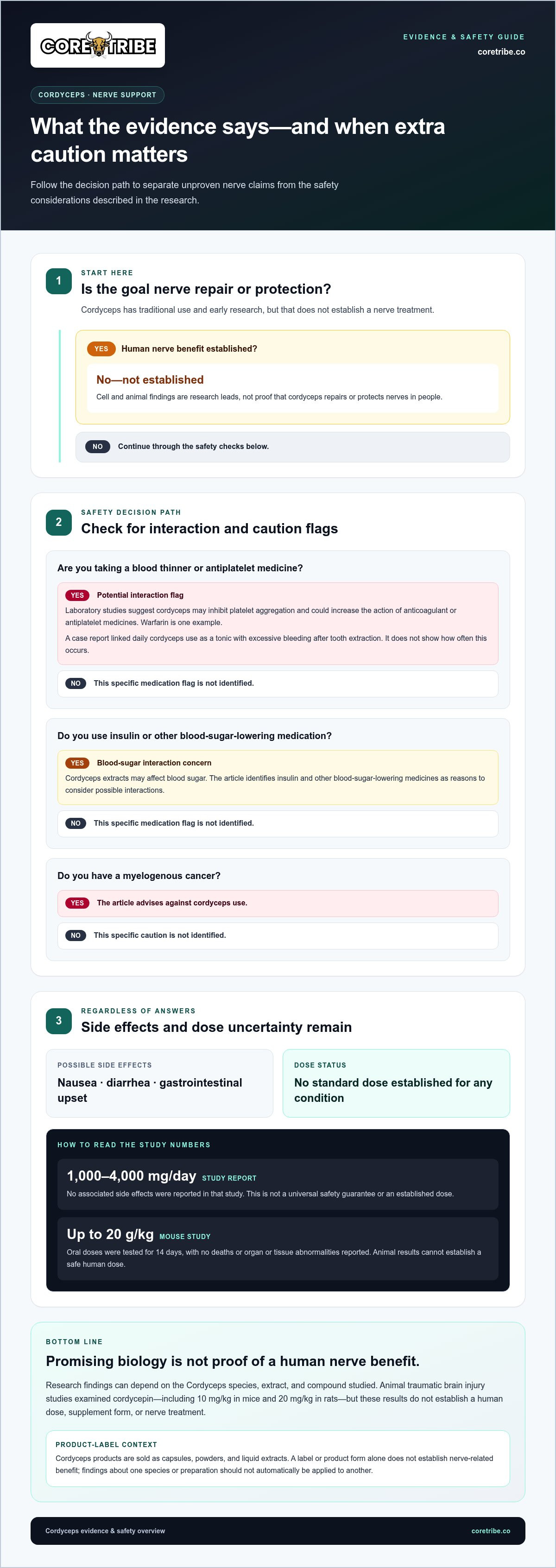
- Potential side effects include nausea, diarrhea, and other gastrointestinal upset; no standard dose has been established for any condition.
- Consider possible interactions before use, especially if you take blood thinners, immune-suppressing drugs, insulin, or other blood-sugar-lowering medication.
- Learn how to distinguish early research from human evidence and recognize when cordyceps may call for extra caution.
What are the side effects?
Cordyceps may cause nausea, diarrhea, or general gastrointestinal upset. A study using 1,000 to 4,000 milligrams per day reported no associated side effects. That result describes the study, not a universal safety guarantee. Researchers have not established a standard cordyceps dose for any condition, including nerve support.
Animal safety findings also require careful interpretation. One mouse study tested oral doses up to 20 grams per kilogram for 14 days, finding no deaths or organ or tissue abnormalities. Those results cannot establish a safe human dose. No major side effects have been reported, but people with myelogenous cancers are advised against using cordyceps.
Studies of possible neuroprotective effects have examined specific compounds, not proven nerve treatment. In traumatic brain injury research, cordycepin was administered to mice at 10 mg/kg. A separate rat study used 20 mg/kg. These animal findings may suggest biological effects worth studying, but they don’t show that cordyceps protects or repairs human nerves.
What cordyceps dose and form have been studied for nerve-related benefits? Traumatic brain injury studies used cordycepin in animals, including mice given 10 mg/kg; these findings don’t establish a human dose or supplement form for nerve benefits. Cordyceps products are sold as capsules, powders, and liquid extracts, but no standard dose has been established for any condition.
Research has also examined possible anti-inflammatory effects, but this does not establish a clinical benefit for nerve conditions. Effects may depend on the Cordyceps species, extract, and compound studied. Cordyceps sinensis and Cordyceps militaris are distinct species used in health products, so findings about one preparation should not automatically be applied to another.
Claims about cancer require the same distinction between laboratory findings and human outcomes. In laboratory research, Cordyceps polysaccharide-peptide complexes induced apoptosis in human neuroblastoma cells. Apoptosis means programmed cell death, but this finding does not show that cordyceps treats cancer in people. People with myelogenous cancers are advised not to use it.
How can consumers identify quality cordyceps supplements in the United States? Look for products identified as organic and made using hot water extraction, two quality features recommended for mushroom supplements. Read the label for the form and ingredients, then compare those details with the research being discussed. A capsule or extract label alone does not establish a nerve-related benefit.
Cordyceps, mood, and mental energy
Cordyceps has a long history in traditional Chinese medicine, including the species Cordyceps sinensis. Today, interest often centers on energy, fatigue, and mental focus. These are related but distinct outcomes: feeling less tired may make concentration easier, yet that doesn’t prove a supplement directly improves mood or cognition. Studies in humans remain mixed, so each outcome needs to be considered on its own.
Some research suggests cordyceps may improve focus by reducing fatigue. A study in older adults reported increased energy and endurance, but those effects are not proof of a mood treatment. Fatigue can have many causes, including sleep, illness, and stress. A change in perceived energy alone does not identify the cause or show that a mushroom supplement addresses it.
Exercise findings offer another way to understand the energy claims. One study followed 28 people completing high-intensity exercise while consuming a mushroom blend that included cordyceps. The study lasted three weeks. Since participants used a blend, its results can’t isolate cordyceps as the cause of any observed effect. More broadly, clinical studies of exercise performance in healthy people have produced mixed results.
Researchers have also examined how cordyceps relates to cellular energy. The mushroom may affect oxygen use and delivery to cells, processes connected with VO2 max and athletic endurance. Cordyceps has also been reported to increase ATP production in muscle cells. ATP supplies energy for cellular activity, but a proposed mechanism doesn’t establish a dependable improvement in everyday stamina, attention, or mood.
A study involving 14 young adults had participants take 1 gram of Cordyceps before a high-intensity interval exercise session. That detail describes the study setup, not a general supplement recommendation. It also doesn’t establish that the same amount improves mental energy. Study design, participant health, extract, and outcome measured all shape what findings can reasonably suggest.
For practical decisions, separate the traditional use of Cordyceps from evidence about a specific outcome. A supplement promoted for energy isn’t automatically a treatment for persistent fatigue, low mood, or concentration difficulties. Keep track of the product and changes you notice, and consider whether sleep, workload, or exercise may also affect energy. People exploring Cordyceps supplements can use these distinctions to read product claims with care.
Interactions with blood thinners and diabetes
Cordyceps extracts may affect bleeding and blood sugar, so medication interactions matter. Laboratory studies suggest cordyceps can inhibit platelet aggregation, a process involved in clotting. This effect may increase the action of anticoagulant or antiplatelet medicines. Warfarin is one example of a blood thinner that may carry added bleeding risk when used alongside cordyceps.
A case report linked daily cordyceps use as a tonic with excessive bleeding after tooth extraction. The report does not establish how often this occurs, but it illustrates why supplement use matters before procedures. People taking cordyceps should tell their surgeon, since possible bleeding effects could influence surgical planning. Blood-thinning medicine and cordyceps extracts deserve particular attention when used together.
Blood sugar is another concern. Cordyceps may lower glucose, so combining it with insulin or other blood-sugar-lowering medicine could push levels too low. People with Type 2 diabetes may need to avoid cordyceps because of this risk. The concern applies to the combined effect of a supplement and medication, not simply to the name of a mushroom species.
For example, someone using insulin could experience a different glucose response after adding a cordyceps product. The product’s ingredients and extract, the medication regimen, and the person’s usual glucose pattern all matter. Cordyceps militaris and other species may differ in composition, so a result involving one compound or extract should not automatically be assumed to apply to every supplement.
Blood sugar and cholesterol are separate measures. The interaction concern described here involves cordyceps and glucose, not evidence of a cholesterol effect. Exercise, meals, and glucose-lowering medicine can also affect blood sugar readings, so an unexpected change should not automatically be attributed to a mushroom supplement. Traditional Chinese medicine use does not remove the need to consider interactions with current medication.
When should someone with numbness, tingling, or nerve pain seek medical care? Seek medical care if numbness, tingling, or pain is new, persistent, worsening, or interfering with daily activities. Sudden or severe symptoms also warrant prompt attention rather than reliance on a supplement.
Keep a clear record of cordyceps use, including the product label, species, and extract, alongside medicines such as warfarin or insulin. This helps identify what was taken if bleeding or an unusual glucose reading occurs. Cordyceps should not replace prescribed medicine or be treated as a way to manage diabetes, cholesterol, or nerve symptoms.
Cordyceps and nerve support
Cordyceps has traditional uses and promising preclinical findings, but these don’t establish nerve-related health benefits in people. The key distinction is whether evidence comes from cells, animals, or clinical outcomes.
Clinical Studies on Neuropathy Symptoms
Neuropathy describes nerve damage that can cause symptoms such as numbness, tingling, or pain. The clinical evidence cited for Cordyceps does not establish that it relieves these symptoms or repairs nerves in people.
A clinical trial tested Cordyceps extract in 40 human participants, but that fact alone doesn’t show the trial evaluated neuropathy. For readers managing a chronic disease, the practical takeaway is to distinguish a human trial from evidence of a specific nerve benefit. A study must measure nerve-related outcomes before its findings can answer whether symptoms changed.
Animal and laboratory research offers possible explanations to investigate, not proof of treatment. For example, research on cordycepin has examined brain injury, while cell studies have investigated Cordyceps compounds and neuronal processes. These models can help researchers explore mechanisms, but their findings do not establish that a supplement reaches human nerves or changes disease symptoms.
Comparisons With Other Nerve Support Supplements
When comparing supplements, look at the specific nerve-related evidence for each rather than assuming similar mushrooms have similar effects. Lion’s mane has been shown to increase nerve growth factor synthesis, and may support recovery after nerve damage or injury.
That research suggests a different mechanism from the Cordyceps evidence discussed here. It still does not mean either mushroom is a proven treatment for neuropathy. When comparing options, focus on the measured outcome: a finding about nerve growth factor is not the same as demonstrated relief from numbness or nerve pain.
Cordyceps contains compounds studied for possible biological effects, including polysaccharides and cordycepin. But activity in an animal model does not establish a usable dose, supplement form, or clinical outcome for people. Species and extracts also differ, so results involving one preparation should not be applied automatically to every product labeled Cordyceps.
Immune activity, inflammation, and nerve function are separate research questions. A possible effect on one pathway does not show a direct benefit for another. For instance, a finding about immune responses cannot by itself demonstrate improved sensation or nerve repair. The same caution applies to broad health claims based on traditional use.
For people considering cordyceps mushroom for nerve support, the clearest conclusion is that current findings offer research leads, not established neuropathy care. New or worsening nerve symptoms deserve attention based on their cause and pattern. Cordyceps should not replace evaluation or treatment for a diagnosed nerve disease.
What evidence supports cordyceps for nerve health or nerve repair in humans?
Human evidence for nerve repair from Cordyceps remains limited. A clinical trial tested Cordyceps extract in 40 human participants, but that fact alone doesn’t establish nerve benefits. To judge relevance, look at whether a study measured nerve pain, sensation, or repair, and whether participants had a diagnosed nerve condition.
That distinction matters because “tested in people” does not necessarily mean “tested for nerve health.” A human trial may investigate a different outcome, population, or purpose. Without nerve-related outcomes, its results cannot answer whether Cordyceps improves neuropathy symptoms or repairs damaged nerves. The participant count describes the trial, not proof of efficacy.
Other findings are further removed from clinical evidence. Laboratory studies found that Cordyceps polysaccharide-peptide complexes induced apoptosis in human neuroblastoma cells. These were cell experiments, not treatment studies in people with nerve damage. Neuroblastoma cells are cancer cells, so their response cannot demonstrate that a Cordyceps supplement protects healthy nerves or improves sensation.
Animal research also explores possible mechanisms. In traumatic brain injury studies, researchers administered cordycepin to mice at 10 mg/kg. Such experiments can help investigate biological effects under controlled conditions, but a mouse dose isn’t a human supplement recommendation. Differences in species, preparation, and study design prevent direct translation to a dose or expected effect for people.
For a nerve-related claim to be persuasive, the evidence needs to connect a specific Cordyceps preparation with a measured human outcome. For example, a study should identify the extract, describe who took it, and assess a relevant change, such as sensation or nerve pain. A laboratory mechanism or animal result can support further research, but cannot replace those clinical measures.
There is also no standard Cordyceps dose established for any condition. Capsules, powders, and liquid extracts are available, but a product’s form does not show that it matches a research preparation. When assessing claims, compare the species, extract, population, and outcome rather than relying on broad phrases such as “nerve support.”
The practical takeaway is to treat current Cordyceps nerve findings as early research, not established nerve care. A supplement should not replace assessment or treatment for nerve symptoms. If you’re exploring Cordyceps products, view the available options and keep the limits of nerve-related evidence in mind.
Researchers evaluate these botanical preparations very carefully. Scientists have identified at least 35 Cordyceps types with potential health benefits and medicinal properties, but human studies have not established whether Cordyceps-related learning and memory benefits observed in research translate to people.
Coretribe: Coretribe ® Pure Shilajit Capsules - Mixed Sea Moss & Ashwagandha
Coretribe ® Pure Shilajit Capsules - Mixed Sea Moss & Ashwagandha offer a shilajit-based option for readers exploring wellness supplements. They are distinct from Cordyceps, and the evidence discussed above does not establish this blend as a treatment for nerve symptoms or nerve repair.
Consider this product if you’re interested in shilajit combined with sea moss and ashwagandha as part of a broader wellness routine. Keep the distinction clear: choosing a supplement for general wellness is different from addressing numbness, tingling, or diagnosed nerve disease. For nerve symptoms, prioritize appropriate medical care and discuss supplement use alongside your existing medicines.
To explore Coretribe’s offerings, visit coretribe.co.
Make your next step an informed one
Make your next decision specific: identify the change you hope to notice, how you’ll observe it, and what else could affect it. For cordyceps mushroom for nerve support, distinguish general wellness interest from a goal such as easing tingling or improving sensation. A clear goal helps keep expectations grounded and choices focused.
Before adding a supplement, note your symptoms, their pattern, and any medicines or supplements you use. Bring that information to a conversation with a healthcare professional, especially if symptoms are changing or disrupting daily life. This turns a broad search into a more useful discussion about your health priorities and potential risks.
Coretribe’s wellness offerings give you a place to explore products as you consider what fits your routine. Choose based on your needs, not on an assumption that a supplement can address nerve problems. Explore Coretribe’s wellness offerings and take your next step with care and confidence.
Frequently Asked Questions
What is cordyceps?
Cordyceps is a group of fungi, with Ophiocordyceps sinensis and Cordyceps militaris prominent in health products. The name Cordyceps sinensis changed to Ophiocordyceps sinensis in 2007. Products may use different species or extracts, so check the ingredient label to identify what a supplement contains rather than relying on the general name alone.
What are adaptogenic mushrooms?
Adaptogenic mushrooms are fungi described as adaptogens because they are used with the aim of supporting the body’s response to stress. The term reflects a traditional or wellness framework, not proof that every mushroom produces the same effect. Cordyceps, for example, is associated with research on energy and endurance, while other mushrooms have different compounds and research questions.
What are the potential uses and benefits?
Cordyceps is studied for possible effects on fatigue, energy, oxygen use, and exercise endurance. Researchers have also examined how compounds such as cordycepin and polysaccharides act in laboratory and animal settings. Human findings on exercise performance are mixed, and a possible effect on energy does not establish a benefit for nerve symptoms, mood, or a particular disease.
What else do I need to know?
Look beyond broad claims and note the species, extract, and intended use shown on a product label. A finding for one preparation may not apply to another. If you’re tracking how a supplement fits your routine, record the product and any changes you notice. This makes it easier to discuss use alongside your current medicines and health concerns.
What is it?
In this article, “it” refers to cordyceps as a dietary supplement, rather than one standardized preparation. Products may come as capsules, powders, or liquid extracts, and their species and ingredients can differ. This distinction matters when comparing a supplement with research: the form on the shelf may not match the preparation or compound studied.
Are cordyceps nerve-support claims based on human, animal, or laboratory research?
Evidence comes from different research settings, but nerve-related findings include laboratory cell work and animal studies. A clinical trial tested Cordyceps extract in 40 human participants, but that participant count alone doesn’t establish nerve benefits. For cordyceps mushroom for nerve support, look for human studies that specifically measure nerve symptoms or repair, not simply research involving people.
What compounds in cordyceps are thought to affect nerves?
Researchers have examined cordycepin and polysaccharide-peptide complexes in nerve-related research. Cordycepin has been studied in animal brain-injury models, while laboratory work found that Cordyceps polysaccharide-peptide complexes induced apoptosis in human neuroblastoma cells. These findings describe specific compounds and experimental models; they do not show that taking a cordyceps supplement repairs nerves in people.
What are the side effects and risks of cordyceps supplements?
Possible effects include nausea, diarrhea, or general gastrointestinal upset. Cordyceps may also affect blood sugar and bleeding risk, making use a concern alongside insulin, other glucose-lowering medicines, or blood thinners. People taking immune-suppressing drugs should also consider potential interactions. People with myelogenous cancers are advised against using cordyceps, and supplement use should be discussed with a healthcare provider when medicines are involved.

