


There’s no single noticeable change that proves moringa is working. The signs of moringa working in the body may be subtle, and positive effects may take weeks or months to notice. Moringa is a source of nutrients and is studied for possible effects on blood sugar, blood pressure, cholesterol, and inflammation. However, evidence that it prevents or treats illness remains insufficient.
It’s understandable to look for a clear signal after adding a plant supplement to your routine. Changes in how you feel can have many causes, so they don’t always reliably show whether moringa is having an effect.
This article explains what moringa is used for, which changes might suggest it’s having an effect, and what research can and can’t tell us about its potential benefits. You’ll also learn about possible side effects, medicine interactions, and why the plant part and serving size matter.
Key Takeaways
- Moringa is used as a nutrient-rich plant supplement, but research on its potential health effects is still developing.
- Changes may take weeks or months to notice; tracking relevant measurements can be more useful than relying on how you feel alone.
- Learn which plant parts are used in moringa products and why that can matter for safety.
- Start with the product label’s serving guidance, and understand why medicines for blood sugar, blood pressure, or thyroid conditions call for extra care.
- Recognize digestive side effects and know when pregnancy or medication use makes a conversation with a healthcare professional important.
Possible side effects and medication interactions
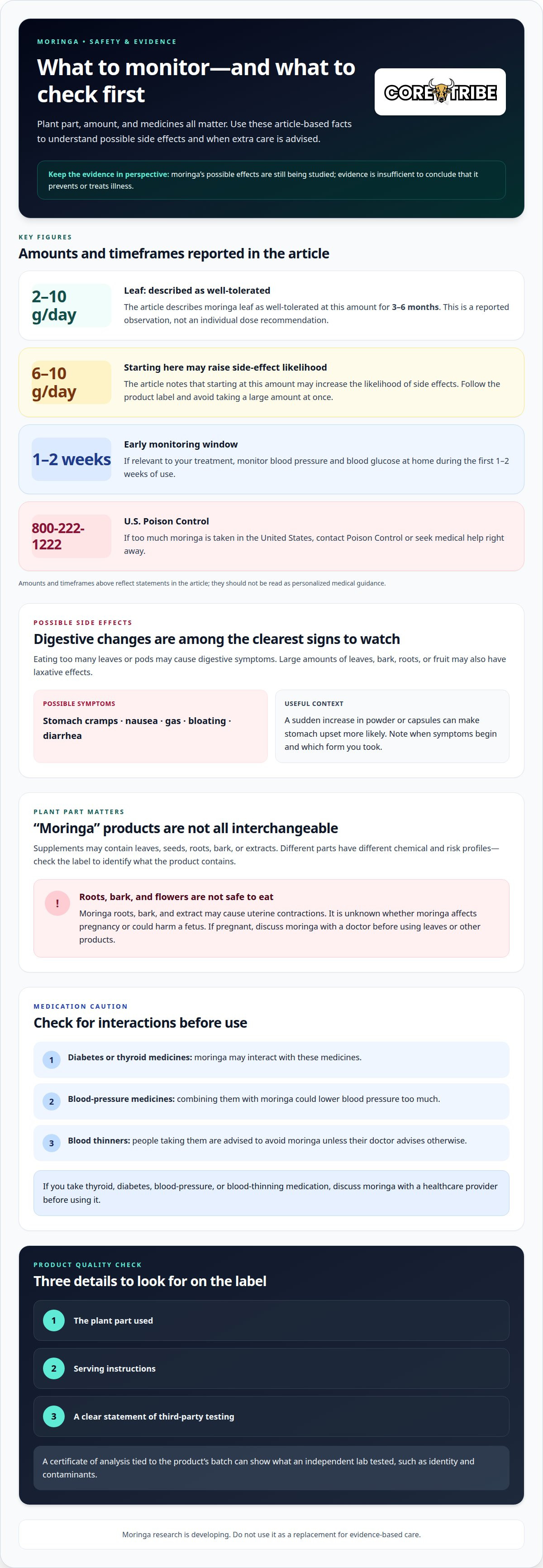
Digestive changes are among moringa’s clearest possible side effects. Eating too many leaves or pods may cause stomach cramps, nausea, gas, bloating, or diarrhea. Large amounts of leaves, bark, roots, or fruit may also have laxative effects. A sudden increase in powder or capsules can make stomach upset more likely, so follow the product label and avoid taking a large amount at once. Note when symptoms begin and which form you took.
The plant part matters. Moringa supplements may contain leaves, seeds, roots, bark, or extracts, and these parts have different chemical and risk profiles. Roots, bark, and flowers are not safe to eat. Moringa roots, bark, and extract may cause uterine contractions. It’s also unknown whether moringa affects pregnancy or could harm a fetus. If you’re pregnant, discuss moringa with a doctor before using leaves or other products. Check the label to identify the plant part.
Moringa’s proposed effects include antioxidant activity. Antioxidants help counter oxidative stress, a process involving unstable molecules that can affect cells. Researchers also study whether moringa compounds influence blood sugar or blood pressure, but these potential mechanisms don’t establish that moringa treats a condition. The form and plant part can shape what a product contains. A leaf powder and a root-containing extract aren’t interchangeable just because both are labeled “moringa.”
Medicine interactions need particular care. Moringa may interact with medicines for diabetes or thyroid problems; combining it with blood-pressure medication could lower blood pressure too much. People taking blood thinners are advised to avoid moringa unless their doctor advises otherwise. If you take thyroid, diabetes, blood-pressure, or blood-thinning medication, discuss moringa with a healthcare provider before using it. During the first 1-2 weeks of use, monitor blood pressure and blood glucose at home if relevant to your treatment.
For quality, look for a label that identifies the plant part and serving instructions, plus a clear statement of third-party testing. A certificate of analysis tied to the product’s batch can show what an independent lab tested, such as identity and contaminants. Leaf has been described as well-tolerated at 2-10 g/day for 3-6 months, while starting at 6-10 g/day may increase side-effect likelihood. If too much moringa is taken in the United States, contact Poison Control at 800-222-1222 or seek medical help right away.
Antioxidant and anti-inflammatory properties
Moringa oleifera leaves contain nutrients and plant compounds studied for antioxidant activity. Chopped leaves provide about 11 milligrams of vitamin C per cup, alongside other vitamins and minerals. The specific amounts depend on whether you eat fresh leaves or use a dried powder. Processing and serving size also affect what reaches your plate. That makes the plant part and form useful context when comparing nutrition claims.
Antioxidant research often measures biomarkers rather than visible changes in daily health. A biomarker is a measurable signal in the body, not proof that a person feels better or has less inflammation. In a study of postmenopausal women, taking 7g of moringa leaf powder regularly for three months may significantly increase blood antioxidant levels, according to The researchers who conducted the study. The result describes a measured change in that group, not a guaranteed response for everyone.
Oxidative stress occurs when the balance between reactive molecules and the body’s defenses shifts. Antioxidants from foods can contribute to those defenses, but a single ingredient doesn’t work in isolation. Sleep, smoking, physical activity, and overall dietary patterns also influence health. For example, adding moringa leaves to a meal can contribute nutrients, while replacing a varied diet with one powder removes other sources. Your broader routine matters.
Moringa’s anti-inflammatory potential is another area of study. An animal-based study cited in the research found that moringa could reduce the impact of rheumatoid arthritis in 30 days. Animal findings help researchers develop questions, but they don’t establish the same effect in people. Inflammation also has many causes, so a change in joint discomfort alone can’t identify moringa as the reason. Human evidence and measured outcomes matter.
Skin claims need similar care. Antioxidants are discussed for their role in protecting cells from oxidative stress, which can affect skin and other tissues. That role doesn’t show that moringa powder or capsules reduce wrinkles, clear acne, or improve complexion. A topical product and an eaten supplement also affect the body differently. Treat a skin change as an observation, not proof of a specific effect.
To assess antioxidant claims, look at the form used, the outcome measured, and the study participants. For example, a study of leaf powder in postmenopausal women doesn’t establish the effects of seed products or every capsule. Include moringa in a varied diet rather than treating its antioxidants as a substitute for fruit, vegetables, or medical care. Keep a simple record of the product form and any changes you notice, so you have clearer context when discussing the results.
If you’re exploring a broader wellness routine alongside nutrient-rich foods, you can browse wellness-focused options.
Moringa’s potential health benefits
Moringa leaves provide nutrients, but nutrition isn’t the same as treating disease. Evidence is insufficient to conclude that moringa prevents or treats illness. This distinction matters for diabetes, liver concerns, and cardiovascular risk. A food can contribute useful nutrients without replacing treatments with established benefits. Moringa should not replace evidence-based care for diabetes or other chronic conditions. For weight goals, leaves can be part of a varied diet, but they aren’t a proven weight-loss treatment.
Blood sugar research offers mixed findings. Researchers examined moringa leaves in 40 people with type 2 diabetes. A placebo-controlled trial using 8 g of moringa leaf capsules daily for four weeks found no significant improvement in glycaemic control. Other controlled trials gave adults with prediabetes 2.4 g daily for 12 weeks to assess blood sugar and inflammatory markers. These details show what researchers tested, not proof that moringa controls diabetes. Don’t adjust prescribed medicine based on supplement use.
Cardiovascular findings also need context. In a study of healthy participants, one group ate 120 grams of cooked moringa leaves daily for a week. Their blood pressure was lower than the comparison group’s two hours after eating. That short-term meal result doesn’t establish lasting control of high blood pressure. Animal studies suggest moringa may reduce high blood pressure in fewer than three weeks and may take up to 120 days to reduce cholesterol. Animal results don’t establish the same effects in people.
Liver support is another reason people consider plant supplements, but available evidence doesn’t establish moringa as a treatment for liver disease. A “detox” claim alone isn’t evidence that a product improves liver function. Look for a specific outcome, such as a measured change in a clinical study, rather than a broad promise about cleansing. Moringa also doesn’t replace assessment or care for a liver condition.
For digestion, moringa leaves contain fiber, with about 0.5 grams in one cup of chopped leaves. Fiber contributes to a balanced diet, but that amount alone doesn’t establish a digestive benefit. The leaves also contain bone-related nutrients: one cup provides about 39 milligrams of calcium and 9 milligrams of magnesium. These nutrients support ordinary dietary intake; they don’t show that moringa strengthens bones or prevents osteoporosis. Consider the full diet, since bone health depends on more than one ingredient.
Overall, understand moringa’s potential benefits by separating nutrient content from treatment claims. Consider the form, amount, duration, and participants in a study before applying its results to yourself. Cooked leaves, leaf powder, and capsules aren’t interchangeable in research. Keep prescribed care in place and consider moringa as one possible food or supplement within a broader health routine, not a stand-alone solution.
Signs that moringa may be working
The signs of moringa working in the body are easier to assess when they match a specific goal. If you’re taking it for general nutrition, notice whether it fits comfortably into your meals and routine. If you’re tracking blood sugar or blood pressure, use measurements relevant to your health, not energy or mood alone. Consistently recorded readings offer a clearer comparison than a vague impression from one day.
Set a simple baseline before changing your routine. Record the date, product form, serving directions, and outcome you care about. For example, someone monitoring blood pressure can use the same home monitor and follow its instructions each time. Someone tracking glucose can log readings alongside meals and prescribed treatment. These records help distinguish a pattern from a single fluctuation or a change caused by another part of daily life.
Time matters. Positive effects may take weeks or months of regular use to notice. That doesn’t mean everyone will notice a distinct sensation, or that a perceived change proves moringa caused it. Look for a consistent pattern across repeated observations. If you’re assessing a chronic condition, use measures relevant to its care rather than stopping treatment or changing medicine because of a supplement.
The form also matters when interpreting a result. Moringa leaves, powders, capsules, and extracts can differ in plant parts and compound concentrations. Someone taking leaf powder shouldn’t assume the effects apply equally to a seed-based extract. Note the plant part and serving instructions on the label, and keep the product consistent during your observation period. Changing products midstream makes it harder to tell what might be influencing a change.
Some outcomes need measurement rather than sensation. Blood antioxidant levels, for example, are laboratory measures, not something a person can reliably identify by feeling at home. Likewise, readings are needed to establish whether blood pressure or glucose levels have changed. Tiredness, clearer skin, or easier digestion can have several explanations, so record them as observations rather than proof. A useful sign is a repeatable change that aligns with your chosen measure.
Keep the takeaway practical: choose one outcome, note your starting point, and track it consistently alongside the product and your routine. Review the pattern over time rather than judging moringa after one dose or an unusually good day. If your goal is managing diabetes, high blood pressure, or another chronic condition, track relevant health measures and keep evidence-based care in place. Feeling different can prompt reflection, but it can’t replace an appropriate measure.
What is the recommended moringa dosage for adults?
There isn’t one set recommended serving size for every moringa product. Powder, capsules, and extracts can differ in concentration, so use the serving directions on the specific label. Many people take 1 to 2 teaspoons of moringa powder per day, but that amount can vary by product. A teaspoon also measures volume, not weight, so it may not equal the same dose across powders. Match your serving to the product’s instructions.
For leaf powder, one suggested gradual approach begins at 0.5-1 g/day. Increase by 0.5-1 g every few days toward a maintenance range of 2-6 g/day. Hold the lowest suggested serving for 5-7 days and watch for unwanted effects before increasing. This staged approach makes it easier to notice how your body responds. Avoid taking a large amount at once, even if you hope to feel a quicker effect.
Use the label’s stated serving as your reference point. For example, if the package recommends 2 g/day, begin with 0.5-1 g rather than jumping straight to the full amount. Capsules or tablets typically contain 500-1000 mg each, so count the amount per capsule against the label’s daily serving. Don’t assume one capsule is a complete serving, or that products with different concentrations need the same number.
Timing can make a routine easier to follow. Take capsules daily, ideally with food, and try to use moringa at roughly the same time each day. Breakfast is one practical option if it suits your schedule. For powder, mix a measured serving into food or a drink, and keep the amount consistent. Record the product form and serving so you can compare days accurately.
Starting high can backfire. A starting dose of 6-10 g/day may increase the likelihood of side effects, including digestive discomfort. If you miss a serving, don’t compensate by doubling the next one. Follow the label instead. Keep in mind that 2-10 g/day for 3-6 months has been described as well-tolerated for moringa leaf, but that doesn’t make the range a personal target or apply to every extract.
Choose the serving based on the product form, its label, and your tolerance, not on a larger dose promising faster results. For a straightforward routine, browse wellness products and use each product’s serving directions as your guide.
Coretribe: Coretribe ® Pure Shilajit Capsules - Mixed Sea Moss & Ashwagandha
Coretribe ® Pure Shilajit Capsules - Mixed Sea Moss & Ashwagandha are a separate option for people exploring botanical supplements. They contain shilajit, sea moss, and ashwagandha, not moringa, so they aren’t a substitute for moringa or a way to reproduce its studied effects. Keep this distinction clear when comparing ingredients or considering a supplement for a particular wellness goal.
If you’re interested in this different blend, read its product information and consider how it fits your existing routine. Supplements shouldn’t replace prescribed treatment for diabetes or other chronic conditions. For concerns about moringa, possible interactions, or your personal dosage, speak with a healthcare professional. For product details, visit coretribe.co.
Choose your next wellness step with care
Start your next step with a clear purpose. Decide whether you’re considering moringa as a food, a supplement, or part of managing a health concern. That distinction can shape what you track and which questions you bring to a healthcare professional. The signs of moringa working in the body are most useful when considered alongside your purpose, rather than as a reason to keep taking a product automatically.
If you’re exploring a different botanical option, Coretribe offers Coretribe ® Pure Shilajit Capsules - Mixed Sea Moss & Ashwagandha and Coretribe®Shilajit Honey Sticks. These are separate products, not moringa alternatives with the same ingredients or studied effects. Choose based on the product information and how it fits your wellness priorities.
Explore Coretribe’s wellness offerings as you consider what feels like a thoughtful next step. Keep your approach steady, informed, and grounded in the care that suits you.
Frequently Asked Questions
What is moringa used for?
Moringa is used as a food and dietary supplement, while researchers study its possible health effects. People may add the leaves to meals or use leaf powder and capsules. Studies have examined outcomes related to blood sugar, blood pressure, cholesterol, and antioxidant levels. These uses don’t make moringa a proven disease treatment. If you have diabetes or another chronic condition, keep evidence-based care in place and treat moringa as a separate dietary choice.
Do moringa powder and capsules work at different speeds?
There’s no reliable basis for saying powder works faster than capsules. Products can differ in serving size, concentration, and plant part, making direct comparisons difficult. Powder can be mixed into a meal, while capsules are taken according to their labels, but this difference alone doesn’t establish a faster health effect. Compare ingredient and serving information, and don’t switch forms simply to seek quicker results.
How does moringa work (mechanism of action)?
Moringa contains plant compounds and nutrients that researchers are studying for effects on antioxidant activity and measures such as blood sugar. A preliminary study measured insulin secretion after healthy adults took a single 4 g dose of leaf powder capsules. Another human study assessed post-meal glucose after adding 20 g of leaf powder to a meal. These study designs explore possible mechanisms; they don’t establish moringa as a treatment.
What health benefits of moringa are supported by human studies?
Human studies have examined antioxidant markers, blood pressure, and blood sugar, but they don’t establish moringa as a treatment or disease-prevention method. For example, one meal study found lower blood pressure in the moringa group two hours after eating. A separate placebo-controlled trial found no significant improvement in glycaemic control after 8 g of leaf capsules daily for four weeks. Results depend on the outcome and study design.
How long does moringa take to show effects?
Positive effects, if noticed, may take a few weeks or months, and timing depends on the outcome being observed. A short-term measurement after a meal differs from assessing a longer-term marker. Adult moringa trials in a 2025 meta-analysis lasted from two weeks to six months. That range describes study durations, not a timetable for personal results. Track one relevant measure consistently rather than judging from a single day.
What signs might indicate moringa is helping?
A repeatable change in a relevant measurement can be more informative than a general feeling. For example, someone focused on blood pressure can record readings using the same monitor and method. A change in energy, digestion, or skin alone doesn’t show that moringa caused it. Keep notes on the product, serving, and other changes to your routine to see whether your observations form a consistent pattern.
What nutrients and active compounds are in moringa leaves?
Moringa leaves contain nutrients including vitamin C, calcium, magnesium, and fiber, alongside plant compounds studied for antioxidant activity. One cup of chopped leaves contains about 13 calories, 39 milligrams of calcium, 9 milligrams of magnesium, and 0.5 grams of fiber. Leaves also contain around 18 types of amino acids. Fresh, cooked, and powdered forms can differ, so these figures don’t describe every product or serving.
What are the side effects and risks of moringa supplements?
Possible side effects include nausea, gas, stomach cramps, and diarrhea, particularly if someone consumes too much. Moringa can interact with diabetes or thyroid medicines, and combining it with blood-pressure medication could lower pressure too much. Pregnancy also calls for caution because the effects of moringa during pregnancy are unknown, and roots, bark, and extracts may cause uterine contractions. Check which plant part a supplement contains and discuss medication use with a healthcare professional.

