


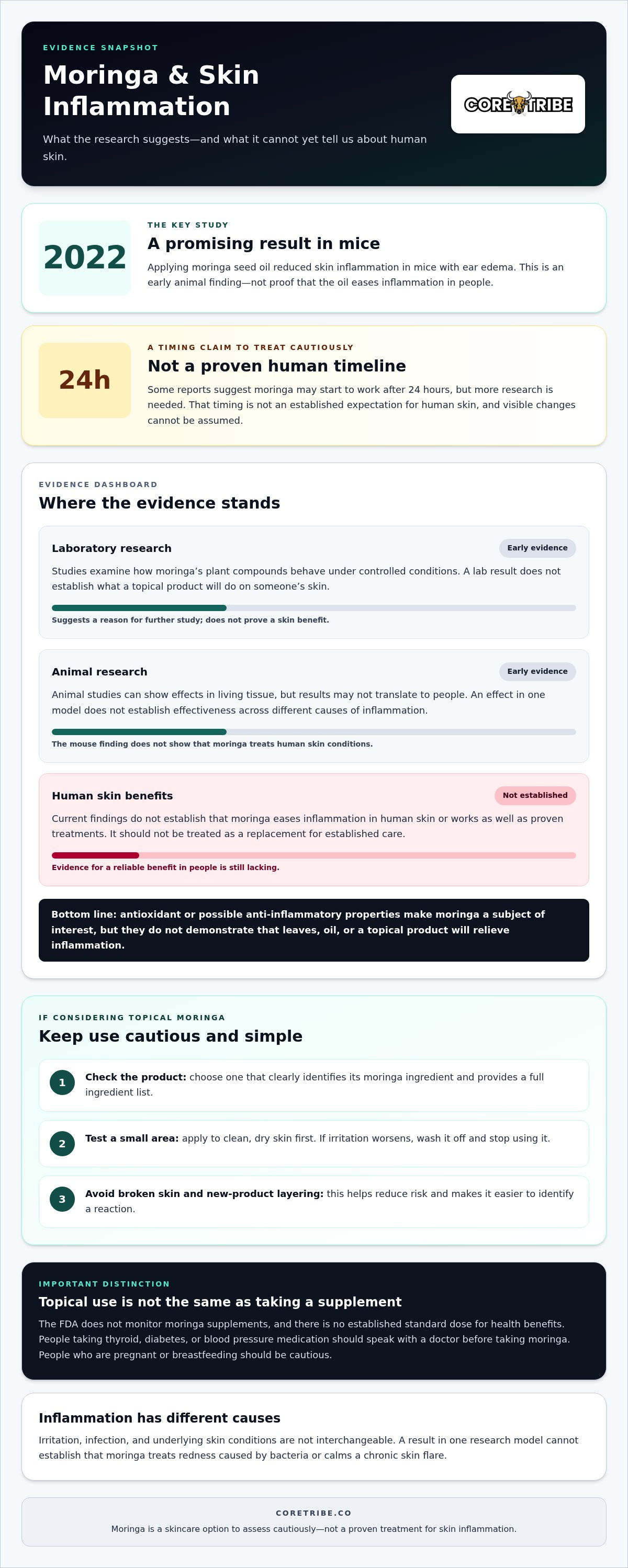
The most intriguing evidence for moringa seed oil and skin inflammation comes from mice, not people. In a 2022 study, applying the oil reduced skin inflammation in mice with ear edema. That’s a promising early finding, but it doesn’t establish that moringa will ease inflammation in human skin.
It makes sense to consider a botanical oil when skin feels irritated, dry, or uncomfortable. Moringa contains compounds with antioxidant and possible anti-inflammatory properties, and its seed oil may nourish and soften skin. However, evidence for moringa for skin inflammation remains limited. Treat an oil or face mask as a skincare option, not a proven treatment.
This article explains what research suggests about moringa’s compounds and seed oil, where the evidence has limits, and how a moringa face mask might fit into a gentle skincare routine. It also covers what to consider before applying a new ingredient to sensitive or inflamed skin.
Key Takeaways
- Separate promising early findings from proven human benefits before relying on moringa to soothe inflamed skin.
- Learn how moringa’s plant compounds may relate to inflammation, and why lab and animal findings don’t establish the same effects in people.
- Explore how seed oil and face-mask ingredients may fit into skincare, while keeping sensitive or irritated skin in mind.
- See what a mouse study suggests about moringa seed oil, and what it can’t yet tell us about human skin.
- Understand why a natural ingredient can be worth exploring without treating it as a substitute for established care.
Evidence limitations for moringa and inflammation
Moringa may affect signs of inflammation in laboratory and animal research, but its effects on human skin haven’t been established. Available findings don’t show that it works as well as proven treatments.
Animal and Laboratory Findings
Animal and laboratory findings are early evidence, not proof that moringa treats skin conditions in people. Research on Moringa oleifera’s possible anti-inflammatory benefits has so far been limited to test-tube and animal studies. Much of the broader moringa research also uses animals, and the results may not translate to humans. Keep this distinction in mind when deciding whether to apply moringa to irritated skin.
Laboratory studies examine how plant compounds behave under controlled conditions. Animal studies can show effects in living tissue, but neither establishes the same effect in human skin. Moringa’s antioxidant and anti-inflammatory properties make it a subject of scientific interest, but they don’t demonstrate that leaves, oil, or a topical product will ease someone’s inflammation.
Inflammation can have different causes, including irritation, infection, or an underlying skin condition. A finding in one model cannot establish effectiveness across those situations. For example, a result involving inflamed animal tissue doesn’t show that moringa will treat redness caused by bacteria or calm a chronic skin flare.
Research Compared With Proven Treatments
Comparing moringa with proven treatments means looking for evidence that it benefits people and works reliably. Current findings don’t establish that, so moringa shouldn’t be presented as a replacement for an established treatment. Delaying appropriate care can leave the cause of inflammation unaddressed.
For anyone considering moringa for skin inflammation, the practical distinction is between a botanical ingredient and a demonstrated treatment. Traditional use for long-lasting inflammation provides context, but doesn’t confirm effectiveness for a particular skin condition. A potential benefit in a test tube also doesn’t establish how much to apply, how often to use it, or whether it will help.
Some reports suggest moringa may start to work after 24 hours, but more research is needed on its possible benefits and long-term effects. That timing isn’t a proven expectation for human skin. Visible changes can’t be inferred from a reported early effect without evidence measuring those changes in people.
Taking moringa orally raises a separate question from applying its oil or using a mask. People taking thyroid, diabetes, or blood pressure medication should speak with a doctor before taking moringa, because supplement use may affect medication decisions. People who are pregnant or breastfeeding should be cautious about using moringa.
The FDA doesn’t monitor moringa supplements, so their purity and quality can’t be assured. There’s no established standard dose for health benefits, and companies don’t have to prove that supplements are safe or work as advertised. These limitations distinguish oral supplements from eating moringa leaves as food and are a reason to assess supplement claims carefully.
How to Use Moringa for Skin?
Moringa’s possible skincare uses include nourishing dry skin and supporting wound-healing research, but benefits for acne and dark spots haven’t been established. The form matters: oil, leaf extract, and oral supplements are different and come with different considerations.
Moringa for Acne and Wound Healing
A laboratory study suggested that moringa may help skin wounds heal more quickly, possibly by reducing oxidative stress. That finding is a reason for further study, not proof that moringa treats cuts or acne in people. A lab result can’t show how a product will behave on an individual’s skin.
Moringa seed oil contains omega-9 fatty acids, which may nourish and soften skin when applied topically. That moisturizing quality is distinct from wound treatment. Don’t put an oil or mask on an open wound as a substitute for appropriate care, and avoid disturbing acne spots by picking or scrubbing them.
Acne, Dark Spots, and Antimicrobial Effects
Acne can involve bacteria, but that doesn’t establish that moringa has a useful antimicrobial effect on acne-prone skin. A product’s botanical origin also doesn’t prove that it reduces blemishes. This distinction separates a possible ingredient property from a demonstrated result on the face.
Moringa contains vitamin C, which plays a role in the natural repair of skin cells. That doesn’t show that applying moringa fades dark spots. For marks left after acne, don’t treat an unproven extract as a targeted treatment; irritation can make skincare harder to manage.
Choosing and Applying Moringa Skincare
In the United States, choose a skincare product that clearly identifies its moringa ingredient and provides a full ingredient list, rather than relying on broad claims such as “natural” or “anti-inflammatory.” The FDA’s lack of monitoring for moringa supplements concerns supplements, not a guarantee about topical skincare.
To apply moringa oil, start with clean, dry skin and test it on a small area. If irritation worsens, wash the oil off and stop using it. Keep it away from broken skin, and avoid layering it with other new products so you can identify which ingredient causes a reaction.
Moringa and Skin Conditions
Moringa oil may soothe dry, itchy skin, including skin affected by conditions such as eczema and psoriasis, but it hasn’t been established as a treatment for them. Comfort from an oil isn’t the same as treating the condition causing a flare.
The same caution applies to acne and dermatitis. Moringa’s possible properties don’t establish that it treats either condition, and evidence for one skin concern can’t be assumed to apply to another. If a flare is worsening or persistent, don’t replace established care with moringa oil or leaf extract.
Moringa compounds with possible anti-inflammatory properties
Moringa oleifera contains plant compounds studied for antioxidant and anti-inflammatory properties. Researchers have identified more than 90 bioactive plant compounds in moringa. That variety helps explain scientific interest, but the presence of a compound doesn’t show that it will reduce inflammation in human skin.
Antioxidants help protect cells from damage. In skin, environmental exposure, including ultraviolet radiation, can contribute to oxidative stress. Moringa’s antioxidant compounds may help counter some of that stress. This potential protective role differs from treating an existing inflammatory condition and doesn’t make moringa a substitute for sun protection or established care.
Isothiocyanates are among the compounds associated with moringa’s possible anti-inflammatory effects. Moringa also contains omega-3 fatty acids, which are described as helping calm inflammation. These properties provide a reason to study the plant, but they don’t establish which chemical has the strongest effect, or whether applying a product delivers an effective amount to skin.
Research has also examined moringa leaf extract in relation to rheumatoid arthritis. The extract may reduce swelling, redness, and pain associated with the condition. Those outcomes relate to arthritis research, not proof that a moringa cream, oil, or face mask will relieve skin redness. Both the form of moringa and the condition studied matter.
Moringa leaves contain vitamin C, which plays a role in the body’s natural repair of skin cells. Moringa is also described as containing cytokinins, plant hormones believed to support cellular function and potentially minimise cell degradation. These details describe biological roles and possible mechanisms. They don’t establish a direct skincare effect from eating leaves or applying leaf extract.
For anyone considering moringa, the key distinction is between a plausible mechanism and a demonstrated result. Antioxidants may help protect cells from damage, while anti-inflammatory compounds may affect inflammation pathways. Yet research on Moringa oleifera’s possible anti-inflammatory benefits remains limited to test-tube and animal studies, so these mechanisms can’t establish clinical benefits for human skin.
In practical terms, these compounds explain why moringa is being studied, not which product or dose will work. Leaves, extracts, and seed oil differ in composition and use. For example, topical oil may soften skin, while laboratory findings about leaf compounds concern different material. Treating these forms as interchangeable can obscure what a study actually tested.
Moringa’s compounds may help researchers understand how plants interact with oxidative stress and inflammation. For skincare decisions, however, claims should match the evidence: antioxidant activity isn’t the same as a proven treatment, and a possible effect in one setting doesn’t establish benefits for every skin concern.
Moringa face-mask ingredients and use
A moringa face mask combines powdered leaves with other ingredients to make a topical paste. Recipes vary, so texture and wear time depend on what you add. These masks are skincare experiments, not established treatments for inflamed skin, acne, or other diagnosed conditions.
Moringa leaves can be sun-dried and crushed into a bright green powder. The plant contains vitamins and minerals, including vitamin C, calcium, protein, and iron. These nutrients help explain interest in moringa oleifera, but their presence in leaf powder doesn’t show how much reaches the skin from a mask.
One suggested recipe combines one tablespoon of moringa powder with one tablespoon of pure honey and a teaspoon of lemon juice or water. It also includes mashed avocado. Mix the ingredients into a spreadable paste, then apply a thin layer to clean skin, avoiding the eye area. Leave it on for about 20 minutes, then rinse gently.
A separate DIY recipe uses 1 tablespoon of moringa powder, ½ tablespoon of turmeric powder, and 1 teaspoon of raw honey. Stir them together into a paste and apply it evenly. Leave this mixture on for 15 minutes, rinse it off, then apply moisturizer and sunscreen. The shorter wear time belongs to this recipe, not the other one.
Before trying either mixture, test a small amount on a discreet area of skin and watch for irritation. Lemon juice, turmeric, honey, and avocado each add another ingredient, so it can be difficult to identify the cause of a reaction if you introduce several new products at once. If your skin stings or becomes more irritated, rinse the mask off and stop using it.
Moringa’s antioxidant compounds may help counter oxidative stress associated with UV exposure. That possibility doesn’t mean a powder mask protects against sun damage or replaces sunscreen. As the DIY recipe instructions advise, apply sunscreen as part of daytime skincare rather than treating moringa as sun protection.
Consider the source and storage of moringa powder: clean, dry powder is easier to measure and mix than damp or clumped material. Use a clean bowl and utensil, and prepare only what you need for one application. These steps help keep the recipe consistent, but don’t establish that it will reduce redness or inflammation.
Choose a recipe based on its ingredients and your skin’s tolerance, not claims that it cures a condition. The two recipes use different ingredients and wear times, so don’t combine their amounts or assume longer contact improves the effect. If a mask worsens an active flare, stop using it rather than repeating the application.
Moringa seed oil and skin inflammation
Moringa seed oil is the part of the plant with the clearest direct link to skin inflammation research. In a 2022 study, applying the oil reduced skin inflammation in mice with ear edema. That result makes the oil worth examining separately from moringa leaves, leaf extract, and oral supplements. It does not establish the same effect in people.
Each form has a different formulation and route of use. Seed oil is applied to the skin, while supplements are taken orally and leaf extract is a separate preparation. A result from topical oil on mice can’t show that drinking a supplement or applying leaf extract will produce the same outcome. The material tested and the tissue affected both shape what a study can tell us.
Moringa seed oil is also described as a source of omega-9 fatty acids, which can nourish and soften skin. That moisturizing effect is different from reducing inflammation. For example, skin may feel less dry after an oil application without the underlying cause of redness or itching changing. Comfort and treatment are not interchangeable outcomes.
Moringa oil has a long history of use and may soothe dry, itchy skin associated with conditions such as eczema and psoriasis. However, further human studies are needed to establish whether moringa seed oil helps skin inflammation. A mouse study can’t tell us whether the oil suits every person, condition, or skin formulation. It also doesn’t establish an effective amount or application schedule.
Claims about antioxidants require similar care. Moringa contains antioxidant compounds that may help counter oxidative stress from environmental exposures, including ultraviolet radiation. Antioxidants can help protect cells from damage caused by free radicals, but that mechanism doesn’t prove that seed oil prevents sun damage or treats an inflammatory flare. Sunscreen remains a separate part of sun protection.
For practical use, distinguish oil intended for topical application from supplements and leaf extract. Read the ingredient label, apply a small amount to a limited area first, and stop if irritation worsens. Don’t rely on oil alone to treat a persistent or worsening flare. These steps help you observe how your skin responds, but they don’t turn early animal findings into established evidence in humans.
The clearest takeaway is measured: the 2022 mouse study offers an early signal, while human benefits remain unestablished. Moringa seed oil may soften dry skin, but that doesn’t prove it treats eczema, psoriasis, or other inflammation. Its role should be understood as a possible skincare adjunct, not a replacement for treatment suited to the condition.
Coretribe: Coretribe ® Pure Shilajit Capsules - Mixed Sea Moss & Ashwagandha
Coretribe ® Pure Shilajit Capsules - Mixed Sea Moss & Ashwagandha are a separate option for readers exploring wellness supplements, not a treatment for inflamed skin. Moringa seed oil and face masks are topical skincare choices; shilajit capsules are a different category and shouldn’t be viewed as a substitute for skincare or medical treatment.
If you’re considering a supplement as part of your broader wellness routine, assess it on its own terms and keep your skin concerns separate. Evidence about moringa’s possible effects on skin doesn’t establish benefits from shilajit. For persistent or worsening inflammation, focus on care suited to its cause rather than relying on a supplement.
For more information about Coretribe’s offerings, visit coretribe.co.
Choose a Thoughtful Next Step for Your Skin
Let your next step be guided by what your skin needs, not just the appeal of a natural ingredient. If you explore moringa for skin inflammation, introduce one topical product at a time and pay attention to how your skin responds. For ongoing or worsening symptoms, seek care focused on the underlying cause rather than relying on a mask or oil.
Coretribe’s broader wellness range includes Coretribe®Shilajit Honey Sticks and Revive Dress, alongside its Pure Shilajit Capsules. These products serve different purposes and aren’t treatments for inflamed skin. Keep that distinction clear when considering what belongs in your routine.
If you’d like to explore Coretribe’s offerings, visit the Coretribe collection. Take a calm, informed approach and choose the next step that best supports your wellbeing.
Frequently Asked Questions
What are the benefits?
Moringa provides nutrients and antioxidants, but those properties don’t establish it as a treatment for skin inflammation. A cup of fresh, chopped leaves weighs 21 grams and contains 13 Calories and 2 grams of protein. It also provides 19% of the recommended dietary allowance for vitamin B6 and 12% for vitamin C. Evidence on using moringa for skin inflammation remains limited, so separate nutritional value from skincare claims.
How are its leaves used?
Moringa leaves can be eaten as food or sun-dried and crushed into powder. For example, fresh leaves can be added to a meal, while powder can be used in recipes such as a face-mask paste. These are different uses: eating leaves isn’t the same as applying them to skin. Choose a preparation based on whether you want food or topical use, and follow the recipe or product directions.
Is It Safe?
Eating moringa leaves or young seed pods is generally considered safe, and leaf extracts made from powder and water may also be safe. Safety depends on the plant part and how it’s used: moringa bark or pulp can be dangerous to eat, especially during pregnancy. People who are pregnant or breastfeeding should avoid moringa. Anyone taking medication should discuss oral supplements with a doctor before use.
What are the side effects of taking moringa?
The main cautions for oral moringa involve pregnancy, breastfeeding, medications, and supplement quality. People taking thyroid, diabetes, or blood pressure medication should speak with a doctor before taking it. The FDA doesn’t monitor moringa supplements, so their purity and quality can’t be assured. No standard supplement dose has been established for health benefits. Don’t treat the amount suggested on a supplement label as proof of safety or effectiveness.
What is the Moringa Tree?
The moringa tree, commonly identified as Moringa oleifera, is a plant whose leaves, young seed pods, and seeds are used in different ways. Leaves can be eaten or made into powder, while seeds provide oil for topical skincare. These parts aren’t interchangeable: a finding about leaf extract doesn’t automatically apply to seed oil or a whole-leaf food preparation.
What studies have tested moringa for inflammatory skin conditions?
Research on moringa’s possible anti-inflammatory benefits has so far been limited to test-tube and animal studies. A 2022 study found that applying moringa seed oil reduced skin inflammation in mice with ear edema. That model tests an animal response, not treatment outcomes in people with eczema, psoriasis, or dermatitis. The findings identify a research direction, rather than a proven skincare result.
Which moringa forms are used on skin: oil, leaf extract, or supplements?
Moringa seed oil and leaf extract are topical forms; supplements are taken orally and aren’t skincare applications. For example, someone considering a moisturizing ingredient would look at a topical oil, not assume a capsule has the same effect. Check the product’s ingredient list and intended use. Research on one form shouldn’t be used to predict the effects of another.
What are the risks or side effects of moringa on skin?
A topical moringa product can irritate skin, particularly when a mask combines it with ingredients such as lemon juice or turmeric. Test a small amount on a discreet area first, and rinse it off if stinging or irritation develops. Avoid applying a new mask during a severe flare or to broken skin. Introducing one new product at a time makes it easier to identify a reaction.

