


Lowering liver enzymes isn’t about a quick cleanse. It starts with understanding what may be affecting your liver. How to reduce liver enzymes naturally depends on the cause, so review your results with a healthcare professional and discuss relevant habits or exposures. Elevated ALT, for example, needs assessment to identify any underlying condition.
It’s understandable to look for simple, natural steps after an abnormal blood test. Everyday choices can matter, but supplements marketed for liver support aren’t automatically safe, and you shouldn’t stop prescribed medicines without medical advice. Learning how to reduce liver enzymes naturally means taking a measured approach rather than relying on a one-size-fits-all remedy.
This guide explains how alcohol, smoking, toxins, medicines, supplements, and food choices may affect liver enzymes. It also covers practical lifestyle changes to discuss with your healthcare team, including alcohol use, balanced meals, and safer supplement reviews. Understanding how to reduce liver enzymes naturally starts with informed choices that support your overall health.
Key Takeaways
- Discuss alcohol use with your healthcare team and consider how smoking or exposure to aerosols and other toxins may affect liver health.
- Share a complete list of supplements with your healthcare team; “natural” products and liver cleanses can still pose risks.
- Elevated ALT is a result to investigate, not a diagnosis on its own. Identifying and addressing the underlying cause matters.
- Ask a doctor or pharmacist to review medicines and supplements that could be affecting your liver, and don’t stop prescribed treatment on your own.
- Build meals around less fried food and fewer refined carbohydrates, choosing whole grains and balanced foods more often.
1. Avoiding alcohol, smoking, and toxins
Which lifestyle changes can help lower liver enzymes naturally? Discuss alcohol use with your healthcare team, reduce exposure to harmful substances, and follow up with repeat testing. The right approach depends in part on what is causing the enzyme elevation.
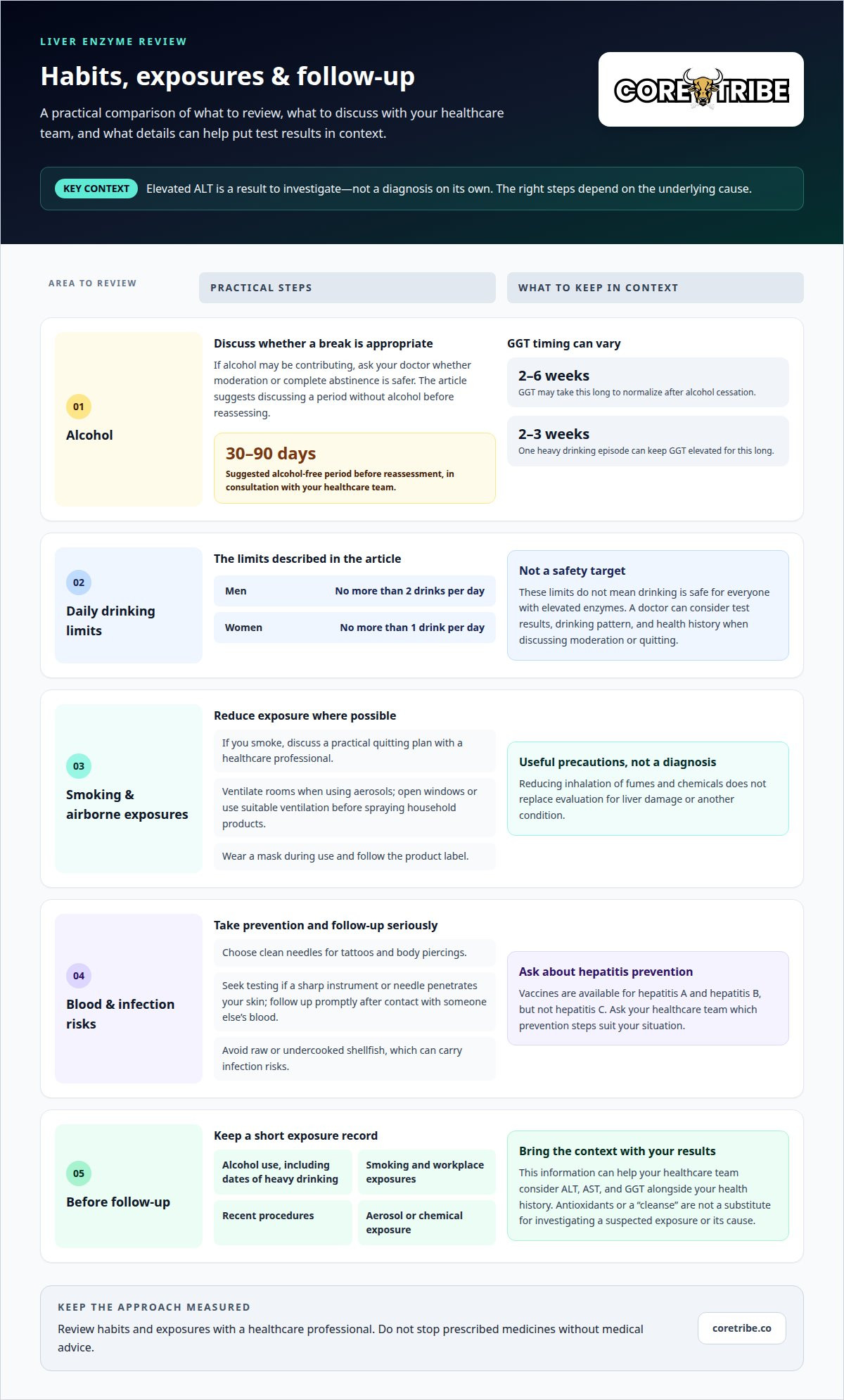
If alcohol may be contributing, ask your doctor whether moderation is appropriate or complete abstinence is safer. A period without alcohol can help clarify whether drinking is affecting your results. The suggested approach is to eliminate alcohol completely for 30–90 days before reassessing liver enzymes, in consultation with your healthcare team. GGT may take 2–6 weeks to normalize after alcohol cessation. Even one heavy drinking episode can keep GGT elevated for 2 to 3 weeks, so recent intake may matter when interpreting a test.
Discuss alcohol intake in context rather than treating general limits as a target. The limits given are no more than two drinks per day for men and one drink per day for women. These limits don’t mean drinking is safe for everyone with elevated enzymes. A doctor can consider your test results, drinking pattern, and health history when discussing whether moderation or quitting is appropriate. If alcohol-related inflammation or alcoholic liver disease is a concern, describe your intake accurately.
Smoking is another exposure to address while investigating possible causes. If you smoke, discuss a practical quitting plan with a healthcare professional. Reduce contact with fumes and chemicals where possible, too. Ventilate rooms when using aerosols and wear a mask during use. For example, open windows or use suitable ventilation before spraying household products, and follow the product label. These steps reduce inhalation of airborne substances, but they don’t replace evaluation for liver damage or other disease.
Some risks involve blood or infection rather than household chemicals. Choose clean needles for tattoos and body piercings, since contaminated equipment can transmit hepatitis. If a sharp instrument or needle penetrates your skin, seek testing. Follow up promptly with a doctor after contact with someone else’s blood. Avoid raw or undercooked shellfish, which can carry infection risks. Vaccines are available for hepatitis A and hepatitis B, but not hepatitis C. Ask your healthcare team which prevention steps suit your situation.
Before your follow-up appointment, keep a short record of alcohol use, smoking, workplace exposures, and recent procedures. Include dates of heavy drinking and any aerosol or chemical exposure. This gives your healthcare team useful context alongside ALT, AST, and GGT results. Don’t treat antioxidants or a “cleanse” as a substitute for removing a suspected exposure or investigating the cause.
2. Discussing supplements with a healthcare team
For fatty liver and elevated enzymes, choose balanced meals built around vegetables, fruit, whole grains, and nourishing protein. Pair dietary changes with regular activity and a sustainable approach to weight, since nutrition and lifestyle habits support liver function.
Liver enzyme levels don’t usually change overnight after a new routine. The first meaningful retest window after lifestyle changes is 8 to 12 weeks. Keep your healthcare team involved so test results can be considered alongside your symptoms, medicines, and nutrition plan.
Before taking a supplement, share its name, ingredients, dose, and frequency with your healthcare team. Include powders, teas, vitamins, herbal products, and “liver cleanse” formulas. Natural ingredients can still interact with medicines or harm the liver. Products marketed for liver detox aren’t automatically safer, and milk thistle hasn’t proved effective for improving liver health.
Evidence for individual nutrients varies. In a trial involving people with MASLD, participants taking 1 milligram of folic acid per day for 8 weeks had a drop in ALT compared with a placebo group. That finding doesn’t make folic acid a treatment for everyone. People with MASLD should use vitamins and supplements for liver health only on advice from their healthcare team, not instead of their care plan. Supplements can’t cure MASLD or replace healthy habits.
Start with food sources when planning meals. Fatty fish, walnuts, some seeds, and leafy green vegetables provide omega-3 fatty acids. Research on omega-3 supplements for MASLD has mixed findings, so ask your healthcare team before taking them if your diet falls short.
For practical daily choices, try these swaps:
- Choose whole fruit instead of processed sweets, and replace soda with water, unsweetened tea, or sparkling water.
- Build meals around fruits, vegetables, and whole grains to add dietary fiber.
- Choose leafy greens and fatty fish a few times a week, and limit red meat.
- Use low-fat milk and small amounts of cheese, and drink water throughout the day.
- Aim for less than 25 g of added sugar per day and less than 2,300 mg of sodium per day.
Share your usual meals and any planned changes during your appointment. If you’re considering wellness products alongside food-based habits, explore wellness supplements without treating them as a substitute for medical care.
3. What Are Liver Enzymes?
Liver enzymes are proteins measured in blood tests, and elevated levels can signal liver cell irritation or injury. ALT is one marker; a typical reference range is 4 to 36 IU/L, though laboratory ranges can differ.
How are elevated liver enzymes evaluated, and what tests may be needed? A healthcare professional reviews your results, health history, alcohol use, and medicines or supplements, then may order repeat testing or a fuller liver panel. ALT, AST, ALP, and GGT provide different clues, while the pattern and degree of change guide further evaluation.
ALT is often considered alongside AST, another enzyme measured in blood. GGT and ALP can add context, while bilirubin is included in assessments of liver function. These results don’t identify a disease by themselves. A high ALT calls for investigating possible causes, rather than focusing only on lowering the number.
Common causes include metabolic dysfunction-associated steatotic liver disease (MASLD), alcohol-related liver injury, hepatitis, and certain medicines or supplements. Fatty liver can occur with metabolic risk factors, while alcoholic fatty liver is associated with alcohol use. Inflammation or liver damage from different causes may produce overlapping results, so the wider clinical picture matters.
Recent activity and timing can also shape test interpretation. Intense exercise may affect enzyme readings, so avoid it for 48–72 hours before testing. Tell the clinician about a recent illness, alcohol use, supplements, and medication changes. Don’t stop prescribed medicines on your own; a prescriber can weigh their benefits against possible liver effects.
A result more than three times the upper limit of normal warrants prompt evaluation. For other abnormal results, the next step depends on which enzymes are elevated, how they compare with previous tests, and whether symptoms or health conditions are present. Follow-up testing can show whether levels are rising, falling, or staying similar.
Research has associated coffee with lower ALT, but more studies are needed to explain the relationship. Treat coffee as a drink choice, not a remedy for liver disease. Likewise, foods described as antioxidant-rich can’t diagnose or resolve the cause of an abnormal result.
Keep a record of test dates and results, and bring it to appointments. After six months, a full liver panel can help assess liver function comprehensively. Pairing that analysis with a review of possible causes gives your healthcare team a clearer basis for next steps.
4. Reviewing medications and supplements
Yes. Alcohol, some medicines, and supplements can raise liver enzymes, so review them with a doctor or pharmacist. Don’t add a supplement or stop prescribed treatment on your own. The safest next step depends on the product, dose, health history, and test pattern.
Bring a complete medication list to your review. Include prescriptions, over-the-counter pain relievers, vitamins, powders, and herbal products, along with each dose and how often you take it. Note recent changes and the reason for each medicine. A pharmacist or doctor can assess whether a medicine or combination may be affecting your liver and discuss safer options where appropriate.
Don’t abruptly stop a prescribed medicine because ALT or AST is elevated. The medicine may treat a condition that also affects liver health, and stopping it could create other risks. Ask the prescriber to weigh the timing of the enzyme change against medication starts, dose adjustments, other health conditions, and weight changes. Share earlier blood test results when available.
Vitamin E illustrates why supplement decisions need context. The recommended daily allowance for adults is 15 milligrams. A study reported that 800 IU per day for 96 weeks lowered ALT in adults with non-alcoholic liver disease and improved liver health measured by biopsy. That result doesn’t apply to everyone: vitamin E isn’t recommended for people with serious liver scarring or type 2 diabetes.
Findings also differ across age groups and study designs. In a study involving 173 adolescents with non-alcoholic fatty liver disease, 800 IU of vitamin E daily for 96 weeks didn’t reduce ALT. A meta-analysis of five studies involving 270 children also found no significant ALT reduction. These results suggest that an adult finding shouldn’t be assumed to predict an effect in children or adolescents.
Other supplements may have limited or different effects. In a study of 60 men, choline at 550 mg/day didn’t lower ALT, although it prevented levels from rising. That distinction matters: a supplement’s effect on a test result doesn’t establish that it treats the cause of liver disease or improves liver function.
Make the review practical: bring product containers or clear ingredient labels, list start dates, and record recent dose changes. Ask whether a product should be paused, continued, or replaced, and how that decision fits your care plan. Avoid combining several new supplements at once, since that makes it harder to identify which change may affect enzyme levels.
5. Fried foods, processed meats, and refined carbohydrates
Food choices can support liver health, especially when fatty liver is linked with metabolic health. Focus on a consistent eating pattern rather than one “liver-friendly” meal. Limit high-calorie meals, saturated fat, refined carbohydrates, and added sugars. These choices can make weight and liver fat harder to manage, which may affect enzyme levels.
Start with the foods you eat most often. Swap white bread, sweetened cereal, or pastries for oats, quinoa, or brown rice. Choose baked, grilled, or air-fried meals instead of deep-fried foods. For example, serve grilled chicken with brown rice rather than fried chicken with fries. Small substitutions can make familiar meals more balanced without requiring a restrictive diet.
You can also replace processed meats, such as bacon, sausage, and deli meats, more often with beans, eggs, or less-processed protein choices. Build meals around vegetables, whole grains, and a suitable protein source. A practical plate might pair roasted vegetables with quinoa and beans. This approach is easier to repeat than relying on strict food rules.
Drinks are part of your eating pattern, too. Replace soda or sweetened drinks with water, unsweetened tea, or sparkling water. Choose whole fruit instead of cookies or other processed sweets when you want something sweet. Added sugar can appear in flavored drinks, sauces, and packaged snacks, so checking ingredient labels can help you spot easy swaps.
If weight loss is appropriate for you, a daily calorie deficit of 300–500 calories is suggested for reducing visceral fat. Pair food changes with 150–300 minutes per week of moderate-intensity aerobic exercise, such as brisk walking. For people with fatty liver disease, losing 7–10% of body weight can reverse NAFLD and normalize ALT in most people. Ask your healthcare team what weight and activity goals fit your health and current needs.
Consistency matters more than a short period of strict eating. Plan a few repeatable meals, keep whole-grain options such as oats or brown rice available, and choose grilled or baked foods when dining out. Track changes alongside follow-up liver tests, since enzyme results help show how your body responds.
Be cautious with products marketed as liver cleanses. Liver cleanse and detox supplements can harm the liver, so discuss ingredients with your healthcare team before considering one. For a careful next step, review available wellness options while keeping food habits and medical guidance central to your plan.
Coretribe: Liver detox
Consider Coretribe’s Liver detox only after reviewing its ingredients with your healthcare team. Elevated liver enzymes need a cause-focused evaluation, and a detox supplement shouldn’t replace testing, prescribed care, or sustainable food and lifestyle changes.
Use particular care if you already take medicines or other supplements, since products marketed for liver cleansing can harm the liver. Discuss whether this product suits your health history and current care plan before using it. If your healthcare team advises against a detox supplement, focus on the recommended steps for addressing the cause of your enzyme results instead.
For questions about the Liver detox offering, contact Coretribe when you’re ready.
Choose your next step with care
Learning how to reduce liver enzymes naturally begins with a clear, thoughtful plan, not a promise on a product label. Keep your healthcare team involved as you decide which lifestyle steps and wellness products fit your situation. If you’re considering supplements, review their ingredients with your team first, especially if you take medication or already use other products.
Coretribe offers wellness products including Coretribe ® Pure Shilajit Capsules - Mixed Sea Moss & Ashwagandha, Coretribe®Shilajit Honey Sticks, and Revive Dress. These offerings don’t replace evaluation of elevated liver enzymes or medical advice. Choose products thoughtfully, keeping the focus on decisions that support your overall well-being.
For a closer look at the available options, explore Coretribe’s wellness range. You can also contact Coretribe with your questions. Take the next step at a pace that feels considered and informed.
Frequently Asked Questions
How can I lower my ALT naturally?
Start by finding out what may be driving the ALT result, then make changes that address that cause. Keep a simple log of meals, alcohol use, medicines, supplements, and test dates to discuss with your healthcare team. Don’t add a “liver support” product as a shortcut. Retesting after lifestyle changes can help show whether your plan is affecting enzyme levels.
What Are Liver Enzymes?
Liver enzymes are proteins measured in blood tests that can provide clues about liver cell irritation or injury. ALT and AST are commonly reviewed alongside other markers, including ALP and GGT. Their pattern helps guide evaluation, but enzyme readings alone don’t establish a diagnosis or fully describe liver function. A healthcare professional considers your results alongside your health history and other relevant findings.
What about 'liver cleanses' or 'liver detox' products?
Be cautious: products marketed as liver cleanses or detoxes can harm the liver, and they don’t replace investigation of abnormal test results. Before using one, share its full ingredient list and directions with your healthcare team, especially if you take medicines or other supplements. Don’t assume a product is safe just because it’s described as natural. A clinician can consider its ingredients alongside your health history and care plan.
What are high ALT levels?
“High” means ALT is above the reference range used by the testing laboratory. A typical range is 4 to 36 IU/L, but laboratories may use different ranges, so interpret your result against the range printed on your report. A value alone doesn’t identify the cause. ALT more than three times the upper limit of normal warrants prompt evaluation, rather than self-treatment.
What is ALT?
ALT, or alanine aminotransferase, is an enzyme found mainly in liver cells. When those cells are irritated or injured, ALT can enter the bloodstream, which is why a blood test measures it. A raised result is a clue, not a diagnosis. Clinicians interpret ALT with other tests, such as AST, and relevant health history to decide what may need further evaluation.
What should I do if my ALT is high?
Arrange medical follow-up and bring the complete laboratory report, including its reference range and any earlier results. Write down your medicines, supplements, and recent changes in use so the clinician can assess possible contributors. Don’t stop a prescribed medicine without discussing it with its prescriber. If ALT is more than three times the upper limit of normal, seek prompt evaluation to assess the reason for the result.
What causes elevated liver enzymes, and what do ALT and AST levels mean?
Possible causes include fatty liver disease, alcohol-related liver injury, hepatitis, and some medicines or supplements. ALT and AST are markers that can rise with liver cell irritation or injury, but neither result identifies a cause by itself. The combination of enzyme results, their pattern over time, health history, and medication or supplement use helps guide the next steps in evaluation.
When should someone see a doctor for elevated liver enzymes or seek urgent care?
Contact a healthcare professional about elevated ALT so the cause can be assessed. A result more than three times the upper limit of normal warrants prompt evaluation. Share the exact result, the laboratory’s reference range, and any related test results. If you’re unsure how quickly to act, call the clinician who ordered the test and explain the value and any new or worsening symptoms.

