


A natural energy supplement isn’t automatically the safest first step. If you’re wondering how to get energy without caffeine, start with everyday habits such as drinking water, moving regularly, eating at steady intervals, and taking a brief nap when an afternoon slump hits. The U.S. Food and Drug Administration advises most adults in the United States to consume less than 400 mg of caffeine per day, but you may still prefer alternatives if you’re trying to cut back or want to rely less on caffeinated drinks.
It makes sense to look for a steadier approach: sleep, meals, movement, and hydration all shape how you feel during the day. This guide explains who may want caffeine alternatives and how everyday habits can support energy. It also covers why supplements marketed as natural energy boosters deserve care: evidence may be limited, and some supplements can interact with medications. If you’re considering one, talk with a healthcare professional or registered dietitian first. Small, consistent changes are a sensible place to begin.
Key Takeaways
- Use thirst as a cue to drink water, and remember that hydration needs can vary from person to person.
- Try a brief walk or a short bout of movement when your energy dips instead of reaching straight for caffeine.
- Plan regular meals and snacks, pairing protein with fruits or vegetables for more sustained energy.
- Keep an afternoon nap brief to help ease grogginess without waking from deeper sleep.
- Approach supplements marketed for energy with care, especially if you take medication; a healthcare professional or registered dietitian can help you weigh the risks.
1. Hydration
Drinking water regularly can support alertness, especially if dehydration is contributing to fatigue. Thirst is a useful cue: keep water nearby and drink when you feel thirsty rather than waiting until you feel parched. Fatigue can be a sign of dehydration, though it can have other causes too. If coffee is part of your routine, add water throughout the day instead of relying on another cup to push through tiredness.
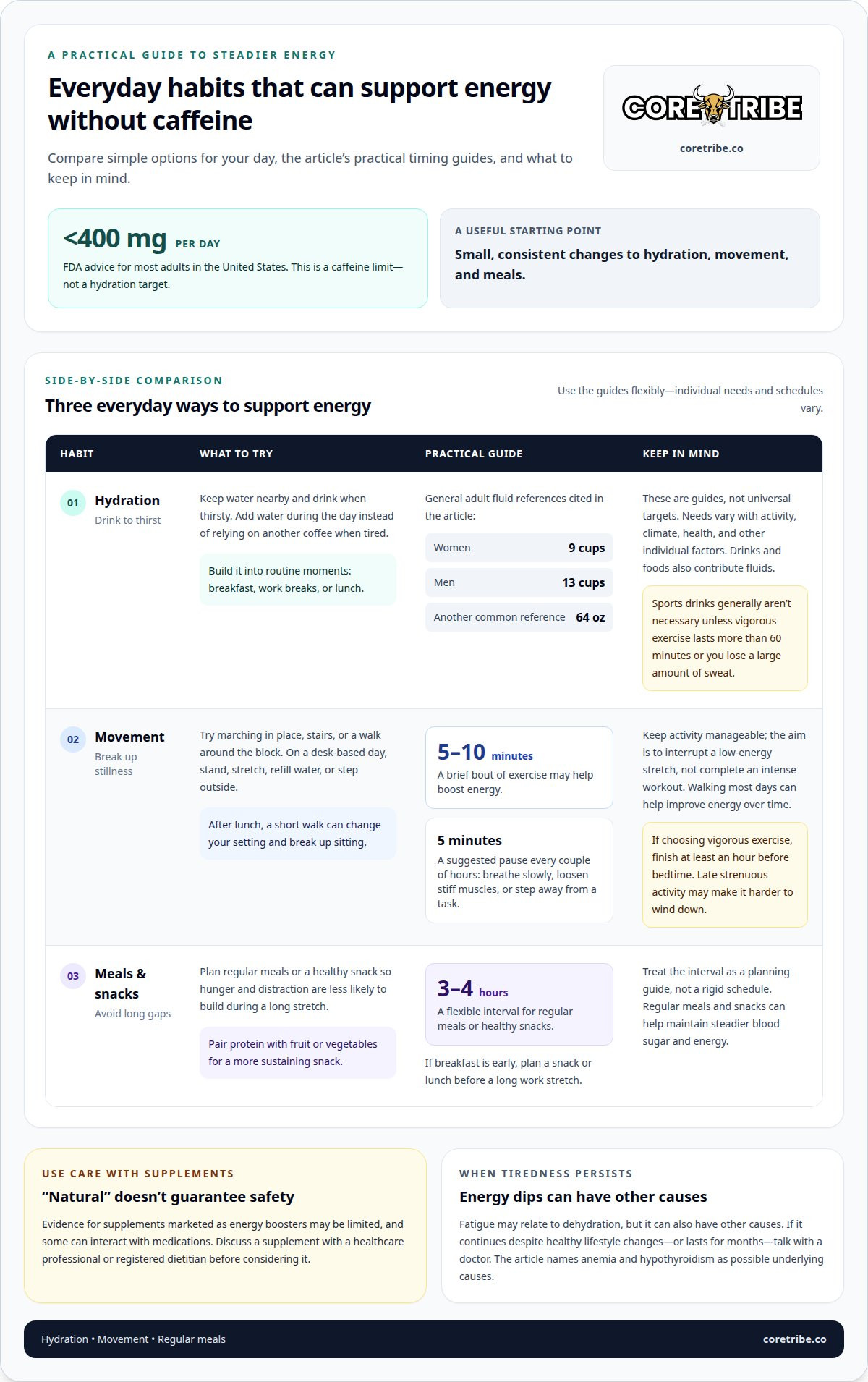
Daily fluid goals are guides, not fixed amounts for everyone. General recommendations cited for adults include 9 cups of fluid for women and 13 cups for men; another common reference is at least 64 ounces a day. Needs can vary with activity, climate, health, and other individual factors. Water is a straightforward choice, and fluids from other drinks and foods also contribute to intake. Use thirst, your routine, and how you feel to guide drinking, rather than treating one target as universal.
A simple approach is to build water into moments already in your day: have a glass with breakfast, refill a bottle during work, or drink alongside lunch. These steps make intake easier to spread out than trying to drink a large amount at once. Extra fluids may matter after sweating or exercise. Sports drinks generally aren’t necessary unless vigorous exercise lasts more than 60 minutes or you lose a large amount of sweat. Alcohol can contribute to fatigue and grogginess because it can dehydrate, sedate, and disrupt sleep.
Sunlight or bright daylight may help you feel more alert, and spending a little time in nature can feel energizing. Try stepping outside during a daytime break; if you’ve been indoors without drinking recently, bring water along. Daylight isn’t a substitute for addressing persistent tiredness, but it can be a practical part of your routine.
Persistent fatigue can have causes beyond caffeine withdrawal. Anemia and hypothyroidism are possible underlying causes. Chronic fatigue lasting for months despite healthy lifestyle changes may warrant evaluation for conditions such as myalgic encephalomyelitis/chronic fatigue syndrome or fibromyalgia. Hydration can support daily well-being, but it won’t address every cause of low energy.
Talk with a doctor if fatigue continues despite healthy lifestyle changes, or if it lasts for months. A healthcare professional can consider possible causes such as anemia or hypothyroidism and assess your symptoms in context. The U.S. Food and Drug Administration advises most adults in the United States to consume less than 400 mg of caffeine daily. That limit is not a hydration target; drinking water when thirsty remains a separate, practical step.
2. Brief exercise and walks
When fatigue makes another coffee tempting, try a short bout of movement first. A brief five- to 10-minute period of exercise can help boost energy. Exercise triggers the release of endorphins and norepinephrine, which can help you feel awake and alert. Choose a manageable activity, such as marching in place, climbing stairs, or walking around the block. The aim is to interrupt a still, low-energy stretch, not to complete an intense workout. Notice how you feel afterward and use that response to choose a comfortable pace next time.
A brisk walk is another practical option, especially when it becomes part of your regular routine. Walking most days of the week can help improve energy over time. Choose a familiar route, such as a loop near home or a walk between errands, so getting started takes little planning. If a longer walk feels difficult, start with a short stretch and build consistency before adding more. Keep a purposeful pace that still lets you speak comfortably.
On a desk-based day, take a brief movement break to change your setting and posture. Stand, stretch your shoulders, walk to refill your water, or step outside for a few minutes. Stress can drain energy, and mindfulness, meditation, physical activity, and short breaks are healthy ways to manage it. Try pausing for five minutes every couple of hours. Breathe slowly, loosen stiff muscles, and step away from the task demanding your attention.
After lunch, a short walk can help you reset for the afternoon. Walking after a meal can help prevent a large blood sugar spike, while a change of scenery breaks up a long stretch of sitting. Keep the plan simple: put on comfortable shoes, walk around the block, or take the stairs for part of your route. If the weather or your schedule makes going outside difficult, walk indoors instead. Consistency matters more than an elaborate routine.
Even a short time in nature may help you feel more energized. Walk in a park, sit outside during a break, or choose a tree-lined route when convenient. Add a few minutes of gentle movement if you’ve been sitting for much of the day. This offers a clear change of pace without special equipment. If you’re tired, keep the activity easy enough for your current energy rather than pushing through exhaustion.
Timing can make movement easier to fit into your day. If you prefer vigorous exercise, finish at least an hour before bedtime, as strenuous activity late in the day may make it harder to wind down. Gentle stretching or an easy evening stroll can be a calmer alternative. Try taking a brisk walk earlier and using shorter movement breaks between tasks. For example, take a five-minute walk after sitting for a long stretch, then another short break later, adjusting to your schedule and energy.
3. Eating meals and snacks regularly
Long gaps between meals can leave you feeling drained and reaching for quick fixes. Regular meals or healthy snacks about every 3 to 4 hours can help maintain steady blood sugar and energy. Use that interval as a flexible planning guide, not a rigid schedule. For example, if breakfast comes early, plan a snack or lunch before a long stretch of work leaves you hungry and distracted.
Build a snack around protein and fruit or vegetables for more sustained energy than sweets alone. Try an apple with peanut butter, plain yogurt with berries, or hummus with carrot sticks. These combinations are easy to pack for a commute or keep ready at home. Candy by itself may not provide the same sustained energy as pairing produce with protein.
A meal combining carbohydrates, fats, and proteins can offer quick energy while helping you feel full and avoid using energy too quickly. For breakfast, try oatmeal with nuts and yogurt. At lunch, whole-grain bread with egg and avocado brings the three components together. These are examples, not required menus; use familiar foods that fit your preferences and routine.
Planning makes regular eating easier on busy days. At the start of the day, decide when you’ll have your next meal and keep a simple snack handy in case your schedule shifts. A small container of nuts with fruit, or yogurt set aside for a break, can bridge the gap between meals. If meetings often run through lunch, set aside time beforehand rather than waiting until hunger disrupts your concentration.
Notice how different meals affect your energy. If a sweet breakfast leaves you hungry soon afterward, try adding protein, such as an egg or yogurt, and see whether it helps. If a large lunch makes afternoon work feel sluggish, consider a more moderate portion and a balanced snack later. Everyday adjustments can help you learn what works for you without treating any one meal as a universal solution.
Keep the pattern practical. A healthy routine might include breakfast, lunch, dinner, and snacks when needed, with roughly 3 to 4 hours between eating occasions. The exact foods and timing can vary with appetite, work, and daily activities. Focus on pairing food groups rather than relying on a sugary snack alone. A couple of prepared options can make balanced choices easier when energy dips and time is short.
4. Short naps for afternoon grogginess
A brief nap can offer a reset when afternoon grogginess makes it hard to focus. Aim for 15 to 20 minutes, then get up and return to your routine. Set an alarm before lying down, so a quiet rest doesn’t turn into a longer sleep. For example, if your attention starts fading after lunch, use a scheduled break for a short nap rather than trying to push through with another coffee.
Nap length matters because sleep moves through different levels. A 20-minute nap can provide restorative benefits from the first couple of sleep stages. Sleeping longer than 20 minutes may mean waking from a deeper stage, which can leave you feeling groggy. Keep the nap brief, and give yourself a moment to sit up, drink water, and orient yourself before returning to a demanding task.
Adults generally need 7 to 9 hours of sleep each night to support energy. A nap can ease an afternoon dip, but it isn’t a replacement for a regular night’s sleep. If you’re routinely needing long naps to get through the day, consider whether your nighttime schedule allows enough rest. Keeping a simple sleep log can help you notice patterns in bedtime, wake time, and daytime tiredness.
Make the nap setting comfortable and simple. Choose a cool, dark, quiet room, and use your bed primarily for sleep. If your bedroom isn’t available during a workday, find a quiet place where you can rest without interruptions. Silence notifications, set one alarm for 15 to 20 minutes, and avoid turning the break into an extended period in bed. A consistent routine can make it easier to settle down.
Notice how you feel after each short nap. If you wake refreshed, a brief rest may suit your afternoon routine; if you feel sluggish, shorten your next nap or try quiet rest without sleeping. Don’t judge its value only by how quickly you fall asleep. A few minutes of calm with your eyes closed can still provide a pause from work, though it doesn’t offer the same sleep stages as an actual nap.
Plan your nap around the task you need to return to. If you have a meeting or focused work later, for example, leave time to wake fully and gather your attention before starting. Keep the alarm within reach and resist resetting it repeatedly. These small steps help keep a short rest from stretching into deeper sleep. Pairing a brief nap with steady bedtimes and wake times supports a more balanced approach to daytime energy.
5. Caution with energy supplements
“Natural” on a supplement label doesn’t prove that a product is effective or suitable for everyone. Supplements marketed as energy boosters may have limited supporting evidence, and some can interact with medications. If you’re considering one, talk with a healthcare professional or registered dietitian first. This is especially important if you take prescription or over-the-counter medication, manage a health condition, or already use several supplements.
Go into that conversation prepared. Write down the supplement’s name, ingredients, and suggested use, and bring the package or a clear photo of its label. Include a list of your medications and other supplements. This gives a healthcare professional or registered dietitian useful context for considering possible interactions. Don’t treat an “energy” claim or a natural-sounding ingredient name as proof that a product will address fatigue.
Keep the goal clear: a supplement shouldn’t replace a routine that supports energy. Regular meals and snacks about every 3 to 4 hours can help maintain steady blood sugar. A meal with carbohydrates, fats, and proteins, or a snack pairing protein with fruit or vegetables, offers a practical food-first option. If tiredness continues despite healthy habits, speak with a healthcare professional about possible underlying causes instead of adding supplements one after another.
Relaxation can also help when stress is contributing to low energy. Try sitting comfortably, releasing tension in your shoulders, and breathing slowly for a few minutes. A five-minute pause every couple of hours can create space to settle down; mindfulness, meditation, and short breaks are other useful stress-management practices. The Stimulating Breath exercise uses rapid inhaling and exhaling through the nose for about 10 seconds, but choose a calm breathing practice if rapid breathing doesn’t feel comfortable.
Before trying an energy supplement, take these steps:
- Write down the product name and its listed ingredients.
- Gather your medication and supplement list.
- Discuss potential interactions and the available evidence with a healthcare professional or registered dietitian.
- Keep meals, movement, and rest in view as part of your broader routine.
These steps help make the decision more informed without assuming that a supplement will deliver a particular result. If you want to review the available wellness supplement options, keep this cautious approach in mind and discuss a product with a qualified professional before taking it.
Coretribe
Coretribe offers natural wellness products for readers exploring options alongside daily habits such as regular meals, movement, and rest. Its range includes Shilajit Supplements and Coretribe ® Pure Shilajit Capsules - Mixed Sea Moss & Ashwagandha. These products are options to explore, not substitutes for hydration, balanced routines, or guidance from a healthcare professional. If you’re considering a supplement for energy, review its ingredients and discuss possible interactions with a healthcare professional or registered dietitian, particularly if you take medication. Choose an approach that fits your broader wellness routine rather than expecting a product to replace the foundations covered in this guide. For ongoing fatigue, seek medical advice about possible causes. If you have questions about Coretribe, contact Coretribe.
Build a routine that fits your day
Energy habits are easier to sustain when they fit your schedule, preferences, and daily responsibilities. Start with one small change, notice how it fits your routine, and then consider adding another. A practical approach to how to get energy without caffeine is to treat everyday choices as a steady foundation, not a quick fix. If fatigue keeps affecting daily life, seek advice from a healthcare professional rather than relying on supplements alone.
For readers exploring wellness products alongside these habits, Coretribe offers Coretribe ® Pure Shilajit Capsules - Mixed Sea Moss & Ashwagandha, Coretribe®Shilajit Honey Sticks, and Revive Dress. These options serve different interests, so consider what fits your routine and keep supplement safety in mind. A product isn’t a substitute for professional guidance about persistent fatigue or possible medication interactions.
Contact Coretribe to discuss your needs and explore an approach that feels considered and sustainable. Start with one manageable step, and give your routine room to take shape.
Frequently Asked Questions
Who should look for caffeine alternatives?
Anyone who wants to rely less on caffeinated drinks can explore everyday alternatives, including people who don’t want coffee to be their automatic response to an energy dip. If you’re considering how to get energy without caffeine, notice when you reach for caffeine and what’s happening then: a skipped meal, a long stretch of sitting, or an afternoon slump may point to a habit you can adjust. If fatigue persists, discuss it with a healthcare professional.
Can supplements boost your energy?
Some supplements are marketed for energy, but supporting evidence may be limited and they can interact with medications. Before trying one, bring its ingredient label and a list of your medicines and supplements to a healthcare professional or registered dietitian. Discussing them together can help you consider the evidence and possible interactions. Don’t assume “natural” means suitable for everyone, or use a supplement in place of medical advice for persistent fatigue.
What are the best ways to boost energy without caffeine?
To get energy without caffeine, start with the habit that best matches your situation. If you’ve been sitting through back-to-back tasks, take a brief walk; if you haven’t eaten for a while, choose a balanced snack. A glass of water is a sensible step when you’re thirsty, while a short nap may suit an afternoon slump. Try one change at a time to see which routine works for your day.
How does drinking water help with fatigue, and how much should you drink?
Dehydration can contribute to fatigue, so drinking when thirsty is a practical cue. General adult fluid guides include at least 64 ounces a day, with some recommendations suggesting nine cups for women and 13 cups for men. These are not identical measures or universal personal targets. Needs vary, so don’t try to force several guidelines into one rule; consider your thirst, daily routine, and activity.
Which foods and snacks provide steady energy without caffeine?
Choose foods that combine protein with fruit or vegetables, or meals that include carbohydrates, fats, and protein. For example, try cottage cheese with sliced pear or lentil soup with whole-grain bread. These options are an alternative to relying on sweets alone. Keep an easy snack handy for a busy day, such as fruit with a protein-rich food, so a delayed lunch doesn’t leave you reaching for a sugary pick-me-up.
How can a short walk or other exercise increase energy?
Movement can help you feel more awake: exercise prompts the release of endorphins and norepinephrine. If you’re working at a desk, walk a familiar indoor route, take the stairs, or step outside briefly. A short bout of activity can be easier to fit into a busy day than a full workout. Choose a pace that feels manageable, especially when fatigue makes movement difficult.
Do power naps improve energy, and how long should a nap be?
A short nap can help ease an afternoon dip. Aim for 15 to 20 minutes and set an alarm before settling down. A nap longer than 20 minutes may leave you groggy if you wake during a deeper sleep stage. If you can’t sleep, resting quietly for a few minutes still gives you a pause from work, but it doesn’t replace sufficient nighttime sleep.

