


What if your best pre-workout boost doesn’t come from a tub of powder? If you’re looking for natural pre-workout alternatives, you may want energy for training without jitters, a stimulant-heavy formula, or guesswork about what to eat and when.
The right choice depends on the session ahead, when you last ate, and how your body responds. A light snack may suit one workout, while fluids or a modest amount of caffeine may feel more useful for another. There’s no single routine everyone needs to follow.
This guide compares practical food, hydration, and caffeine options, with flexible timing ideas. You’ll learn how to match your fuel to your training, account for caffeine sensitivity, and build a pre-workout routine without treating supplements as a shortcut or a necessity.
Key Takeaways
- Match your pre-workout choice to your session, your last meal, and what feels comfortable to digest.
- Compare natural pre-workout alternatives, from fruit and oats to coffee, tea, and water, by their practical role and caffeine content.
- Use flexible timing rather than a rigid rule: a small snack and a full meal may suit different routines.
- Start with food and fluids, and treat supplements as optional choices to assess carefully.
- Before trying a supplement, check its label, ingredient amounts, and independent quality information where available.
What Are Natural Pre-Workout Alternatives, and Who Might Prefer Them?
Preparing for exercise doesn’t have to start with a brightly colored powder or a strong stimulant. Natural pre-workout alternatives are everyday foods and drinks, or carefully selected supplements, used before training to provide fuel or fit a person’s preferences. The phrase describes an approach, not a promise: natural origin alone doesn’t prove that something is safe, effective, or right for every person.
Consider the difference between a piece of fruit or a cup of tea and a concentrated powder made from isolated ingredients. Both can be marketed as natural, but they differ in form, concentration, and how easily you can assess what you’re consuming. The broader principles of Sports nutrition offer useful context: food choices can support activity, but no single ingredient or routine guarantees a better workout.
What Does “Natural Pre-Workout” Actually Mean?
Whole foods and familiar drinks are one category; concentrated powders and supplements are another. Processing doesn’t automatically make a product harmful, just as a plant-derived ingredient isn’t automatically gentle or beneficial. The source, amount, preparation, full ingredient list, and your own response all matter. A simple option can make choices easier to understand, but “natural” isn’t a substitute for checking what’s in a product or whether it suits you.
Who May Want an Alternative to Conventional Pre-Workout?
This approach may appeal if caffeine makes you feel unsettled, you’d rather avoid stimulant-heavy blends, or you prefer familiar foods and drinks to products with ingredients you don’t recognize. It can also suit anyone who wants a simpler routine with less focus on finding a performance shortcut. You don’t need a supplement to prepare for exercise.
Personal circumstances matter, too. Pregnancy, a medical condition, or medication use can affect whether a supplement or even a caffeinated drink is suitable. If you’re unsure, ask a qualified healthcare professional before trying a supplement, particularly one with multiple active ingredients. This is a practical precaution, not a reason to assume every conventional product is harmful or every food-based choice is risk-free.
Look beyond the word “natural.” Ask what role you want the choice to play, whether you recognize its ingredients, and how you tend to respond. The comparisons below can help you weigh those questions against the demands of your workout.
How Food, Fluids, and Caffeine Support Pre-Workout Fuel
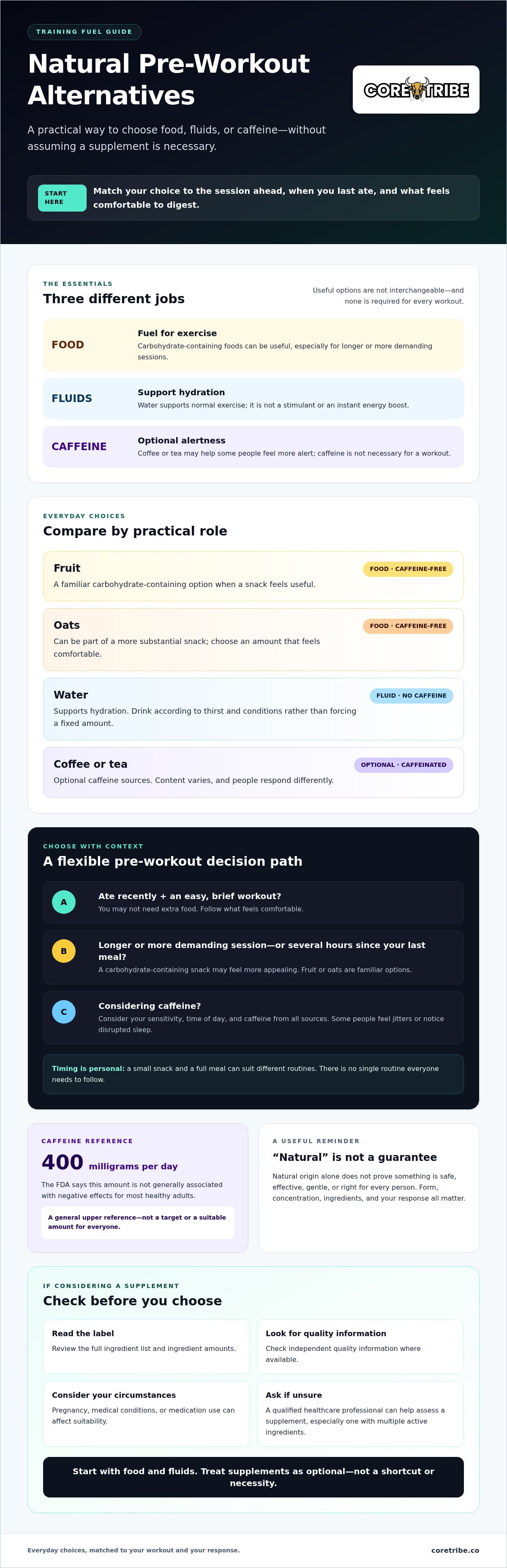
Pre-workout choices serve different purposes. Food can provide energy your body uses during exercise, fluids support hydration, and caffeine may make some people feel more alert. They aren’t interchangeable, and none is required for every workout. Food is fuel for exercise; ingredients marketed for focus or endurance are optional tools, not a replacement for that fuel.
Carbohydrates, Energy, and Training Demands
Carbohydrates are a practical source of energy, particularly for longer or more demanding sessions. Fruit is a familiar option, while oats can be part of a more substantial snack. Neither is a universal solution. The amount and type of food that feels comfortable depend on your appetite, digestion, training, and what you’ve already eaten.
A brief, easy workout may not call for extra food if you’ve eaten recently. A longer session or challenging training day may make a carbohydrate-containing snack more appealing, especially if it’s been several hours since your last meal. Consider how you feel and what your routine allows, rather than expecting one snack to improve every workout.
Hydration and Caffeine: Useful, but Not Universal
Drinking enough fluid supports normal exercise, but water isn’t a stimulant and shouldn’t be expected to create an instant surge of energy. Fluid needs vary with the workout, environment, and individual needs. Starting exercise comfortably hydrated and drinking according to thirst and conditions is more useful than forcing a fixed amount.
Coffee or tea can be optional sources of caffeine, but they aren’t necessary pre-workout choices. Caffeine content varies, and sensitivity differs: some people feel alert, while others experience jitters or find that caffeine disrupts sleep. Consider the time of day and your intake from all sources. The FDA says 400 milligrams per day is an amount not generally associated with negative effects for most healthy adults. That’s a general upper reference, not a target or a suitable amount for everyone.
For a balanced look at what common workout supplements may and may not offer, Harvard T.H. Chan School of Public Health outlines evidence-based uses in sports nutrition. This can help put individual ingredients in perspective alongside a healthy diet. Natural pre-workout alternatives are best viewed as choices to match to your needs, not guaranteed performance aids. If you’re exploring supplements separately, you can review wellness products and their current labels before deciding whether any are appropriate for you.
Natural Pre-Workout Alternatives Compared: Foods, Drinks, and Caffeine-Free Choices
The most useful choice depends on what you need: a little food, a familiar drink, or simply fluid. Use the comparison below as a starting point, not a ranking. Portion size and suitability vary with your appetite, digestion, time since your last meal, and planned workout.
| Option | Potential role | Caffeine status | Convenience | Practical caveat |
|---|---|---|---|---|
| Fruit | A simple, carbohydrate-containing snack | Caffeine-free | Easy to carry and eat | Amount and fruit choice depend on appetite and digestion |
| Oats | A more substantial food option | Caffeine-free | Can be prepared ahead | May feel too filling close to exercise for some people |
| Yogurt-based snack | Food with protein; can be paired with fruit | Usually caffeine-free | Simple if kept chilled | Protein can feel filling, and dairy doesn’t suit everyone |
| Smoothie | A flexible way to combine fruit with other foods | Usually caffeine-free | Portable in a suitable bottle | Ingredients and portion size affect how filling it feels |
| Coffee or tea | An optional caffeinated drink | Contains caffeine; amount varies | Easy to fit into many routines | Consider sensitivity, sleep, and caffeine from other sources |
| Water or another caffeine-free drink | Fluid to support hydration | Caffeine-free if the product contains no caffeine | Simple to bring along | Hydration isn’t a stimulant or a substitute for food |
| Beetroot food or juice | A food-based option some exercisers choose to explore | Typically caffeine-free | Juice can be quick to consume | It isn’t a guaranteed endurance aid; check tolerance and suitability |
Which Food-Based Options Fit Different Workout Situations?
For a light session, fruit may be enough if you want a small snack. Oats can suit someone looking for a more substantial choice, while a smoothie lets you adjust ingredients to your preferences. Yogurt-based snacks are another option, but protein doesn’t need to be eaten immediately before exercise. If you’re eating close to training, choose foods and portions that sit comfortably. Your own experience is a better guide than a universal serving rule.
What Can You Choose If You Want to Avoid Caffeine?
Think about the roles separately: water or a caffeine-free drink provides fluid, and a suitable snack provides food. You can use them together or independently, depending on your needs. Check packaged drink labels, since “caffeine-free” doesn’t automatically mean stimulant-free or appropriate for everyone. Don’t assume adaptogens and concentrated powders work as established, immediate replacements for caffeine. Among natural pre-workout alternatives, the simplest option that feels comfortable may be the most practical for your routine.
How to Time Natural Pre-Workout Food Around Your Workout
A comfortable pre-workout routine starts with a few questions, not a strict countdown. What kind of session are you doing? When did you last eat? How does food feel in your stomach during exercise? Then consider fluids and, only if you want it, caffeine. Natural pre-workout alternatives should fit your day and tolerance, rather than making you eat or drink by a universal schedule.
A full meal generally needs more time for digestion than a modest snack. If you’ve eaten recently and feel comfortable, you may not need anything extra. If hunger distracts you, a familiar, easy-to-manage snack may be worth trying. Adjust based on your experience.
What Should You Eat Before a Short or Light Session?
For a brief or gentle workout, a separate snack may be unnecessary, especially after a balanced meal. If you’re hungry, choose something familiar and modest, such as fruit or a small yogurt-based snack, and notice how it feels as you move. There’s no need to eat simply because a pre-workout routine says you should.
How Should You Fuel a Longer or More Demanding Workout?
For a longer or more challenging session, plan ahead so a meal or carbohydrate-containing snack has time to sit comfortably. Consider your last meal, how your digestion responds, and whether heat or exercise conditions may affect your fluid needs. Try changes during ordinary training first. Testing a new food or drink at a major event leaves little room to learn how your body responds.
Here are three flexible starting points:
- Early morning: If you’re comfortable exercising without food, keep the routine simple and bring water. If hunger gets in the way, try a familiar snack that feels manageable.
- After work: Think about the gap since lunch. A snack may be useful if you’re hungry, while a recent meal and comfortable energy may mean no extra food is needed.
- Longer training: Plan food around the session and your usual digestion, and bring fluids suited to the conditions. Avoid making several new changes at once.
Let comfort and routine guide your timing; there’s no single pre-workout clock that suits everyone. Keep brief notes on what you ate, when you trained, and how you felt. Small, one-at-a-time adjustments can help you find a steady approach without turning every workout into an experiment.
If you’re also considering supplements, you can explore available wellness products and review their labels. Treat them as optional, and assess their ingredients and suitability separately from your food-timing routine.
Using Supplements Thoughtfully: Safety, Evidence, and Next Steps
Food and fluids are practical starting points for workout preparation. Supplements are optional, and a product’s natural origin or fitness-focused label doesn’t establish that it will improve your training or suit your needs. Evidence differs by ingredient, and a blend may combine ingredients with different purposes. Assess each product on its own rather than treating “pre-workout” as a guarantee of a particular effect.
In the United States, the FDA regulates dietary supplements as food, not drugs, and doesn’t approve them for safety or effectiveness before they’re sold. Careful label reading and quality checks are therefore worthwhile. Independent testing information, when available, can offer another point to consider, though it doesn’t guarantee that a supplement will work for you.
What Should You Check Before Trying a Pre-Workout Supplement?
Read the full ingredient list, serving directions, and warnings. Look for the amount of each ingredient rather than relying on a blend name or broad marketing language. If a label uses a proprietary blend without showing individual amounts, it may be harder to judge what you’re taking. Check for relevant independent quality-testing information, too.
Take care with combinations. Coffee, energy drinks, and supplements may contribute overlapping stimulants, so consider your total intake instead of evaluating each product in isolation. “Natural,” “adaptogenic,” and “clean” are descriptions, not proof of safety or performance benefit. If you take medication, have a health condition, are pregnant, or are unsure about an interaction, ask a qualified healthcare professional before trying a supplement.
Where Do Coretribe Supplements Fit in a Food-First Routine?
Coretribe offers supplements including Pure Shilajit Capsules mixed with Sea Moss and Ashwagandha, Shilajit honey sticks, and Cordyceps products. Their presence in a wellness range doesn’t establish them as proven pre-workout solutions, and this article can’t determine whether a particular product is suitable for you. Check the current label, ingredients, directions, and warnings, then consider the product separately from your basic food and hydration routine.
A measured next step is to compare product information with your needs and, if relevant, discuss it with a qualified professional. You can explore Coretribe’s supplement and wellness range without assuming that any product is necessary for exercise. A thoughtful approach to natural pre-workout alternatives keeps personal tolerance, transparent information, and realistic expectations at the center.
Build a Pre-Workout Routine That Fits You
The best natural pre-workout alternatives are the ones that suit your training, schedule, and personal tolerance. Start by considering whether you need food, fluids, both, or neither. A familiar snack can help when hunger distracts you, while caffeine remains optional and may not suit everyone, especially if it affects your sleep or leaves you feeling jittery.
Keep the routine flexible. Your last meal, digestion, and workout demands can all shape what feels comfortable, so adjust gradually instead of chasing a perfect formula. Supplements aren’t essential. If you choose to explore them, check current labels, ingredient amounts, and available quality information, and seek qualified advice if you have health concerns or take medication.
Coretribe offers products including Shilajit supplements and Pure Shilajit Capsules mixed with Sea Moss and Ashwagandha, without a guarantee that they’ll improve workout performance. Explore Coretribe’s supplement and wellness range and review product information as you decide what fits your routine. Trust your experience, make thoughtful choices, and build a steady approach to training.
Frequently Asked Questions
What is the best natural pre-workout alternative?
There’s no single best choice for everyone. A familiar carbohydrate-containing snack, water, or coffee may suit different people and workouts. Start by considering your session, when you last ate, your caffeine preference, and how your digestion responds. Natural pre-workout alternatives can support a routine, but they don’t guarantee a particular performance result. Try one change at a time during regular training and notice how you feel.
What can I take before a workout without caffeine?
Water and a familiar snack, such as fruit or oats, are options to consider based on hunger and workout demands. If you’ve eaten recently, you may not need a separate snack. Read labels carefully if choosing a packaged drink or supplement, since caffeine-free doesn’t necessarily mean stimulant-free. Medications, health conditions, and individual tolerance can affect what’s appropriate, so seek professional advice if you’re unsure.
Is coffee a natural pre-workout?
Coffee is a common source of caffeine, and some people choose to drink it before exercise. It’s optional, not essential, and people respond differently. Consider your sensitivity, total caffeine intake from all sources, the time of your workout, and whether caffeine affects your sleep. If it causes unwanted effects or conflicts with medical advice, skip it and choose a caffeine-free routine that feels comfortable.
What should I eat before a workout for energy?
Choose familiar food that fits your hunger, schedule, and planned session. Fruit or oats can provide carbohydrates, while a more substantial meal may make sense if you have a longer gap before training. There’s no universal snack or portion that works for everyone. Allow enough time to feel comfortable, and avoid trying unfamiliar foods just before an important workout or event.
How long before a workout should I eat?
Timing depends on the size and type of meal, your digestion, and personal comfort. A full meal generally needs more time than a small snack, but there’s no rigid rule that suits everyone. Use regular training sessions to learn what feels comfortable. If eating close to exercise leaves you uncomfortable, try adjusting the timing or choosing a lighter, familiar option.
Are natural pre-workout supplements safe for everyone?
No. A supplement isn’t automatically suitable for everyone because it’s described as natural. Ingredients, amounts, medications, health conditions, and individual sensitivities all matter. Read the full label and ask a qualified healthcare professional before trying a supplement if you’re pregnant, have a medical condition, take medication, or aren’t sure about possible interactions. Marketing language isn’t proof of safety or benefit.
Can I work out without eating beforehand?
Some people feel comfortable exercising between meals or after an overnight fast, while others prefer a snack. Your choice depends on the session, how you respond, and your health context. Pay attention to how you feel, and don’t push through concerning symptoms. If you have a medical condition or specific nutrition needs, ask a qualified healthcare professional whether exercising without food is appropriate for you.

